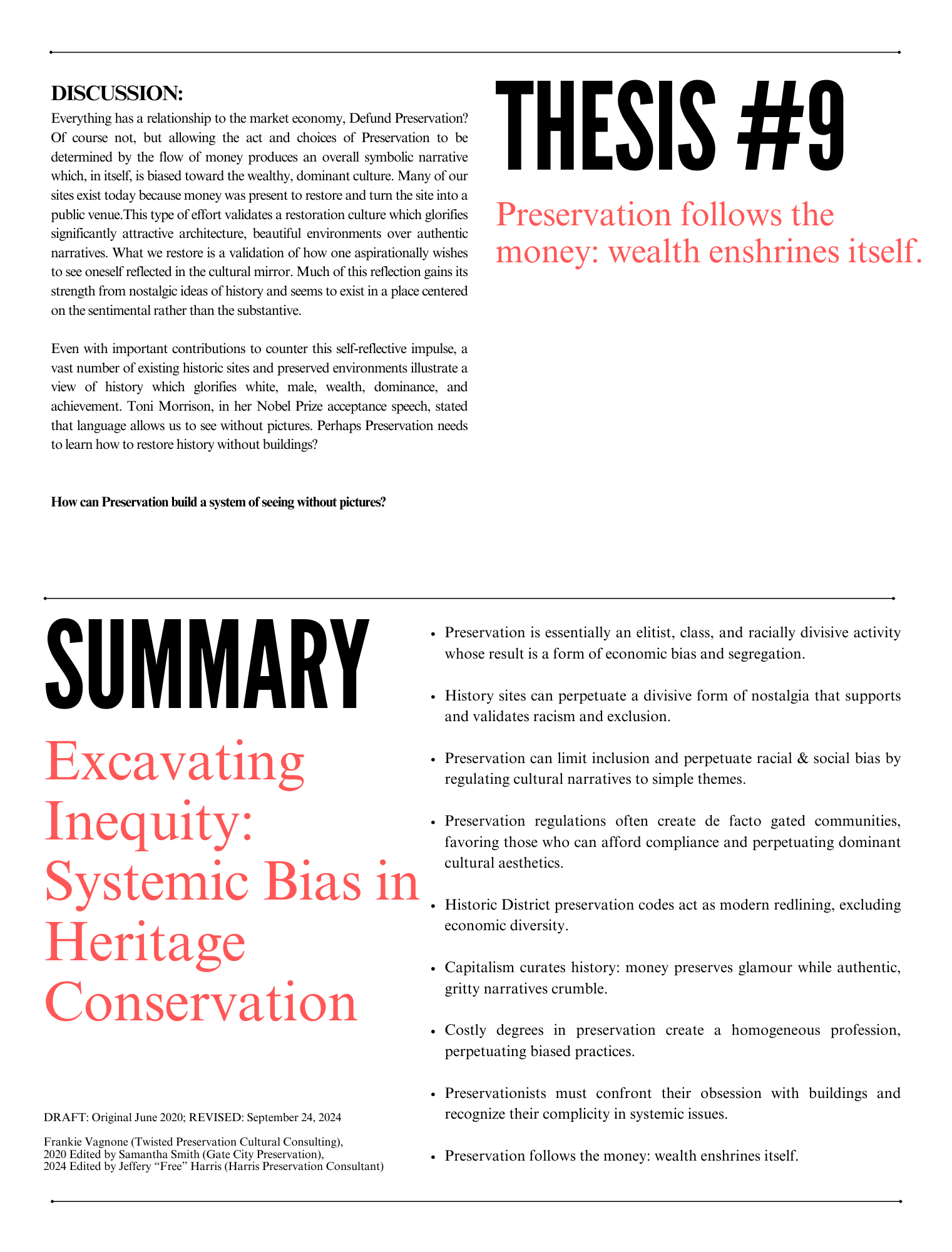
As the author of these essays – which I began writing in 2020 and have continued to develop through thoughtful feedback and reflection – I’ve attempted to explore systemic bias within heritage conservation and historic preservation. My nine interconnected theses suggest we must examine our field’s fundamental assumptions about preservation work, including how our current practices might perpetuate inequities despite our good intentions. The statistics that shaped my thinking are concerning: only 3% of National Register Historic Places represent Black American history, and just 3% of Los Angeles Historic Landmarks represent women’s history. These numbers suggest preservation may be an activity that inadvertently reinforces divisions through compliance requirements and narrative choices.
I was grateful for the opportunity to share these developing ideas at both the New England Museum Association annual conference and the joint conference between The Eastern States Archaeological Federation and Salve Regina’s preservation program in 2024. The document proposes we consider reimagining our practices, perhaps looking beyond our focus on buildings to examine how our processes might affect community access and representation. Through conversations with colleagues, I’ve been exploring how our field’s economic structure – including educational costs and funding patterns – might influence which stories we preserve and which we may overlook. These thoughts are offered as part of an ongoing dialogue about how we might work together to create more inclusive preservation practices.


 Twisted Preservation