As I clean my windows in our 1777 colonial house in Newport, with the sun streaming through the glass (a rarity lately), I contemplate how keeping clean windows has been a constant thread throughout my life. In 1999, I wrote about my philosophy of old windows but never explored my compulsion to keep them pristine.
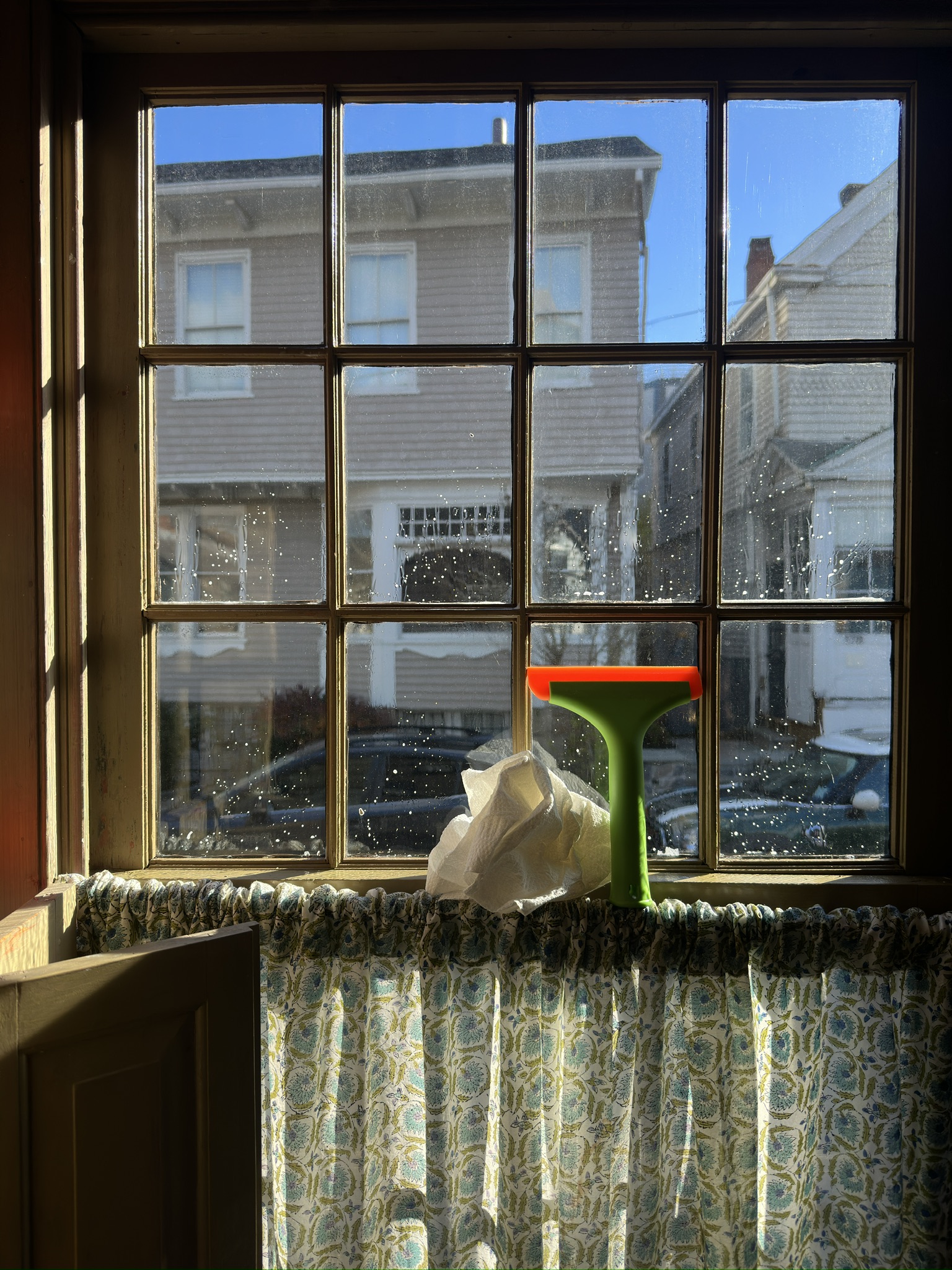
There’s something lodged in my memory – though perhaps it’s apocryphal – about Martha Stewart saying that everything else will be forgiven if you have clean windows. Whether she actually said this or not, it has stuck with me like a personal commandment, shaping my domestic priorities in ways I’m only now beginning to understand.
Windows are the filter between two worlds: the public theater of the town and my private sanctuary, carefully curated in my living room. This intersection of public and private reminds me of Amsterdam, where the enormous windows rarely had drapes, offering glimpses into Dutch domestic life (though one wasn’t supposed to look!). Those windows always seemed to gleam with a cleanliness that felt deeply symbolic, as if transparency itself was a virtue.

Living in Newport, a village during the winter and as a city in the summer, I’ve realized that these windows make me both observer and observed. Passersby regularly comment on what they glimpse through my windows – the small lights twinkling above my café drapes, the rugs adorning my walls. It’s fascinating how these casual observers piece together stories from mere fragments of my interior life, like assembling a puzzle with most pieces missing. Sometimes their comments bring a warm smile to my face, a pleasant acknowledgment of shared community life. Other times, their observations feel like small invasions, tiny public and private boundary breaches that I’ve tried to maintain. The unpredictability of my own reactions puzzles me – why does one comment feel like a friendly neighborly connection while another strikes a discordant note of violation?
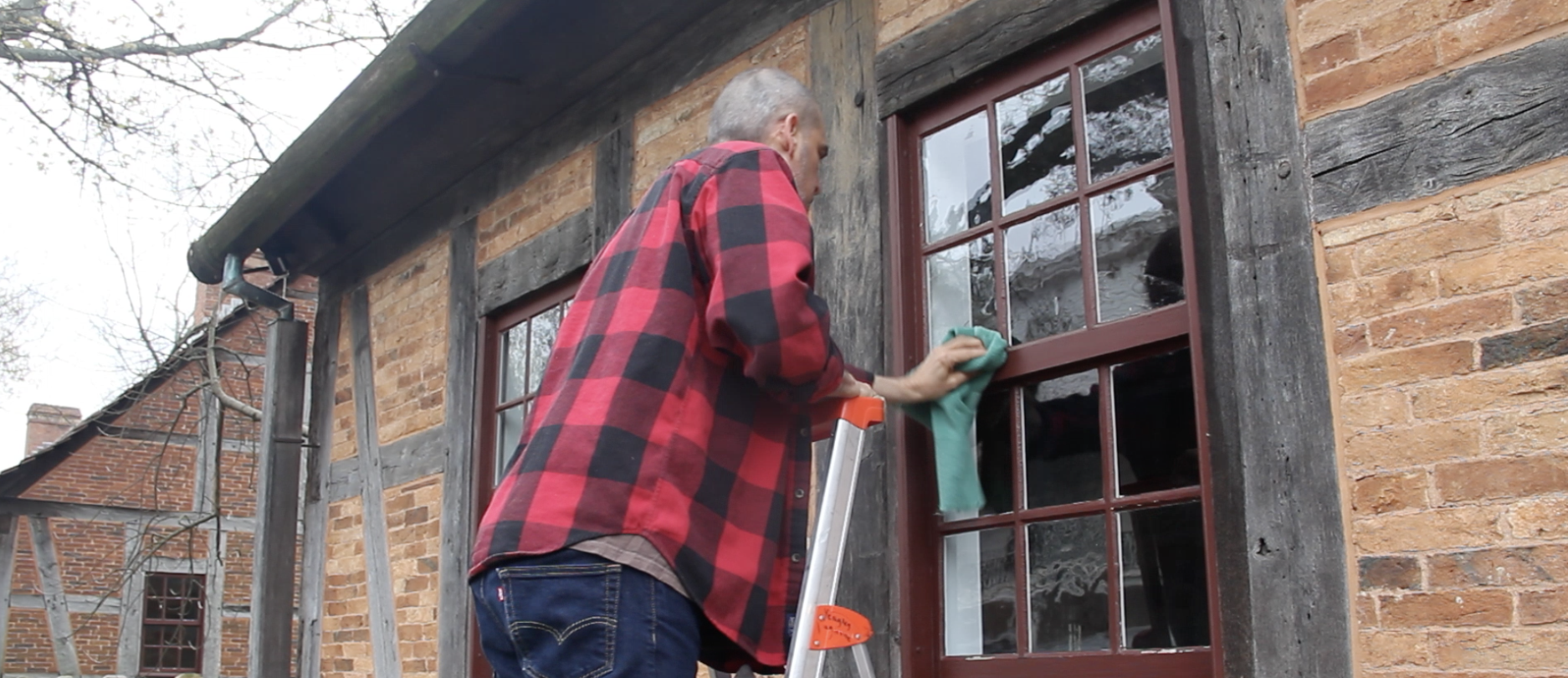
This devotion to clean windows has even become a currency of friendship. Somewhere in my iPhone photos, there’s evidence of me cleaning windows in Old Salem, North Carolina, at our former neighbors’ house. Karen and Bill had often admired how I kept our windows sparkling, so I simply appeared at their home one sunny day with my two-story window brush and cleaning supplies. They had given me standing permission – a blanket “OK” to clean their windows whenever the mood struck. It became a gesture of friendship, a way to share this peculiar passion of mine. The memory of Karen’s delight at seeing her windows gleam makes me smile, even as I miss having them as neighbors. Sometimes, the simplest acts of care – like cleaning a friend’s windows – forge the strongest community bonds.
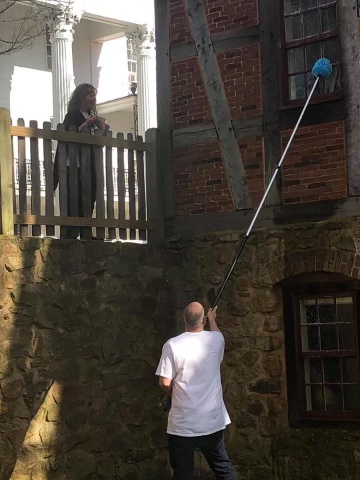
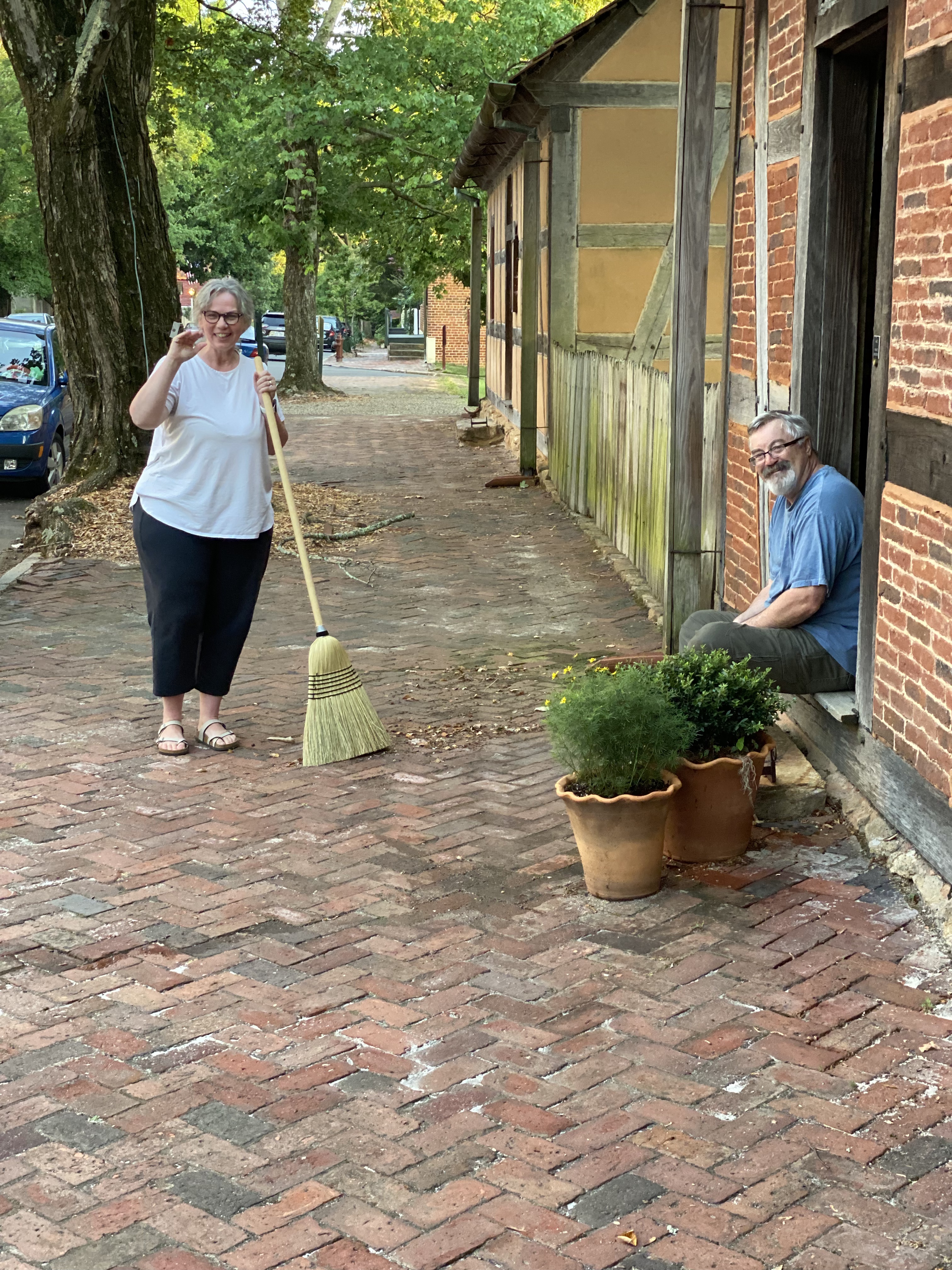
This communal aspect of window cleaning reached its zenith during my time as Executive Director of the Historic House Trust of New York City. I initiated what we affectionately called the “window cleaning brigade” – a roving band of preservationists armed with squeegees and enthusiasm. We would travel to all 23 of our historic house sites, transforming what could have been a solitary maintenance task into a social event. Those memories remain crystal clear: the laughter, the shared sense of purpose, the way the houses seemed to come alive as the light streamed through freshly cleaned panes, as if we were awakening these historic spaces with each swipe of our cloths.
Yet this symbolism doesn’t quite hold up to real-life – maintaining that crystalline barrier between inside and out demands either considerable time or money. Sometimes I wonder if I’m enslaved to a mythology about what clean windows represent. Is it about clarity? Control? The presentation of perfection to the outside world? I’m keenly aware that my window-cleaning fixation is my own peculiar obsession – not a standard by which I measure others. When I visit friends’ homes, I never scrutinize their windows or silently judge the smudges or streaks. This compulsion is mine alone, a personal ritual that brings me satisfaction but isn’t everyone’s obligation or priority.
The fact that I will clean my windows before I mop my floors speaks to some deeper priority system. Perhaps it’s because windows are our eyes to the world, and keeping them clean is about maintaining clarity of vision, both literally and metaphorically. In this old Newport house, with its centuries of history, maybe I’m participating in a tradition older than I am – this ritual of keeping the boundary between private and public life clear.
Each swipe of the cloth becomes a meditation on how we let the world in. The sun streaming through newly cleaned glass illuminates not just my living room but also my friendships and care of historic spaces. Whether this compulsion comes from Martha Stewart’s alleged wisdom or some deeper personal symbolism, it has become an integral part of how I maintain my space and, by extension, myself.
 Twisted Preservation