The Power of Active Engagement

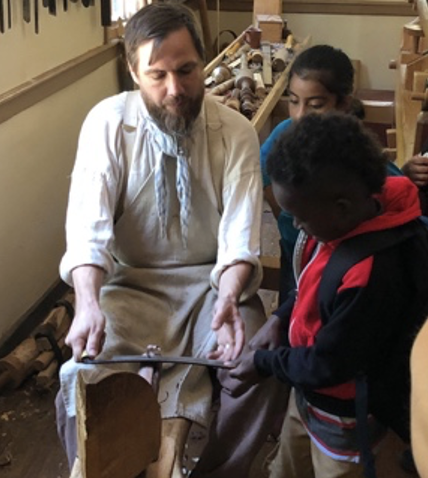
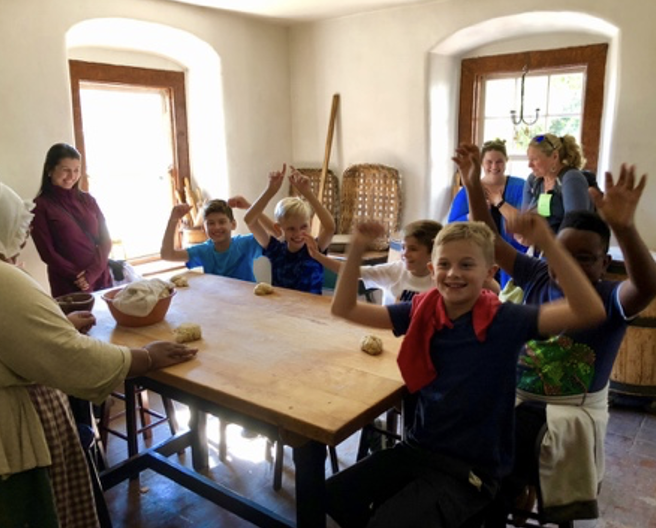
The traditional model of living historical education often relies heavily on passive observation – visitors read panels, view artifacts behind glass, or listen to reenactors perform a task. However, a different approach is emerging, transforming these passive experiences into dynamic, hands-on learning opportunities that engage multiple senses and create deeper connections to historical narratives while teaching STEAM concepts through authentic historical practices.

When visitors physically engage with historical processes and crafts, they develop a more intimate understanding of the past while naturally encountering fundamental concepts in science, technology, engineering, art, and mathematics. This kinetic learning approach lets participants get dirty with history while discovering the sophisticated knowledge embedded in traditional practices.

Interdisciplinary Learning Through Historical Practices

Quilting: Geometry in Action

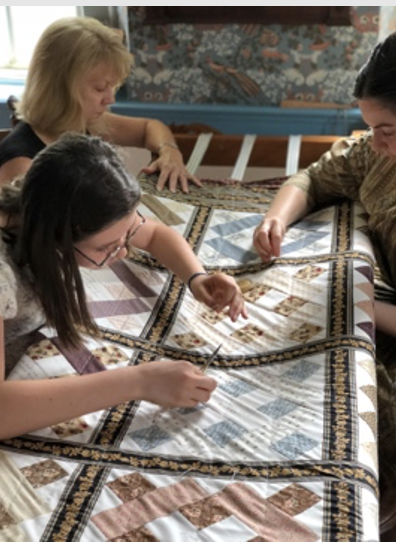
Traditional quilting serves as a sophisticated laboratory for geometric concepts. Visitors who work with conventional patterns naturally engage with mathematical principles, including symmetry, tessellation, fraction work, and spatial reasoning. Creating complex geometric patterns through simple shapes helps develop mathematical intuition and precise measurement skills. Historical quilting patterns often demonstrate advanced mathematical concepts like rotational symmetry and geometric transformations, making abstract mathematical ideas tangible and practical.

Seed Saving: Living Biology Lessons

The historical practice of seed saving provides a direct window into biological concepts. While engaging with traditional agricultural practices, participants learn about plant life cycles, genetics, and natural selection. This hands-on experience with seeds connects visitors to historical agricultural methods and fundamental concepts in biology, including plant reproduction, genetic diversity, and adaptation. The process demonstrates how historical farmers developed a sophisticated understanding of plant biology through careful observation and selection.

Carpentry: Applied Physics and Geometry

Traditional woodworking techniques naturally incorporate principles of physics and advanced geometry. Visitors engage with historical carpentry methods and encounter concepts like mechanical advantage, force distribution, and structural integrity. Measuring, cutting, and joining materials provides practical experience with geometric principles including angles, proportion, and spatial relationships. Historical joinery techniques often demonstrate a sophisticated understanding of materials science and engineering principles.

Pottery: Geological Sciences and Chemistry

Working with clay connects visitors to both geological processes and materials science. The pottery experience teaches participants about mineral composition, physical properties of materials, and chemical transformations through firing. Traditional glazing techniques incorporate practical chemistry lessons, while the pottery process demonstrates principles of thermal dynamics and physical changes in materials. This hands-on experience shows how historical artisans developed sophisticated understanding of materials through experimentation and observation.

Baking: Chemistry in the Kitchen

Historical baking practices provide an accessible introduction to chemical reactions and precise measurement. As visitors work with traditional recipes, they encounter concepts like fermentation, protein chemistry, and the effects of temperature on chemical reactions. The process demonstrates how historical bakers developed practical understanding of complex chemical processes through careful observation and experimentation.
Multiple Pathways to Understanding

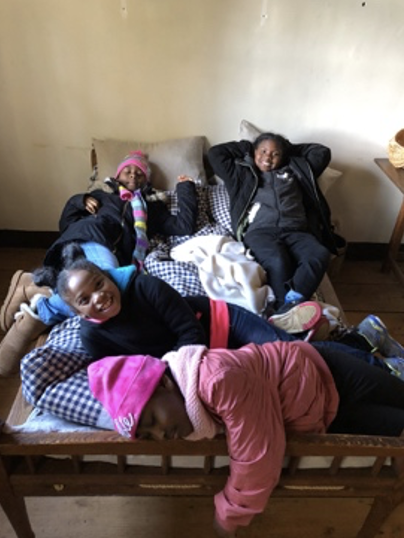
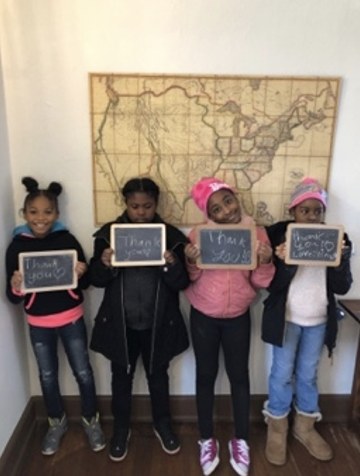
These kinetic learning experiences accommodate diverse learning styles and abilities while naturally integrating STEAM education into historical interpretation. Some visitors might connect deeply with the mathematical precision required in quilting, while others might find their understanding through the tactile experience of working with clay or sorting historical materials. This multi-modal approach ensures that both historical education and STEAM concepts become accessible and meaningful to a broader range of learners.

Creating Lasting Impact

The impact of these interdisciplinary kinetic learning experiences extends beyond the immediate activity. When visitors actively participate in historical processes, they develop:

  • Deeper understanding of historical contexts and scientific principles
  • Increased appreciation for historical innovation and problem-solving
  • Better retention of both historical and STEAM concepts through physical memory
  • Enhanced critical thinking skills through hands-on problem solving
  • Stronger connections between historical practices and modern science

These experiences help demonstrate that historical practices weren’t simply crude predecessors to modern methods, but sophisticated systems that incorporated deep understanding of scientific and mathematical principles. Visitors begin to appreciate historical figures not just as people of the past, but as innovative problem-solvers who developed complex understanding through careful observation and experimentation.

Looking Forward

As we continue to develop and refine these kinetic learning experiences, we’re seeing how they can transform both historical and STEAM education from passive reception of information into active, engaging processes of discovery. This integrated approach doesn’t just teach history or science – it demonstrates how these fields have always been interconnected through human innovation and problem-solving.

The success of these programs suggests that the future of education lies in breaking down artificial barriers between disciplines and creating opportunities for visitors to discover knowledge through direct experience. By literally putting historical practices in people’s hands, we’re not just teaching about the past – we’re helping visitors develop a deeper understanding of how human knowledge and innovation develop across time.

Through these hands-on experiences, history becomes not just a subject to study but a process to participate in, creating deeper understanding of both historical practices and the fundamental principles of science, technology, engineering, art, and mathematics that underlie them.

Seeing the Caregiver:  Museums and Caretaker Anxiety

Recent research demonstrates museums’ positive impact on visitor wellbeing through programs like “Meet Me at MoMA” and the UK’s House of Memories. However, these studies focus almost exclusively on participants with disabilities or conditions, not their caregivers. While sensory mornings and accessibility programs help those receiving care, they can paradoxically increase caregiver stress. Each “special program” becomes another complex outing to manage, another environment to navigate, another situation where the caregiver must maintain hypervigilance – now with the added pressure of participating in a structured activity.

Research on caregiver health presents alarming evidence of the physical and psychological toll of constant vigilance and support responsibilities. Studies from the Journal of Gerontology and American Journal of Psychiatry reveal that caregivers experience accelerated cellular aging, compromised immune function, and rates of clinical anxiety and depression 2-3 times higher than the general population. The chronic activation of stress responses leads to increased cardiovascular problems, sleep disorders, and PTSD-like symptoms that can persist long after direct caregiving ends.

This research suggests that public institutions must dramatically shift their approach to accessibility. While adapting spaces for those with disabilities remains crucial, equal attention must be paid to caregiver wellbeing. Museums, theaters, and other cultural venues have an opportunity to pioneer this dual-focus approach – creating environments that support both those needing care and those providing it. Without addressing caregiver health, we risk compromising the very support system these institutions work to accommodate.

For caregivers, museum visits often trigger intense anxiety. What others see as a simple cultural outing becomes a complex risk assessment: Will there be meltdowns? How will others react to unexpected behaviors? Where are the exits? This constant stress transforms potential moments of beauty into sources of dread.

While “sensory mornings” and similar programs reduce crowding, they don’t address the core challenge: caregiver anxiety. A less crowded space is helpful, but caregivers still carry the full weight of support, vigilance, and management. Traditional accessibility measures focus on physical accommodations while missing the psychological barriers caregivers face.

Creators throughout history have navigated mental health challenges and care relationships. Van Gogh’s struggles with mental illness were supported by his brother Theo, while Camille Claudel’s complex relationship with institutional care shaped their art. In science and natural history museums, Darwin’s care for his chronically ill family members influenced his work habits and observations. These aren’t just biographical footnotes – they’re testament to the profound impact of care relationships on cultural achievement.

Artists have also documented the caregiver experience. Mary Cassatt’s intimate paintings of maternal care, William Wordsworth’s poetry about supporting his sister Dorothy, and Johanna van Gogh-Bonger’s care for both Vincent and Theo while preserving their legacy speak to the universal experience of care relationships. These works offer caregivers something rare: recognition of their experience in celebrated cultural artifacts.

The relationship between caregiving and creativity weaves through art history in profound ways. Artemisia Gentileschi painted while raising two children alone in 17th century Italy, often incorporating her experiences of motherhood into her powerful biblical scenes. Virginia Woolf not only managed her own mental health but also took on significant care responsibilities for her sister Vanessa Bell’s children, finding ways to write in the early mornings before family duties began. Charlotte Perkins Gilman wrote “The Yellow Wallpaper” after her own experience with postpartum depression and prescribed isolation, later caring for her daughter while building her career as a social reformer and author. Marie Curie balanced groundbreaking research while raising two daughters alone after Pierre’s death, with her daughter Eve later documenting both their scientific and familial bonds. These stories reveal how caregiving experiences have shaped creative and intellectual work, offering modern caregivers a connection to a rich heritage of balancing care and creation.

In addition to providing logistical assistance during a visit, Museums could leverage these narratives to create meaningful engagement opportunities for caregivers. Rather than treating caregiver support as purely logistical, institutions could develop programming that connects caregivers’ lived experiences to the broader cultural heritage they protect. This approach validates caregiver experiences while offering intellectual engagement with the collection – a rare moment where caregiving becomes a lens for deeper understanding rather than a barrier to participation.

Four innovations could transform the museum experience:

  1. Trained Support Staff wearing purple “Museum Helper” shirts, ready to assist without judgment
  2. A universal hand signal (✋) between caregivers, acknowledging shared experiences
  3. Clear messaging that validates caregiver experiences and builds community
  4. Programming that connects caregivers to historical narratives of care in art and science, offering intellectual engagement that validates their experiences

True accessibility means providing actual respite – moments where trained staff can step in and caregivers can briefly step back. The goal isn’t just making space – it’s sharing the load and acknowledging that everyone deserves access to cultural spaces and moments of beauty.

Proposed Welcome Sign for Caretakers:

WELCOME TO YOUR MUSEUM

Everyone deserves moments of beauty and fascination. Every visit matters, no matter how brief. Every connection with art and culture is meaningful. We’re here to make those moments possible.

For All Caregivers Supporting Those With:

  • Autism
  • Dementia
  • Cognitive Differences
  • Physical Disabilities
  • Mental Health Needs
  • Communication and Sensory Processing Needs
  • LGBTQ+ Youth and Adults
  • Gender Identity Support Needs
  • Any Other Support Requirements

Purple-Shirted Museum Helpers

  • No judgment intervention
  • Trained in all support needs
  • Help manage space and others
  • Give you breaks when needed
  • Bathroom assistance available
  • Understand diverse abilities

It’s OK if…

  • Sounds, screams, crying happen
  • Running occurs or elopement happens
  • Touch is needed or constant movement
  • Meltdowns take place and need time
  • Quick exits are necessary
  • Visits are short or limited to one spot
  • You’re too overwhelmed to view art
  • Managing movement takes priority
  • You need immediate support
  • Bathroom assistance is needed

See a caregiver having a challenging moment? Been there with meltdowns, running, noise? Raise your hand ✋ It means: “I see you. You’ve got this.”

Need Support?

Find any purple “Museum Helper” shirt. We’re a community – we help each other here.

Beautiful Burdens: A Generational Shift in Collections Care

“Pretty things, so what if I like pretty things” Pretty Things, Rufus Wainwright

As a museum professional and public historian with over two decades of experience in collections care and archive organization, I’ve witnessed firsthand how our relationship with cultural heritage materials evolves. My career has focused on creating unified, accessible collections from dispersed materials – from establishing the Raymond & Mildred Pitcairn Archives at Glencairn Museum to establishing the Bryn Athyn Cathedral Archive to unifying documents for the Philadelphia Society for the Preservation of Landmarks’ formation. While at the Historic House Trust of New York City, I participated in collection and archive-related decisions and oversight for documents and archaeological artifacts across all 23 historic sites, with most heritage sites maintaining their own archives on-site. At Old Salem, I helped consolidate artifacts and documents into a single archive venue, enhancing storage conditions and accessibility. Most recently, at NRF, I was part of the team that gathered the collection of scattered materials into one location and hired their first professional archivist.

These experiences bringing together disparate collections have taught me that preservation isn’t just about loving pretty things—it’s about understanding their context and ensuring their relevance for future generations.

Rufus Wainwright’s meditation on beauty and impermanence captures a profound truth about our relationship with material culture. His lyrics acknowledge our attraction to beautiful objects while confronting their ephemeral nature – “This time will pass and with it will me/And all these pretty things.” As a preservationist, I live with similar tensions: the desire to preserve beautiful and meaningful objects, even as we recognize that relationships with material culture inevitably shift and transform across time and space.

Like the astronomical distances Wainwright invokes in his song (“From where you are/To where I am now/Is its own galaxy”), we find ourselves at a fascinating distance from traditional approaches to preservation and collections care. We can look back at these practices while charting a new course forward, acknowledging both our love of beautiful things and the complex realities of maintaining them.
Traditionally, museum conservation followed the “everything is a Rembrandt” approach – treating each object with the highest possible preservation standards, regardless of context or resources. While this reverence for material culture came from a good place, it’s increasingly clear that this approach isn’t sustainable or desirable today.

We’re witnessing this shift dramatically in the current generational transition. As Baby Boomers downsize, we see a fascinating and sometimes painful phenomenon: their children and grandchildren often cannot or do not want to take on the responsibility of preserving the life objects collected by previous generations. This isn’t simply about different tastes or values – it reflects profound changes in how younger generations live and relate to material culture.

Multiple factors drive this shift. There’s the digital transformation, where memories and experiences are increasingly stored in clouds rather than cabinets. But it’s more complex than a simple analog-to-digital transition. Young generations face different economic realities that often require geographic and professional mobility, making maintaining extensive collections of physical objects impractical. They’ve also grown up with different aesthetic sensibilities and relationships to consumption, often prioritizing experiences over possessions and sustainability over accumulation.

This generational shift mirrors broader changes in how we value and preserve objects institutionally. Instead of the traditional approach of comprehensive preservation, we need a more nuanced framework for collections care decisions. This framework must balance multiple factors: cultural and historical significance, available resources, potential uses, and preservation viability. However, perhaps most crucially, it must consider context – the web of relationships and meanings that make an object genuinely significant.

Context transforms objects from mere things into carriers of meaning. An object’s significance lies not just in its physical form but in its relationships: to its community of origin, to the stories it can tell, to the communities it serves today, to other objects in the collection, and to contemporary dialogues and issues. This contextual approach helps us make more intelligent decisions about resource allocation, focusing our preservation efforts where they can have the most meaningful impact.

This shift toward context-driven preservation intersects with changing realities in cultural heritage funding. Increasingly, grants and foundations are moving away from traditional collections care funding in favor of community engagement and programming initiatives. This isn’t simply a challenge to overcome – it’s an opportunity to reimagine how we approach collections care. Those charged with preserving cultural heritage must now think creatively about interweaving collection care with community engagement, developing purpose-driven preservation strategies demonstrating how objects can actively serve community needs and interests. Rather than seeing this as a choice between caring for collections and serving communities, we must show how these missions are fundamentally interconnected.

However, this emphasis on context doesn’t mean we should dismiss pure aesthetic value. Some objects possess inherent power through their visual or material presence alone—what we might call “art for art’s sake.” Yet even these seemingly context-free aesthetic objects exist within implicit frameworks: artistic traditions, material cultures, economic systems, and preservation choices. What’s changed is our willingness to acknowledge and examine these frameworks rather than present objects in an artificial vacuum.

As we look to the future of heritage conservation, these challenges become personal and institutional. How do we decide what to preserve when younger generations develop fundamentally different relationships with material culture? How do we balance preserving physical objects with the growing importance of digital heritage? What happens to the stories embedded in objects when the next generation chooses not to keep them?

The future of collections care lies not in treating everything as a Rembrandt but in making thoughtful, context-aware decisions about preservation. This means being more strategic about what we preserve and how. It means considering the entire web of relationships and meanings around objects. It also means being open to new ways of preserving and sharing cultural heritage that might differ significantly from traditional approaches.

Ultimately, the objects we choose to preserve and how we care for them reflect our past, present values, and hopes for the future. As museum professionals, our challenge is to navigate these generational shifts and changing values while maintaining our core mission of preserving and sharing meaningful aspects of our cultural heritage. Perhaps the solution isn’t to lament younger generations’ different relationship with objects but to understand it as part of the evolving story of how humans relate to their material world. Like Wainwright’s celestial metaphor suggests, we’re all moving through our own galaxies of meaning, watching pretty things pass through our orbits, deciding what to hold onto and let go.

The Afterlife of Buildings

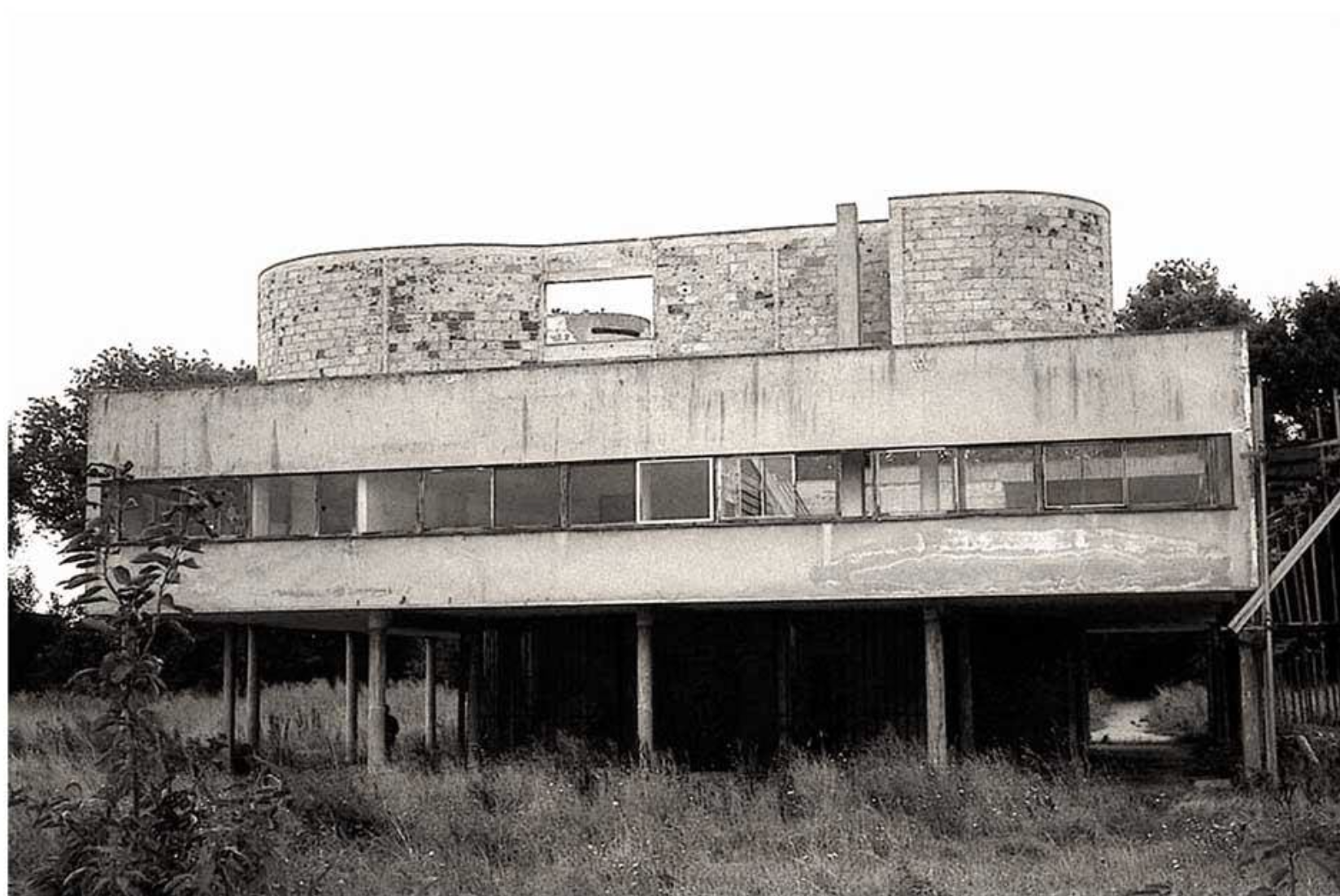
Villa Savoye, Poissy, circa 1959: The modernist masterpiece in its ‘most architectural’ state, according to Bernard Tschumi. Its deterioration reveals Le Corbusier’s pure geometric forms and modernism’s inherent contradictions. The building’s state of decay, with overgrown vegetation and stained surfaces, arguably tells a more complete truth about the project than its pristine restoration. Photograph: Unknown.

Like undertakers preparing a body for viewing, heritage conservationists often find themselves in the curious position of preserving something that has already died. Yet this preservation is further complicated by a generational paradox: those doing the preserving are typically not those who knew the “body” when it was alive. Instead, each generation becomes the caretaker of another generation’s memories, preserving experiences they never had.

The Death of Original Purpose and Birth of New Meaning

Bernard Tschumi’s encounter with the Villa Savoye in 1965 perfectly embodies this generational dynamic. As a young architect encountering Le Corbusier’s aging masterpiece, Tschumi was quite literally the next generation grappling with modernism’s physical and theoretical legacy. When he declared, “The most architectural thing about this building is the state of decay in which it is,” he was not speaking as someone mourning the loss of the building’s original pristine state, but as someone discovering new truths in its decay.

Villa Savoye as hay barn, c.1959-1963: The modernist icon found its most enduring purpose not as a machine for living but as a machine for farming, with its raised ground floor inadvertently creating an ideal agricultural storage space. Sometimes, a building’s unintended use becomes its most authentic.

The Villa Savoye had already experienced multiple deaths by the time Tschumi encountered it. As a home, it died quickly – its original function failing almost immediately due to persistent leaks, heating problems, and an inherent inability to serve as a comfortable dwelling. The Savoye family’s rapid abandonment marked its first death. Yet like a body experiencing multiple clinical deaths, the building would “die” several more times: as an abandoned structure, as a hay barn, and finally as a deteriorating ruin before its “resurrection” as a heritage site.

This functional failure adds another layer to our understanding of decay’s revelatory power. In the 1950s and 60s photographs, we see the building deteriorate: its white walls stained, windows broken, and pristine surfaces overtaken by vegetation. These images reveal the structural bones of Le Corbusier’s geometric vision and, paradoxically, the building’s inherent contradictions. The clean lines and machine aesthetic of modernism are simultaneously emphasized and undermined by decay, making the tension between modernist ideals and lived reality visible.

The Generational Transmission of Memory

This pattern of death and rebirth through generational reinterpretation appears throughout architectural history. The Powell House in Philadelphia experienced its own death as an elite residence, only to be reborn as a horse hair brush factory. This utilitarian afterlife lasted far longer than its original incarnation. Each generation encounters these buildings not as living spaces but as inherited artifacts requiring interpretation and reanimation.

Powell House Withdrawing Parlor fireplace wall, c.1930, prior to Fiske Kimball’s restoration. The deteriorated state reveals the room’s original Georgian architectural vocabulary while documenting its industrial adaptation as a brush factory. Note the exposed brick chimney breast, six-panel doors with their original proportions, and modified openings – each element telling a different chapter in the building’s life. This ‘found condition’ served as crucial archaeological evidence for Kimball’s subsequent restoration work while simultaneously recording the building’s evolution from elite residence to industrial workspace. Photograph courtesy of The Philadelphia Society for the Preservation of Landmarks.

The multi-valent nature of these sites emerges precisely through this process of generational reinterpretation. Each generation approaches the “dead” building with fresh eyes, discovering new meanings:

  • As Architectural Icon: The pristine vision of its creators
  • As Functional Failure: The reality of its lived experience
  • As Witness to Time: Its periods of decay and alternative use
  • As Philosophical Tool: Its role in ongoing architectural discourse
  • As Heritage Symbol: Its current status as preserved artifact

The Risk of Restoration

This multi-valent nature raises critical questions about restoration practices. When we restore a building like Villa Savoye to its “original” state, which version of original do we choose? The brief moment when it was newly completed? The state Le Corbusier photographed it in? The reality of its inhabited period? Or when the house, abandoned as a dwelling, was utilized as a haybarn – a period that ironically may have been its most extended consistent use? Each choice privileges certain interpretations while potentially erasing others.

Powell House ballroom elevation showing fireplace wall, Philadelphia. Red lines indicate Fiske Kimball’s conjectural restoration (c.1930s) of the Georgian interior details, overlaid on existing architectural evidence. This primary research drawing by Frank Vagnone demonstrates the interpretative nature of heritage restoration – even seemingly “accurate” reconstructions involve educated guesswork about lost elements. The geometry of classical proportions guided Kimball’s assumptions about the original decorative scheme, which had been modified during the building’s industrial period as a brush factory.

This pattern of adaptive reuse – often ignored in traditional heritage narratives – appears across architectural history. The Powell House in Philadelphia, now restored as a pristine example of Georgian architecture, spent much of its life as a factory producing boar hair brushes. Like the Villa Savoye’s period as a haybarn, this industrial use represents a significant and legitimate part of the building’s history. Yet in both cases, heritage restoration practices often privilege the buildings’ brief periods as elite residences over their longer histories of practical adaptation and use.

Beyond Preservation: The Dialogue Between Generations

This suggests that heritage conservation might be better understood not as a process of preservation but as a facilitation of dialogue between generations. Tschumi’s interaction with Villa Savoye demonstrates how younger generations don’t simply inherit and preserve the past – they actively reinterpret and find new meanings.

This reframing has significant implications for heritage practice:

  1. Acknowledging Multiple Deaths: Preserving evidence of various uses and interpretations
  2. Generational Space: Creating room for new interpretations to emerge
  3. Temporal Honesty: Recognizing that each generation will “kill” and “revive” heritage sites in their own way
  4. Documentation of Process: Recording not just physical changes but interpretative evolution

Towards a Multi-Valent Heritage Practice

This suggests the need for new approaches to heritage conservation that can maintain multiple, simultaneous interpretations:

  1. Layered Interpretation: Presenting multiple narratives simultaneously through varied interpretive materials
  2. Preserved Contradictions: Deliberately maintaining evidence of both success and failure
  3. Temporal Honesty: Acknowledging that different periods may hold equal heritage value
  4. Emotional Space: Creating room for varied emotional responses rather than prescribing a single “correct” reaction

The Living Dead: Heritage Sites as Active Participants

The power of heritage sites may lie precisely in their status as “living dead” – structures that have died multiple deaths yet continue to generate new meanings. Rather than attempting to freeze them in a single moment of “life,” we might better serve these sites by acknowledging their role as vessels for intergenerational dialogue.

Conclusion

The challenge for heritage professionals is not simply to preserve the dead but to facilitate meaningful dialogue between generations through these preserved remains. This might mean developing practices that maintain both physical fabric and interpretative possibility, allowing each generation to encounter these sites not as preserved specimens but as complex entities capable of generating new meanings and understandings.

Tschumi’s youthful encounter with the aging Villa Savoye reminds us that heritage sites are not static monuments but active participants in an ongoing conversation between generations. Their power lies not in perfect preservation but in their capacity to die and be reborn through each generation’s reinterpretation, creating a continuous chain of cultural meaning stretching past to future.

Rockets and Doughnuts

The morning unfolded through spaces both intimate and shared. Jaxson raced across the playground, confident and free, before we settled on a park bench to watch the world pass by. Elderly couples ambled past, teenagers laughed in clusters, and families hurried to weekend activities – each group writing their own momentary story across the public green. Later, tucked into a quiet corner of the bakery, we shared a doughnut and dove into his new fascination with rockets, the pages of his fresh book from Charter Bookstore spread between us.

Each transition revealed new facets of Jaxson—from confident explorer on playground equipment to curious observer of strangers passing by, eager scholar picking out a book about rockets, and animated storyteller over our shared doughnut. As his grandfather, I treasured each moment. As a public historian, I saw how these seemingly ordinary shifts in space and interaction exemplify the subtle rhythms we so often fail to document.

The Swedenborgian concept of “continuous and discrete degrees” offers a valuable framework for understanding these subtle shifts. It suggests that change occurs constantly but in such minute increments that we only recognize the transformation once it becomes unmistakable – like watching a child grow. You notice it suddenly one morning, though the change has been continuous. In public history, we often miss these continuous degrees of change, instead focusing on discrete moments that seem more historically significant. Yet it’s in these small, continuous changes – like my grandson’s shifting engagement with space throughout our morning – where we find the true texture of human experience.

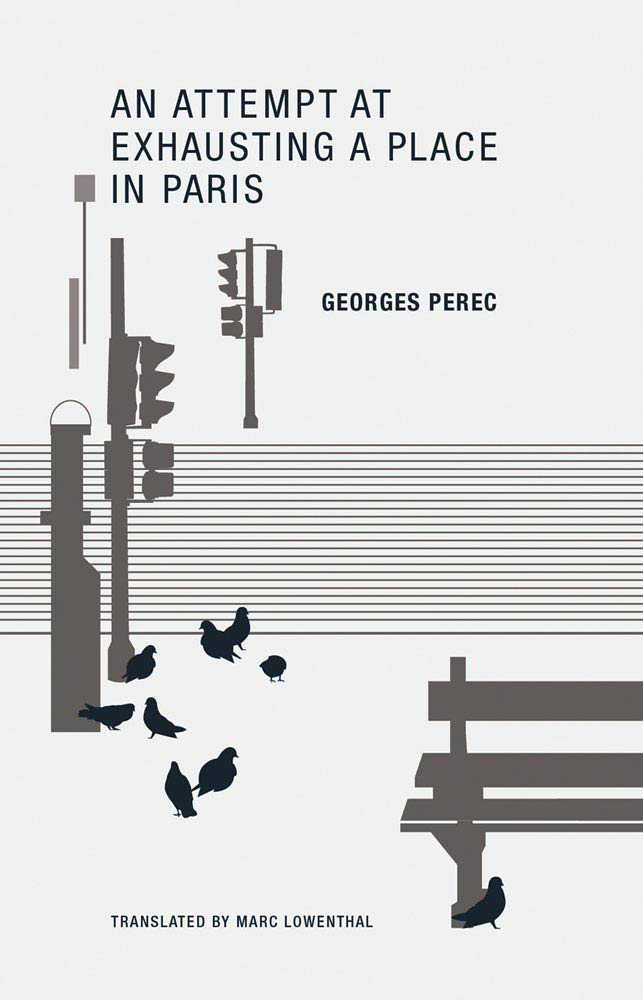
Michel de Certeau’s “The Practice of Everyday Life” (1980) explores this tension by examining how ordinary people’s daily routines constitute forms of meaning-making often overlooked by traditional historical narratives. Similarly, Carlo Ginzburg’s microhistorical approach in “The Cheese and the Worms” demonstrates how examining seemingly insignificant lives reveals deeper cultural patterns. Georges Perec’s “An Attempt at Exhausting a Place in Paris” (1975) takes this further – through meticulous documentation of mundane details like passing buses and pigeons at Place Saint-Sulpice, he reveals how richly textured ordinary public spaces become when we truly pay attention. Yet despite these theoretical frameworks, we still mythologize “periods of significance,” freezing historic spaces – particularly homes – in supposedly meaningful moments while ignoring life’s continuous flow.

I’ve studied how rooms in homes organically evolve as families adapt them to their needs. A nursery becomes a teenager’s room, then a home office, then a guest room – each transformation carrying its own significance. Henri Lefebvre’s “The Production of Space” (1974) helps us understand how such spaces are socially produced through daily use. Yet, our current interpretive frameworks, focused on dramatic events and notable figures, struggle to capture these quieter aspects of history.

When we designate a period of significance, we arbitrarily decide which historical layer matters most. Collection policies, restoration decisions, and interpretive narratives become confined within these artificial temporal boundaries, stripping away the rich patina of lived experience that makes spaces meaningful. Just as my morning with my grandson moved between private intimacy and public space, historic sites accumulate countless such layers of meaning through generations of use. Our challenge as public historians lies in developing new methods to capture and convey these seemingly insignificant moments that ultimately shape both our personal spaces and our broader historical understanding.

Fluid Memory

In my work as a public historian, I’ve repeatedly returned to four fundamental frameworks that have shaped my understanding of how landscapes, monuments, and cultural memory intersect: Simon Schama’s insights into landscape meaning, Robert Venturi and Denise Scott Brown’s architectural theory, John Hejduk’s architectural narratives, and contemporary approaches to monumentality. These intersections reveal new ways of commemorating the past while acknowledging memory’s fluid nature.

The preservation of cultural landscapes is inherently about time and memory. The question becomes, how best can we navigate those components while embracing contemporary landscape use?

Schama’s “Landscape and Memory” (Knopf, 1995) transformed my understanding of how landscapes accumulate layers of cultural meaning over time. His work reveals that these meanings aren’t fixed but evolve as societies reinterpret their relationships with particular spaces. I see this evolution constantly in my work – a forest or river that once held sacred significance becomes a symbol of national identity, industrial progress, and environmental concern. This fluidity of meaning now shapes everything I do with cultural landscapes.

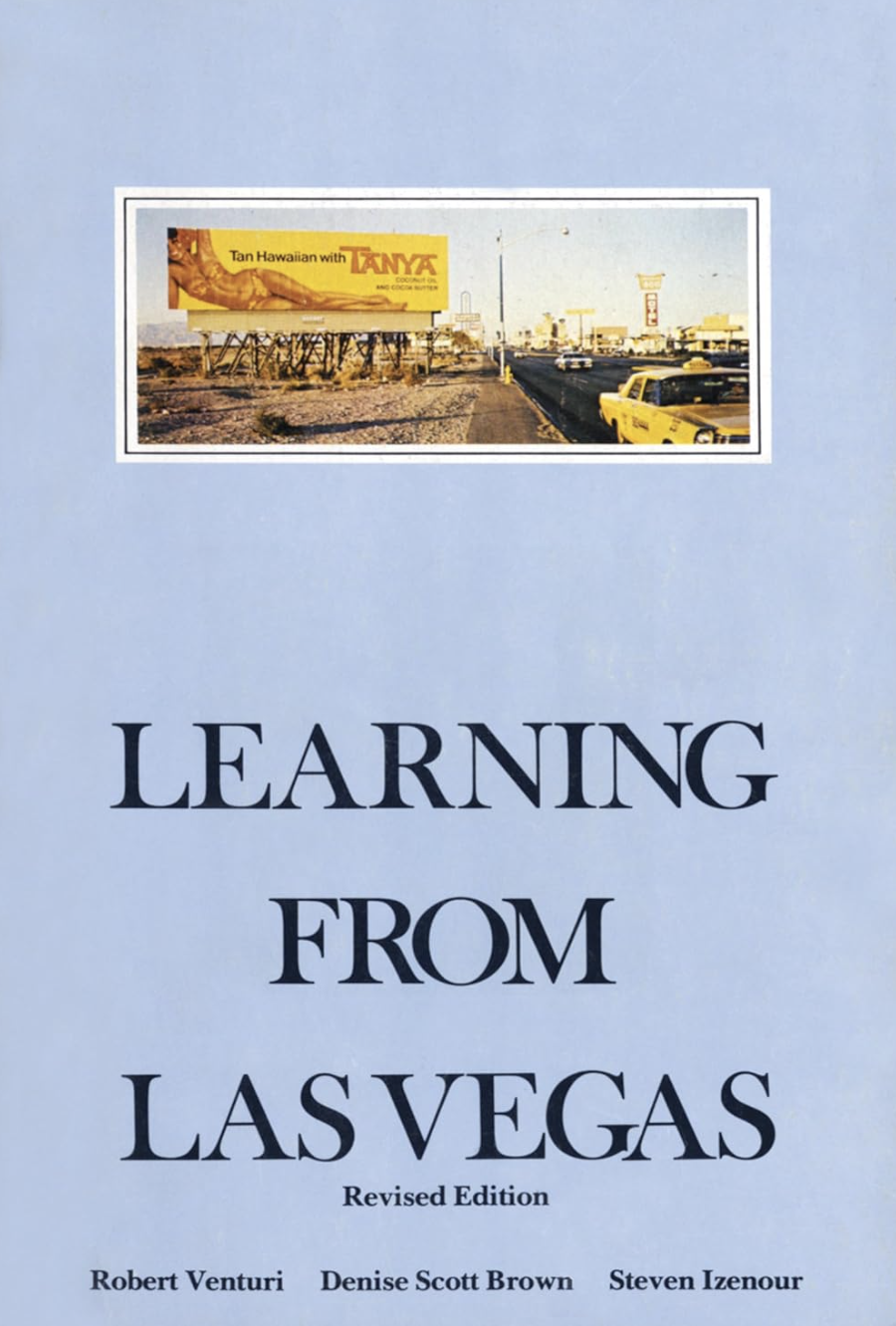
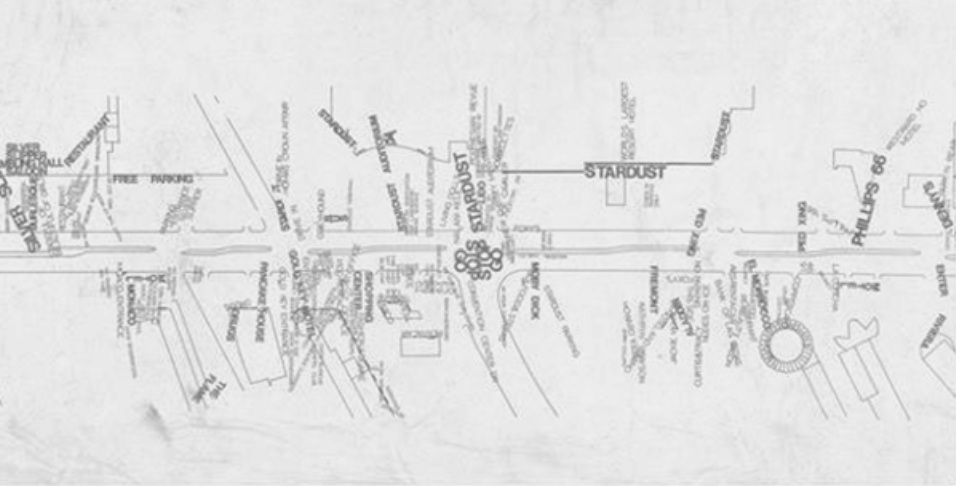
Venturi, Scott Brown, and Izenour’s “Learning from Las Vegas” (MIT Press, 1972) provides equally vital insights. Their analysis of how built environments function as systems of signs and symbols illuminates how interventions in the landscape – whether commercial signs or public monuments – function as what they termed “billboards to meaning.” They showed me how physical spaces can be intentionally designed to convey particular messages.

John Hejduk’s “Mask of Medusa” (Rizzoli, 1985) offers another crucial perspective on how landscapes and structures carry meaning. Through his concept of “masques” – architectural characters between reality and imagination – Hejduk demonstrates how physical spaces can simultaneously embody stories, memories, and transformations. His work suggests that landscapes, like his architectural characters, are never simply physical entities but are constantly engaged in a theatrical performance of memory and meaning. This understanding of landscape as both a physical presence and narrative device helps explain how places can simultaneously preserve the past while remaining alive in the present.

Yet in “The Disposable Monument: Finding Truth in Transient Memory” (2024), I argued that traditional approaches to monumentality often control historical narratives rather than facilitate genuine remembrance. Like Hejduk’s masques, which resist fixed interpretation in favor of ongoing performance of meaning, monuments, and landscapes might better serve memory by acknowledging their role as actors in an ongoing narrative rather than fixed symbols of the past.

My work with transient monuments attempts to develop alternatives that align with both Schama’s understanding of fluid landscape meaning and Hejduk’s conception of architecture as temporal performance. By embracing impermanence, these monuments make visible what Schama shows happens naturally – the evolution of meaning over time. Just as Hejduk’s architectural characters perform different roles depending on their context, projects like the soil collection at the Legacy Museum in Montgomery or Jorge Otero-Pailos’s “Ethics of Dust” series demonstrate how ephemeral materials become powerful carriers of memory precisely because they acknowledge their own impermanence.

The recontextualization of monuments at Budapest’s Memento Park or Belgium’s Africa Museum offers another strategy for working with meaning’s fluid nature. These spaces become what Hejduk might recognize as stages for his masques – places where meanings perform and transform through changing contexts rather than remaining fixed in stone.

While Executive Director of the Bryn Athyn Cathedral, I oversaw the Historic Bryn Athyn Cemetery. The site is a naturalistic, rural cemetery still in use by the active congregation. A careful approach to maintenance and restoration was required so that the grounds maintained an almost hidden quality.

This understanding of fluid meaning becomes particularly relevant when considering how landscapes change over time. The life cycles of trees and other landscape features mirror Hejduk’s interest in transformation and temporality – both experience growth, maturity, decline, and regeneration. Traditional preservation practice often calls for like-kind replacement when historic trees die, or landscape features deteriorate. This approach offers continuity and comfort, providing communities with tangible connections to their past. Many find deep meaning in seeing “the same” tree species growing where their ancestors walked.

However, these moments of landscape transition also present opportunities for deeper community engagement with place and meaning. Rather than viewing preservation choices as binary – either traditional replacement or contemporary reinterpretation – we can embrace multiple approaches that allow landscapes to carry both historical and emerging meanings. Like Hejduk’s masques, these spaces can perform multiple roles simultaneously.

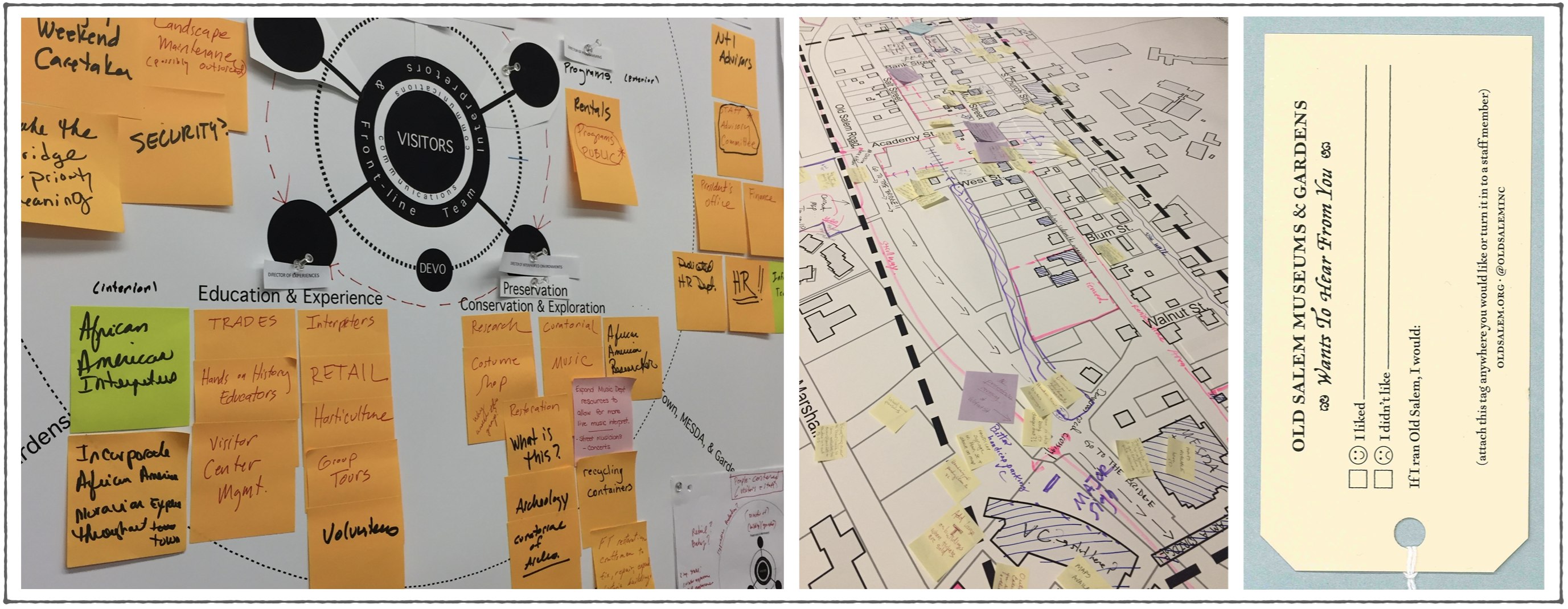
At the historic site of Old Salem Museums & Gardens and the Museum of Early Southern Decorative Arts, we facilitated re-considering the site, wayfinding, and innovative ways of connecting the site’s physical features with historical narratives. This re-evaluation included internal staff ideas and comments and outside organization stakeholders. The result was a new map, signage, and connective interpretive elements.

Community design charrettes around landscape changes can become powerful tools for collective memory-making. Alongside traditional preservation approaches, we can create space for temporary installations that help people process and reflect on landscape change. These “anti-monuments” or temporal landscape interventions might include artists working with fallen limbs to create temporary sculptures, community documentation projects capturing stories about dying trees, seasonal installations marking transitions between old and new plantings, or interactive elements inviting people to share their memories and hopes for the space. Each approach echoes Hejduk’s understanding of architecture as a form of storytelling, where physical forms become characters in an ongoing narrative of place.

Through practice, I’ve developed these core principles for working with evolving landscapes:

  1. Design commemorative spaces that can accommodate both permanent and temporary interventions
  2. Use ephemeral materials and installations to highlight the dynamic nature of landscape meaning
  3. Create opportunities for community engagement in interpretation and design
  4. Develop frameworks that acknowledge multiple, layered meanings
  5. Embrace change as an opportunity for renewed community connection with the place

This dual approach—honoring traditional preservation while creating space for temporal interpretation—reflects how landscapes function in our lives. Like Hejduk’s architectural characters, they are simultaneously physical and narrative, historic and contemporary, fixed and fluid, personal and communal. By embracing both permanent and temporary interventions, we allow communities to engage with landscapes as living, evolving spaces rather than just historical artifacts.

One of the dwelling sites of the Nat Turner Uprising, the historic structure has been left to decay as the forest grows up around it. These sites in Virginia speak to the complexity of meanings overlaid upon a landscape.

The convergence of Schama’s insights about landscape meaning, Venturi and Scott Brown’s ideas about architectural communication, Hejduk’s concepts of architectural performance, and contemporary approaches to transient monuments opens rich new directions for public history. When we acknowledge landscapes as both carriers of historical memory and performers of ongoing meaning-making, we create opportunities for more authentic and inclusive forms of preservation practice.

Our challenge as public historians extends beyond creating new forms of monuments to fundamentally rethinking our relationship with historical memory in public spaces. By embracing multiple landscape preservation and interpretation approaches, we can create spaces that honor continuity and change, allowing communities to engage more deeply with their shared environments. This approach moves us beyond traditional monumentality toward a more dynamic and honest form of public commemoration that recognizes landscapes as creations of the past and living elements of contemporary community life.

Transparent Boundaries

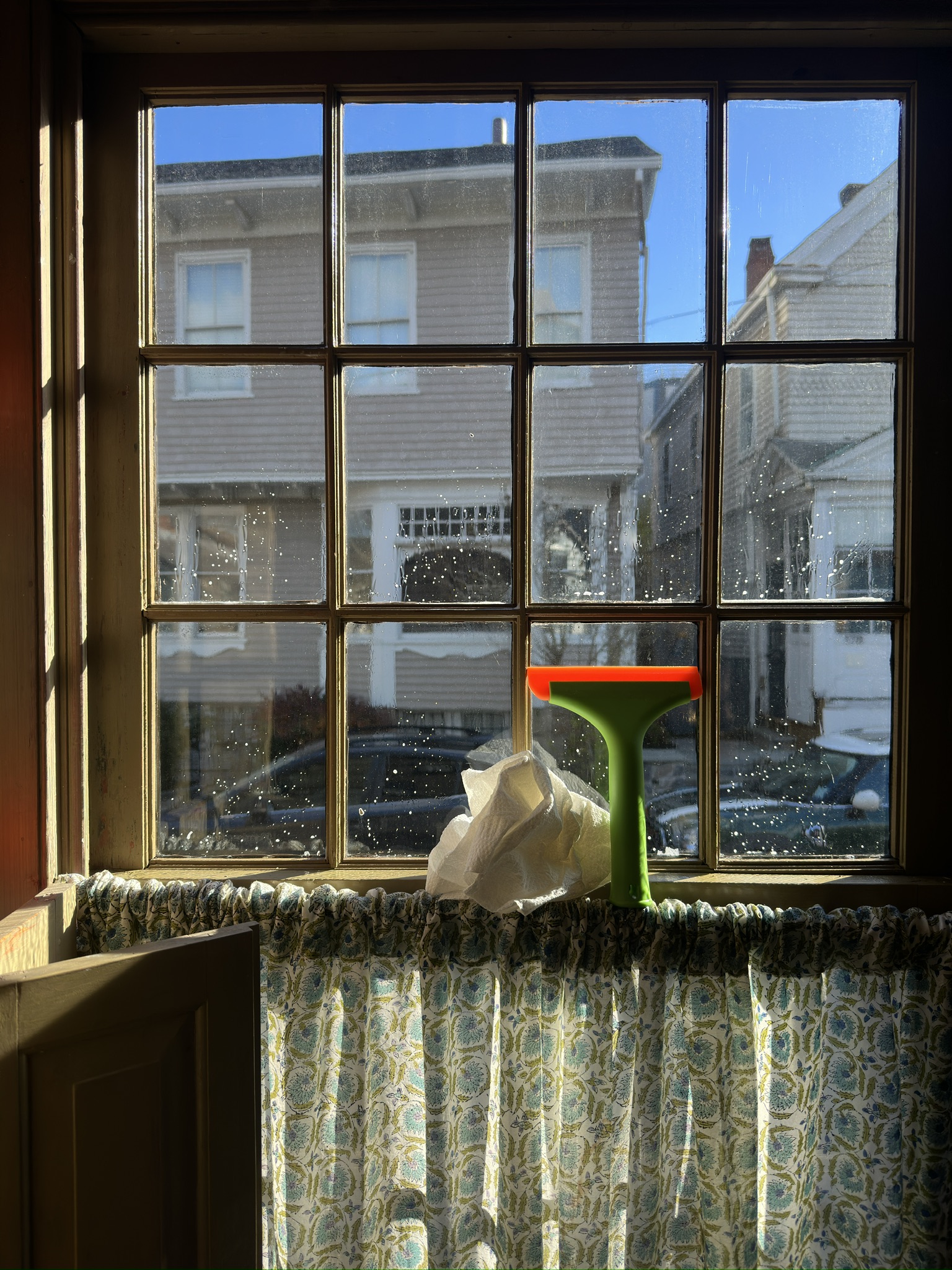
As I clean my windows in our 1777 colonial house in Newport, with the sun streaming through the glass (a rarity lately), I contemplate how keeping clean windows has been a constant thread throughout my life. In 1999, I wrote about my philosophy of old windows but never explored my compulsion to keep them pristine.

There’s something lodged in my memory – though perhaps it’s apocryphal – about Martha Stewart saying that everything else will be forgiven if you have clean windows. Whether she actually said this or not, it has stuck with me like a personal commandment, shaping my domestic priorities in ways I’m only now beginning to understand.

Windows are the filter between two worlds: the public theater of the town and my private sanctuary, carefully curated in my living room. This intersection of public and private reminds me of Amsterdam, where the enormous windows rarely had drapes, offering glimpses into Dutch domestic life (though one wasn’t supposed to look!). Those windows always seemed to gleam with a cleanliness that felt deeply symbolic, as if transparency itself was a virtue.

Living in Newport, a village during the winter and as a city in the summer, I’ve realized that these windows make me both observer and observed. Passersby regularly comment on what they glimpse through my windows – the small lights twinkling above my café drapes, the rugs adorning my walls. It’s fascinating how these casual observers piece together stories from mere fragments of my interior life, like assembling a puzzle with most pieces missing. Sometimes their comments bring a warm smile to my face, a pleasant acknowledgment of shared community life. Other times, their observations feel like small invasions, tiny public and private boundary breaches that I’ve tried to maintain. The unpredictability of my own reactions puzzles me – why does one comment feel like a friendly neighborly connection while another strikes a discordant note of violation?

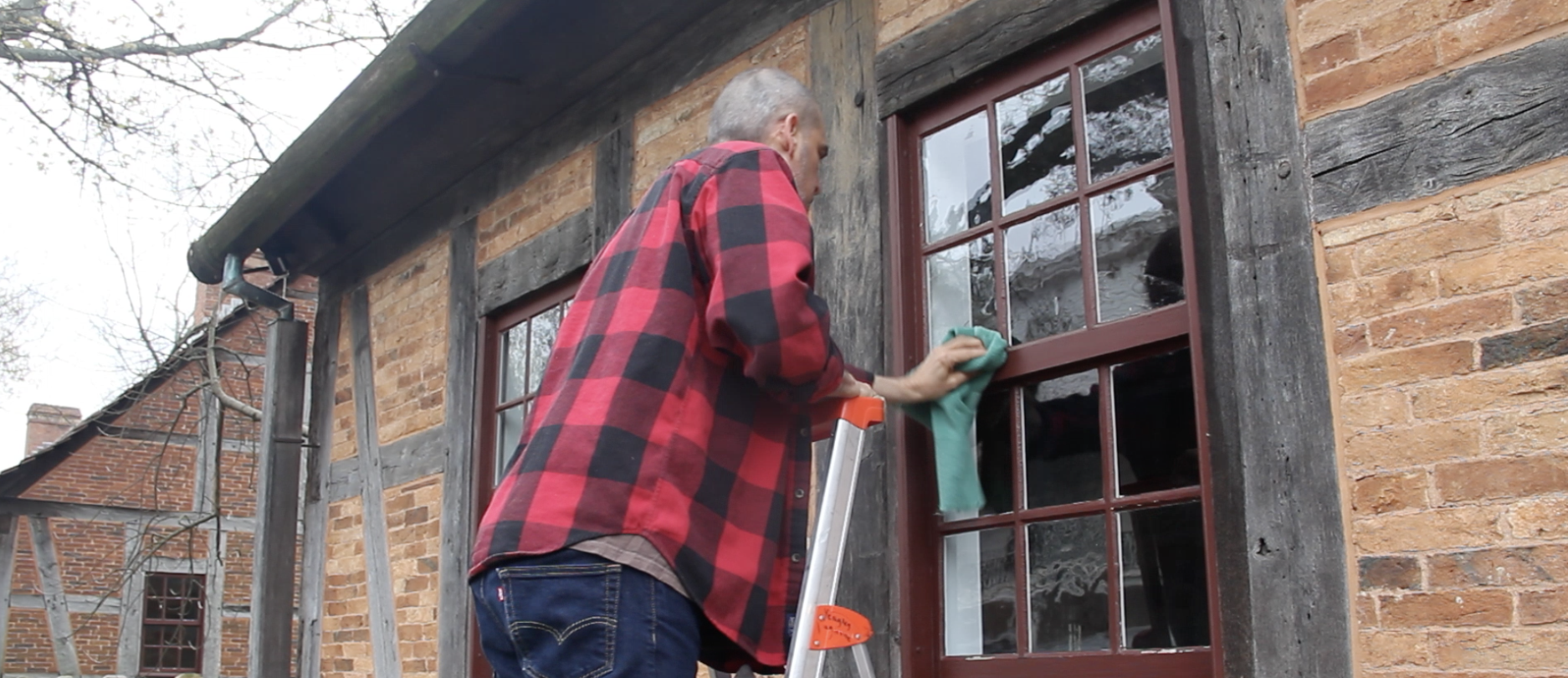
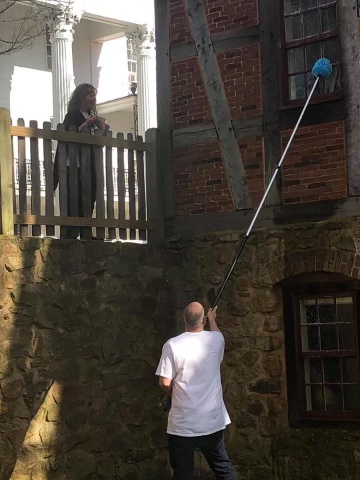
This devotion to clean windows has even become a currency of friendship. Somewhere in my iPhone photos, there’s evidence of me cleaning windows in Old Salem, North Carolina, at our former neighbors’ house. Karen and Bill had often admired how I kept our windows sparkling, so I simply appeared at their home one sunny day with my two-story window brush and cleaning supplies. They had given me standing permission – a blanket “OK” to clean their windows whenever the mood struck. It became a gesture of friendship, a way to share this peculiar passion of mine. The memory of Karen’s delight at seeing her windows gleam makes me smile, even as I miss having them as neighbors. Sometimes, the simplest acts of care – like cleaning a friend’s windows – forge the strongest community bonds.

This communal aspect of window cleaning reached its zenith during my time as Executive Director of the Historic House Trust of New York City. I initiated what we affectionately called the “window cleaning brigade” – a roving band of preservationists armed with squeegees and enthusiasm. We would travel to all 23 of our historic house sites, transforming what could have been a solitary maintenance task into a social event. Those memories remain crystal clear: the laughter, the shared sense of purpose, the way the houses seemed to come alive as the light streamed through freshly cleaned panes, as if we were awakening these historic spaces with each swipe of our cloths.

Yet this symbolism doesn’t quite hold up to real-life – maintaining that crystalline barrier between inside and out demands either considerable time or money. Sometimes I wonder if I’m enslaved to a mythology about what clean windows represent. Is it about clarity? Control? The presentation of perfection to the outside world? I’m keenly aware that my window-cleaning fixation is my own peculiar obsession – not a standard by which I measure others. When I visit friends’ homes, I never scrutinize their windows or silently judge the smudges or streaks. This compulsion is mine alone, a personal ritual that brings me satisfaction but isn’t everyone’s obligation or priority.

The fact that I will clean my windows before I mop my floors speaks to some deeper priority system. Perhaps it’s because windows are our eyes to the world, and keeping them clean is about maintaining clarity of vision, both literally and metaphorically. In this old Newport house, with its centuries of history, maybe I’m participating in a tradition older than I am – this ritual of keeping the boundary between private and public life clear.

Each swipe of the cloth becomes a meditation on how we let the world in. The sun streaming through newly cleaned glass illuminates not just my living room but also my friendships and care of historic spaces. Whether this compulsion comes from Martha Stewart’s alleged wisdom or some deeper personal symbolism, it has become an integral part of how I maintain my space and, by extension, myself.

The Private Surveyor

For years, a vintage postcard of Prague has held court on my studio table, a daily touchstone that speaks to something deeper than mere architecture. The Gothic spires and medieval towers rising against that moody sky aren’t just picturesque – they’ve fundamentally shaped how I see the world around me.

Through this image, I’ve understood that the most compelling aspects of our world rarely follow neat, orderly progressions. Like Prague’s jumbled skyline, with its dramatic towers and irregular rooflines pressing against each other, life resists smooth transitions. Public spaces don’t politely end at designated boundaries – they reach their tendrils deep into the urban fabric, creating complex intersections of physical space and social life.

My camera roll tells this story of urban fascination. While others might focus solely on the grand vistas and monumental spaces, I’ve always been drawn to capture those quieter moments where urban scales overlap. With its intricate network of alleys and side streets threading between grand civic spaces, Philadelphia exemplifies these special moments of urban poetry. Trinity Street might suddenly frame City Hall’s tower, or a narrow colonial alley might offer an unexpected glimpse of Rittenhouse Square. These photographs document the city’s ability to move us gradually between scales of intimacy and publicity, private and collective experience.

Some of my most treasured urban moments occur in those liminal spaces where intimate side streets suddenly open into grand public plazas or gardens. These transitions mirror our own psychological journey as we move between private and public spheres – that delicate negotiation we make as we emerge from a quiet alley onto the grand promenade of Commonwealth Avenue in Boston or the elm-lined alleys of Central Park. There’s something profound in how these spaces accommodate our need to shift between roles: one moment the quiet observer on a secluded bench, the next a participant in the grand theater of public life.

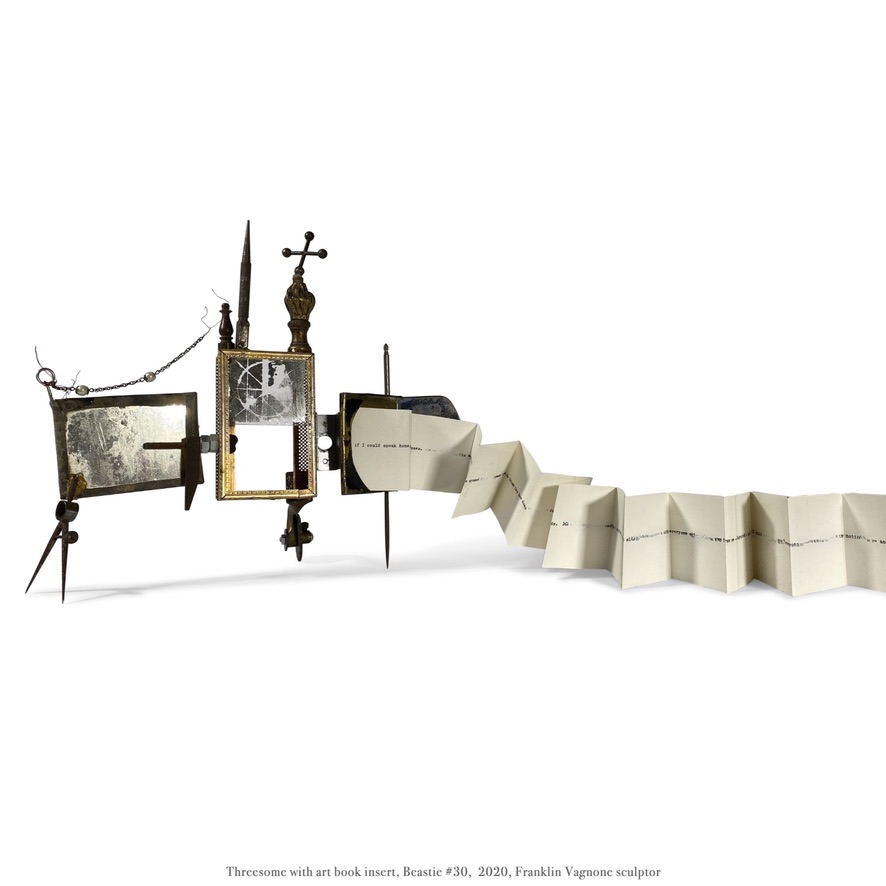
This understanding manifests directly in my sculptural work, particularly in “Threesome with art book insert, Beastie #30,” a portrait of my grandfather. The piece explores how personal identity exists within the larger public space framework – much like how we negotiate our place walking down these transitional urban pathways. The sculpture’s three interconnected frames create their own journey of revelation and concealment, echoing those magical moments when a narrow street unexpectedly reveals a grand plaza.

The sculpture’s mirrors, some weathered and clouded with age, others still reflecting light, speak to this complex relationship between public and private space. Like the reflective windows of Prague’s buildings, which simultaneously reveal and conceal, these mirrors hold multiple truths: they reflect the viewer, hold the memory of my grandfather’s portrait, and capture fragments of their surroundings. The chain that connects the frames suggests those essential transitions between intimate and public spaces, between personal memory and collective experience.

The piece balances precariously on its metal points, much like how we as individuals maintain our private equilibrium within the demanding theater of public life. Just as a city bench offers respite and a chance to shift from being viewed to becoming the viewer, the sculpture’s various angles and surfaces provide different ways of engaging with personal and public narrative. The ornate golden frame, distressed mirrors, and luminous blue glass segment create a kind of architectural psychology – each element representing different aspects of how we present ourselves in public while maintaining our private narratives.

This postcard has taught me that the relationship between public and private space is never simple or linear. In cities and personal narratives, meaning accrues in these nuanced, jagged, and complex transitions. The negotiation of place and fit – whether in an urban landscape or in our own sense of self – is endlessly fascinating. These are the moments I’ve spent decades photographing: the subtle shift of scale as an alley opens to a square, the frame of a colonial archway revealing a public garden beyond. Like Prague’s skyline and perfectly scaled urban transitions, my sculpture embraces these complexities – creating a space where personal memory and public history, individual identity, and collective experience can coexist in dynamic tension. I always imagined this beastie being my tour guide – lighting the way through a confusing path.

What began as a simple postcard has become a philosophical lens through which I explore these intricate relationships between private and public space, individual memory and collective experience. In my sculptural work, as in the beloved urban spaces that accommodate our need for both intimacy and grandeur, the most profound moments emerge at these intersections – where private contemplation meets public spectacle, where personal narrative meets architectural form, and where the individual story becomes part of the larger urban fabric.

The Disposable Monument: Finding Truth in Transient Memory

The act of remembering is never neutral. As I’ve watched different cultures and institutions create monuments to commemorate historical violence and genocide, I’ve found myself increasingly troubled by the underlying dynamics at play. There seems to be an unspoken assumption that memorialization somehow balances the scales of history – as if acknowledging past wrongs through bronze and stone could make them right.

In my observation, these permanent monuments often serve less as authentic vehicles of remembrance and more as tools for controlling historical narratives. When the same power structures that enacted historical violence control how that violence is remembered, we risk creating what feels to me like a form of collective gaslighting – where the performance of remembrance becomes more critical than genuine reconciliation or change.

As I’ve contemplated these monuments and memorials, I’ve become increasingly aware of how power shapes what we remember and how we remember it. The official commemoration seems to channel memory through specific cultural filters, often overwhelming and replacing the lived experiences of affected communities. When those who hold power get to determine the “official” version of history through their monuments, what voices are we losing? What memories are being overwritten?

Across Europe, I’ve encountered powerful alternatives to traditional memorialization that have shaped my thinking about these questions. In Budapest’s Memento Park (Szoborpark), the massive Socialist monuments of Hungary’s communist era stand in exile. Rather than destroying these ideologically charged statues after the fall of communism or allowing them to maintain their positions of authority throughout the city, they were gathered and deliberately displaced into what amounts to a statue graveyard on the outskirts of the city. This act of preservation through displacement creates a fascinating tension – the statues remain as historical artifacts but are stripped of their original power and purpose. By removing them from their pedestals of authority and gathering them in this almost satirical setting, the park transforms what were once symbols of oppression into objects of reflection and even subtle ridicule.

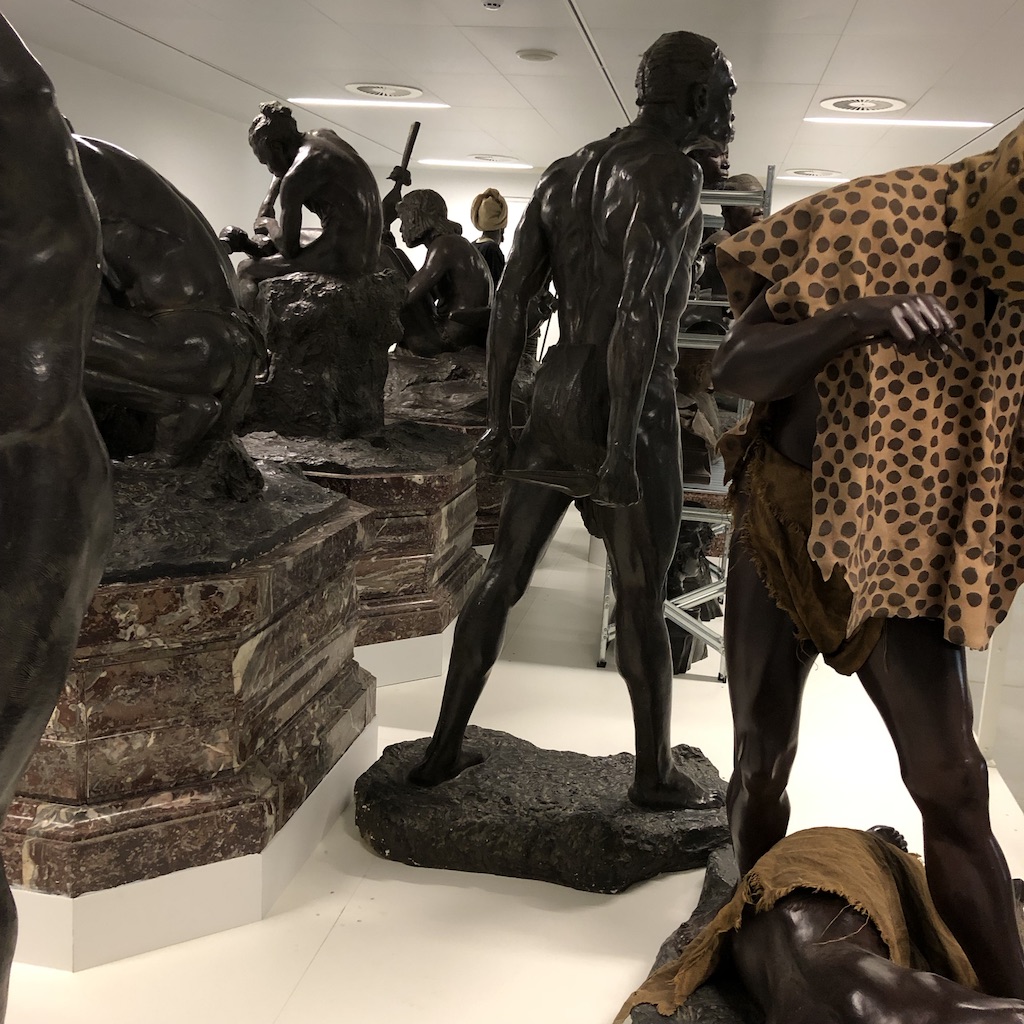
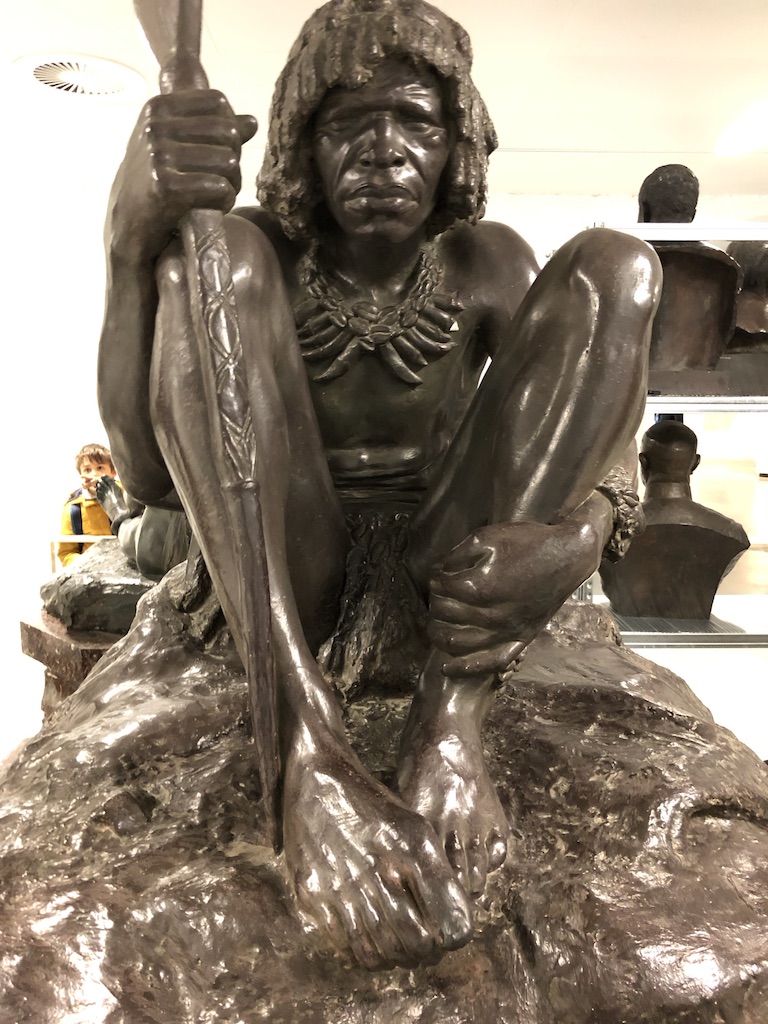
A more direct confrontation with problematic commemoration can be found at the Royal Museum for Central Africa (now AfricaMuseum) in Tervuren, Belgium. Here, the very same triumphant bronze sculptures and elaborate dioramas that once celebrated Belgium’s colonial “civilizing mission” in Congo now serve as damning evidence of colonial violence and racist ideology. Rather than removing these troubling artifacts, the museum has reframed them, surrounding them with new interpretative materials that expose their original propagandistic intent. The infamous gilded statue showing a Belgian “bringing civilization” to a Congolese child remains but now exists as a specimen of colonial arrogance rather than an object of admiration. This approach creates a powerful cognitive dissonance – forcing visitors to simultaneously see both the intended message of these monuments and their proper historical significance as tools of oppression.

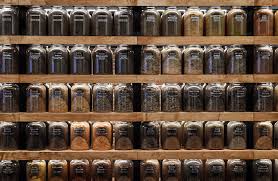
In America, the Legacy Museum and National Memorial for Peace and Justice in Montgomery, Alabama, offers perhaps the most moving example of how humble materials can carry immense memorial weight. Their soil collection project uses nothing more valuable than earth gathered from lynching sites across America, preserved in glass jars. Each jar contains perhaps the most common and overlooked of materials, yet this soil holds within it the last physical connection to these acts of violence and their victims. Named, dated, and carefully preserved, these jars of earth become powerful transmitters of memory, their very ordinariness making them all the more affecting. The power lies not in the permanence or grandeur of the material but in its direct connection to the event being remembered. These jars of soil also speak to the impermanence of memory – the soil can be scattered, mixed, and transformed – yet paradoxically, this impermanence makes them more truthful as carriers of historical memory than imposing bronze or marble monuments.

The artist Jorge Otero-Pailos’s “Ethics of Dust” series offers another compelling approach to what we might call anti-honorific memorialization. By carefully removing centuries of accumulated pollution and grime from historical buildings and preserving these extracted layers as independent artifacts, he creates what amounts to negative impressions of history – literal shadows of time’s passage. These delicate latex sheets of preserved dust and debris tell stories not of grand historical moments or influential figures but of daily life, industrial development, and environmental change. Like the soil collections in Montgomery, these dust extractions elevate the overlooked and seemingly worthless into powerful carriers of memory. They suggest that perhaps the true story of a place lives not in its carefully maintained facades but in the accumulated grime of everyday existence – the residue of countless forgotten moments and anonymous lives. This approach inverts traditional monumentality: rather than adding something grand and permanent to a space, it preserves what time itself has deposited, making visible the usually invisible processes of decay and transformation.

These various approaches to memorial-making – from the displaced monuments of Memento Park to the recontextualized colonial artifacts in Belgium, from the profound simplicity of collected soil in Montgomery to the preserved dust of everyday life – have profoundly influenced my artistic practice. Rather than contributing to the tradition of permanent monuments, I’ve created what I call “transient monuments” – works that deliberately embrace their own impermanence. Using detritus and disposable materials as my medium, much like the humble soil of Montgomery or Otero-Pailos’s extracted histories, I aim to create memorials that can shift, deteriorate, and transform, mirroring how our understanding of history evolves.

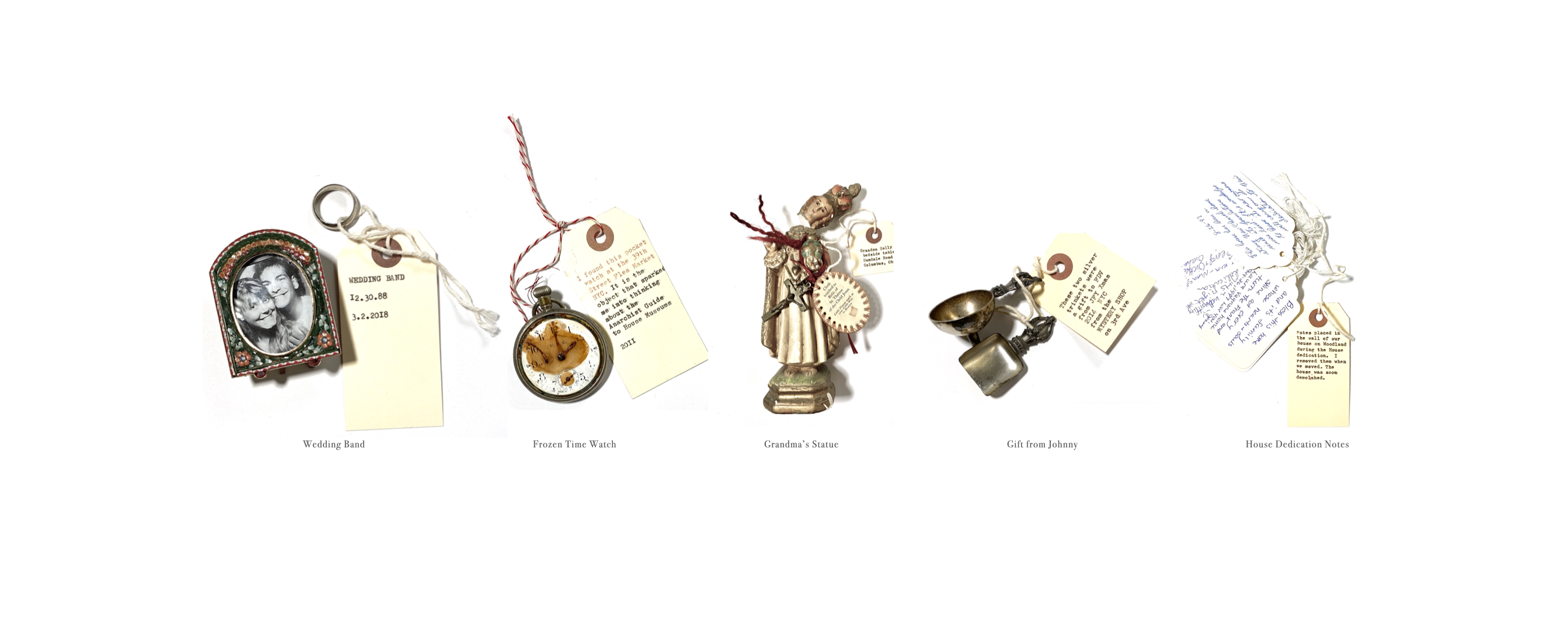
My “Life Museum” project emerged from this thinking about constructing and reconstructing memory. Instead of presenting a fixed narrative, these installations allow for constant rearrangement and reinterpretation. How elements can be reconfigured mirrors how our understanding of historical figures and events evolves. By using found objects and society’s cast-offs, I’m suggesting that our collective memory is built from what we choose to remember and what we’ve decided to forget or discard.

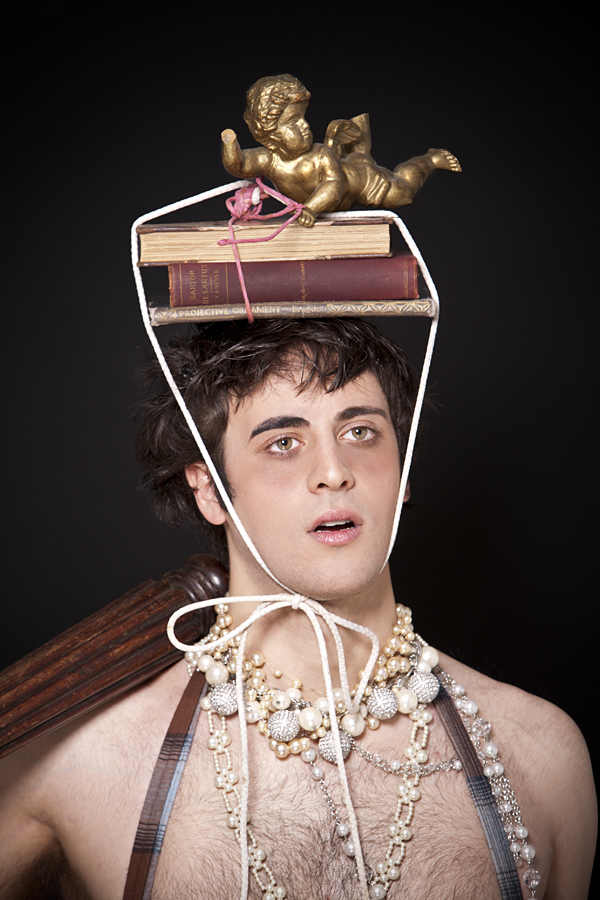
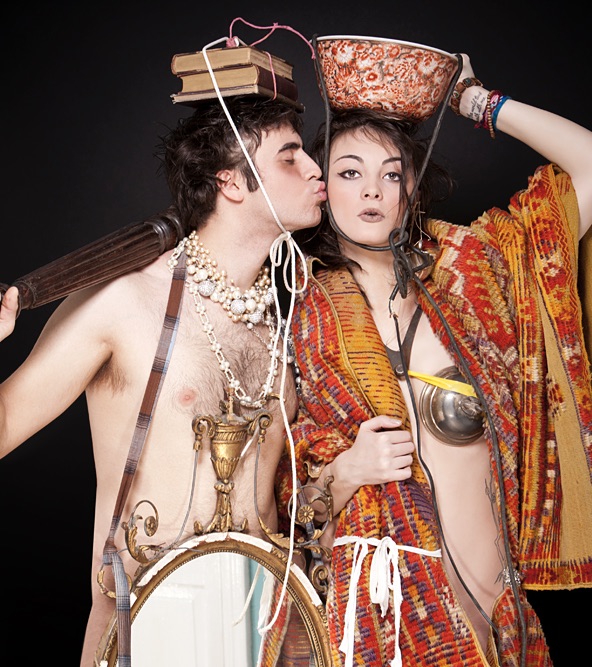
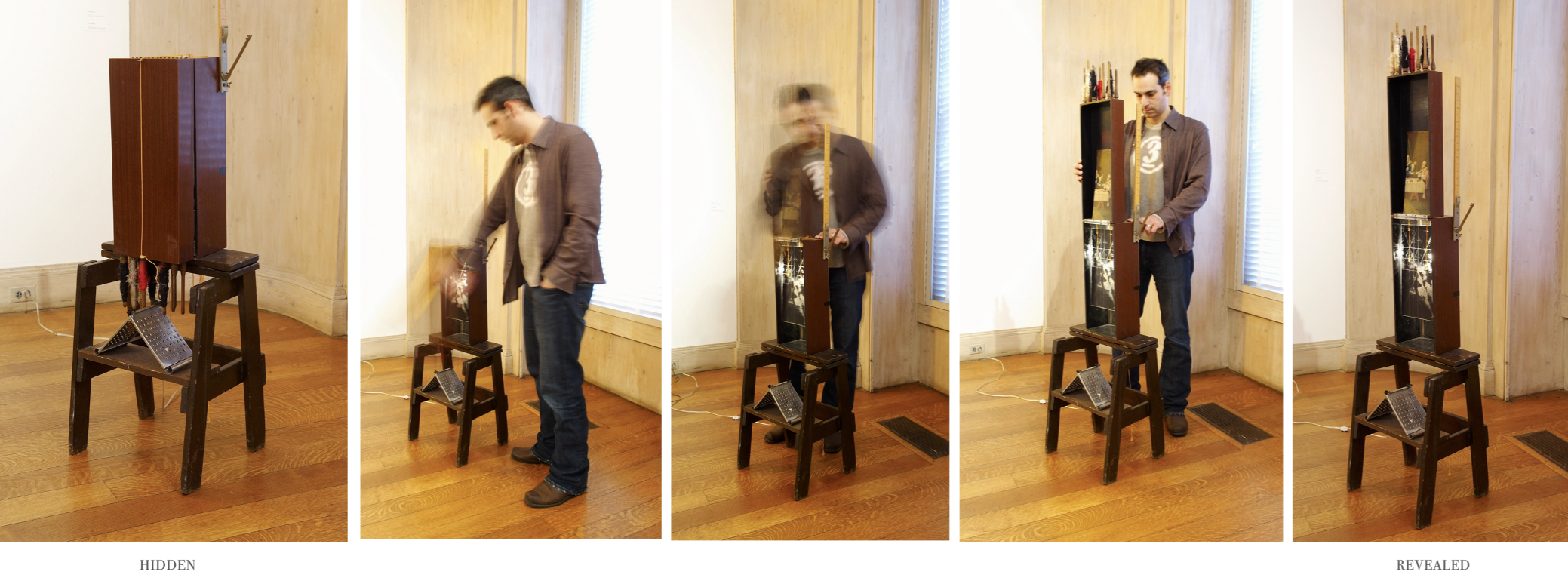
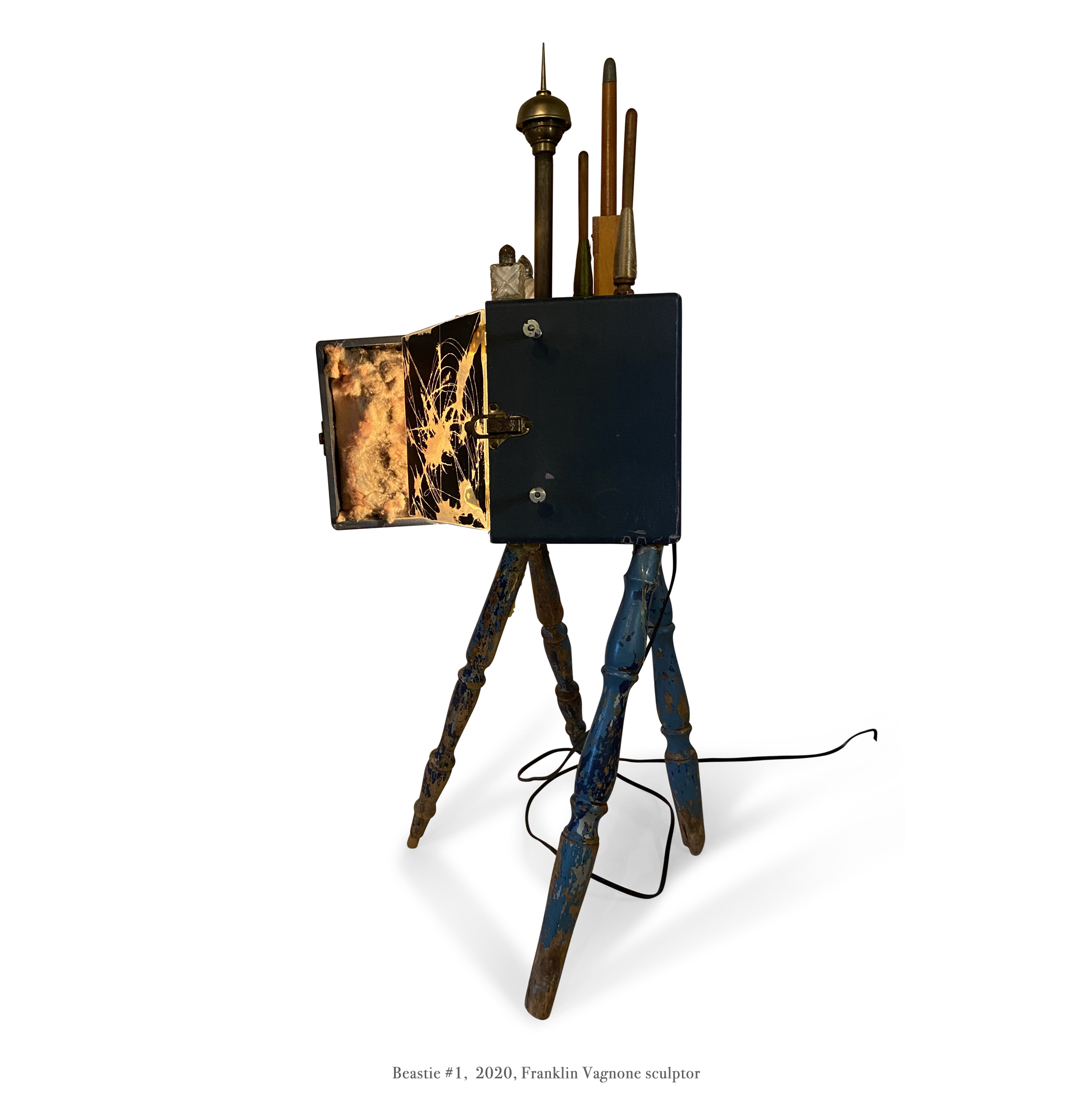
In my transient, kinetic monument projects, like the ones pictured here, I explore how revealing and concealing can become part of the memorial experience. The piece consists of a simple wooden cabinet mounted on a utilitarian stepladder – both found objects that carry their own histories of use and discard. Inside, fragments of domestic life are glimpsed through an intentionally restricted viewing experience, forcing the viewer to physically engage with the piece to access its contents. This interaction becomes a metaphor for how we engage with memory – partial, fragmentary, requiring effort and involvement. The motion of discovering what lies within mirrors our own process of uncovering historical truths, while the humble materials – the worn wood, the everyday objects, the makeshift display – resist the monumentality typically associated with memorial-making. Like the soil collections in Montgomery or Otero-Pailos’s preserved dust, these pieces elevate the overlooked and ordinary into memory carriers. But they go further by making remembering itself a physical, time-based experience. The viewer becomes a witness and participant, their movement and engagement essential to the piece’s meaning. This approach suggests that memory isn’t something to be passively received from an imposing monument but rather something we must actively work to uncover and understand.

Through this work, I’m not just questioning traditional forms of memorialization – I’m trying to imagine new ways of engaging with our collective past. Perhaps accurate remembrance isn’t about creating permanent markers that resist time and change but embracing the inherently transient nature of memory and understanding. By acknowledging this impermanence in the physical form of our memorials, we might come closer to honest engagement with history.

The challenge isn’t just about creating new forms of memorials but about fundamentally rethinking our relationship with historical memory. Through Public History-informed sculptural work, I’m exploring the possibility that meaningful remembrance requires us to embrace uncertainty and change rather than trying to fix memory permanently in place. In this way, the physical transformation of these pieces becomes a metaphor for the transformation of understanding itself – always in flux, always open to reinterpretation, always alive with the possibility of new meaning.

Performative Authenticity

Recently, while attending a drag brunch, I was struck by an unexpected parallel between the hyper-feminine (or masculine) presentation of drag performance and the carefully curated aesthetics of American historical landmarks. I realized that both practices engage in cultural amplification that transcends mere imitation to create something more theatrical and pointed than their original inspiration. This observation led me to explore the fascinating intersections between drag performance and historic preservation, particularly in how both practices navigate the complex relationship between authenticity and artifice.

Photos: left – by Freepik; Right – by Hunger Magazine (Jordon Rossi Photographer)

Theoretical Framework

The theoretical underpinnings of this comparison find support in several vital scholarly works. Judith Butler’s groundbreaking work on gender performativity provides a framework for understanding how drag performance creates what she terms a “hyperreal” version of femininity (or masculinity). As Jean Baudrillard might suggest, this hyperreality represents not just an imitation but a new form of reality that comments on and transcends its original reference points. Similarly, historian Michael Wallace’s concept of “memory palaces” helps us understand how preserved historical sites function as idealized versions of the past that often reveal more about contemporary cultural values than historical reality.

David Lowenthal’s influential work “The Past is a Foreign Country” (1985) provides crucial insight into how heritage sites differ from pure historical preservation. Lowenthal argues that heritage presents a simplified, romanticized version of history that serves contemporary cultural needs – a framework that perfectly parallels how drag performance approaches gender presentation.

Performance and Preservation

The connection first became apparent when considering how drag queens/kings, with their elaborate wigs, padded silhouettes, and dramatic makeup, create an intentionally exaggerated version of femininity/masculinity that both celebrates and comments on gender performance. This heightened presentation resembles how historical sites, particularly those restored during the Colonial Revival period (1870s-1940s), present an idealized version of the past. The perfectly maintained boxwood hedges, pristine facades, and meticulously curated interiors of these sites represent not historical accuracy but what I call “performative authenticity” – a deliberately stylized interpretation that serves contemporary cultural needs.

Consider Mount Vernon, George Washington’s estate. The mansion we see today exists in a curious space between historical fact and cultural performance. While its architectural features and paint colors have been researched with academic rigor, the final presentation achieves perfection that would have been impossible in Washington’s time. The famous cupola, though original, gleams with a precision that speaks more to our contemporary desires for historical clarity than to 18th-century reality. This approach parallels how drag performers might reference iconic feminine figures – not to create exact replications but to capture and amplify their essence using modern techniques and materials.

Selective Authenticity and Cultural Performance

The concept of “selective authenticity” proves crucial in both contexts. Historical houses often present a carefully curated mix of periods, perhaps featuring an immaculately preserved 18th-century parlor alongside a subtly modernized kitchen. This selective approach to preservation aligns with what historian Dell Upton describes in “Architecture in the United States” (1998) as the “invented past” – a construction that serves present needs while maintaining historical authority.

Similarly, drag performers might combine historically accurate vintage gowns with contemporary makeup techniques or modern music. Neither practice aims for pure authenticity; instead, both seek to create compelling narratives that speak to contemporary audiences while honoring their historical influences. Susan Sontag’s foundational analysis of camp in “Notes on Camp” (1964) provides valuable insight here, as both practices embrace what she describes as the love of the exaggerated, the importance of the seemingly trivial, and of things-being-what-they-are-not.

Spectacle and PerformanceInnovation Within Tradition

The element of spectacle unites these seemingly disparate practices. Just as drag shows feature dramatic reveals and transformations, historical sites employ theatrical techniques in their presentations. Costumed interpreters at living history museums engage in their own form of historical drag, adopting period-appropriate clothing and mannerisms that likely exceed historical reality in their polish and precision.

The gardens of Colonial Williamsburg provide a particularly apt example of this dynamic. Their geometric patterns and perfectly maintained parterres represent an intensified vision of colonial aesthetics that would have been impossible to keep in colonial times. Landscape historian Elizabeth Barlow Rogers notes in “Landscape Design: A Cultural and Architectural History” (2001) how these gardens represent an idealized version of colonial landscaping that never existed in such perfection.

This mirrors how contemporary drag artists might use traditional elements like corsetry and hoop skirts but enhance them with modern materials to create more dramatic silhouettes than were historically possible. Both practices demonstrate practices that appear historical but are modern interpretations, drawing selectively from various historical sources.

Technological Integration and Contemporary Adaptation

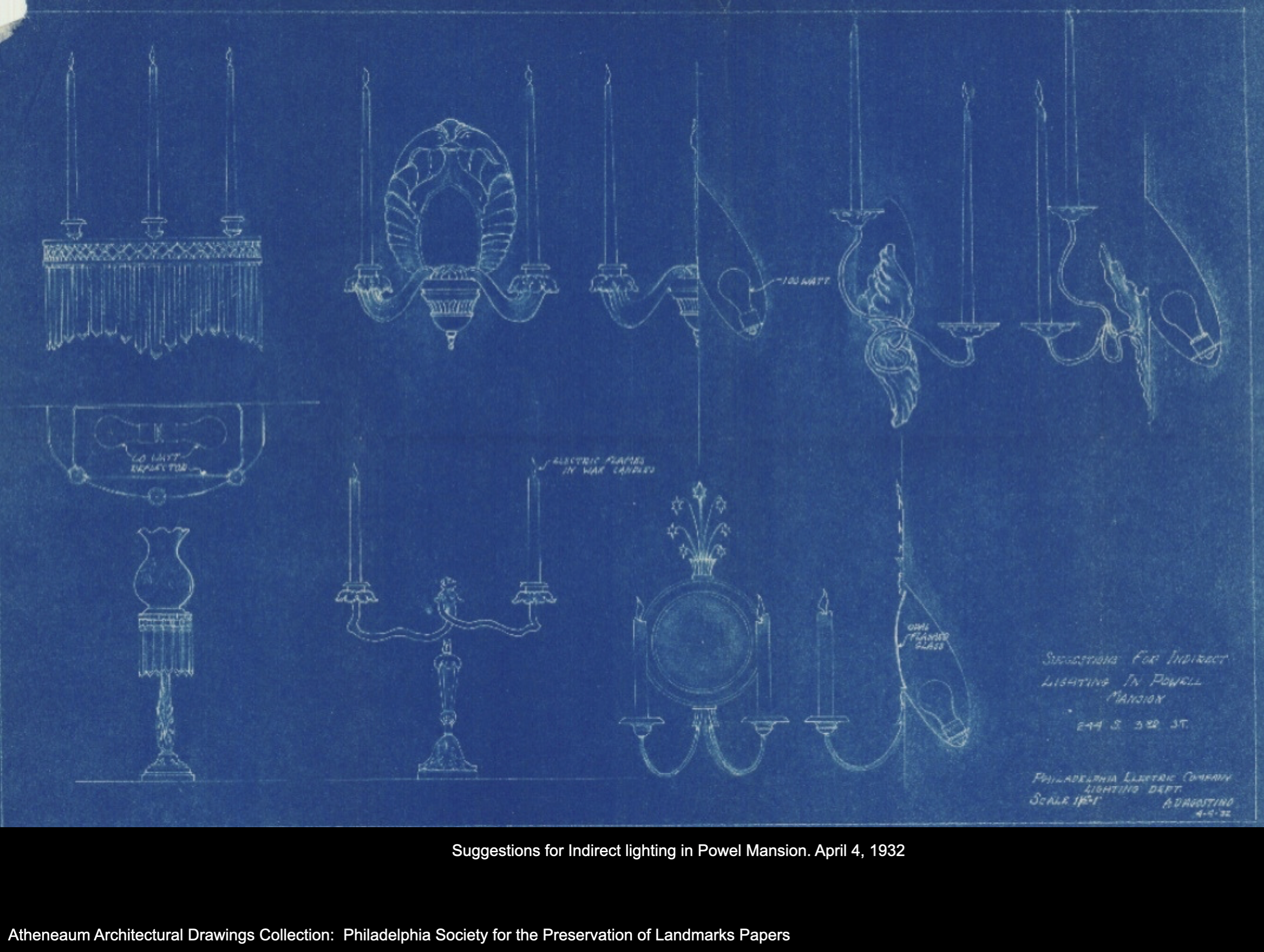
Both domains have evolved to incorporate modern technologies while maintaining their respective illusions. Historic houses often conceal sophisticated climate control systems behind period-appropriate grilles or, as in the Powel House example below – ways to provide indirect light so the visitor won’t see that the house has electricity. At the same time, drag performers utilize modern prosthetics and adhesives while maintaining the illusion of “natural” feminine forms. This technological integration reflects what architectural historian Dell Upton calls the “meditation between past and present” – a necessary compromise between historical authenticity and contemporary functionality.

Contemporary Manifestations and Controversies

The relationship between drag performance and historical preservation has moved beyond theoretical parallel into actual intersection in recent years, most notably through the emergence of Drag Queen/King Story Hours and similar programming at historic sites and museums. These events have sparked heated debates that extend beyond expected political fault lines into more profound questions about authenticity and representation. When drag performers – with their intentionally theatrical and exaggerated presentation – occupy spaces that we have culturally designated as repositories of “authentic” history, it creates a cognitive dissonance that forces us to confront uncomfortable truths about historical presentation.

The controversy surrounding these intersections stems from political objections and a deeper conceptual discomfort: these events inadvertently highlight the performative nature of historical interpretation itself. When we see a drag artist in full theatrical regalia reading stories in a meticulously restored Victorian parlor, the juxtaposition lays bare the equally constructed nature of both presentations. The pristine period rooms, the carefully scripted tours, the precise arrangements of artifacts – all are, in their way, as deliberately staged and performative as drag itself. This realization challenges our comfortable assumptions about historical authenticity. It forces us to acknowledge that our historic sites, like drag performances, engage in a theatrical presentation that amplifies and idealizes its subject matter.

This discomfort reveals a broader truth about cultural preservation: our desire for historical authenticity often conflicts with our equally strong desire for historical legibility and narrative coherence. Just as drag performances heighten and stylize gender presentation to make specific cultural statements, our historic sites heighten and stylize historical presentation to create compelling narratives about our past. The parallel manifestation of these practices in the same physical space creates a unique moment of cultural self-reflection that some find deeply unsettling precisely because it reveals too much about the constructed nature of gender and historical authenticity.

Cultural Significance and Future Implications

This observation reveals something significant about contemporary culture’s engagement with gender and history. Drag performance and historical preservation are forms of cultural expression that acknowledge the impossibility of pure authenticity while celebrating the power of intentional artifice. These practices don’t simply imitate their sources; they transform them into something new, creating spaces where preservation and innovation coexist in dynamic tension.

Through this lens, we might better understand how future historians will view our current attempts at historical preservation. As we study how the Colonial Revival movement interpreted the past, future scholars might analyze how our era understood and represented historical authenticity and gender performance, finding in our careful curations and deliberate exaggerations a reflection of our own cultural moment.

The parallel between drag performance and historical preservation – as arbitrary as it may seem on the surface – ultimately suggests a more profound truth about cultural representation: that authenticity itself is perhaps less critical than the meaningful narratives we create through these heightened interpretations. As both practices continue to evolve, they remind us that cultural preservation is not merely about maintaining the past but actively interpreting and reimagining it for contemporary audiences.