One Night Stand: A Modest Use of Ohio Clay

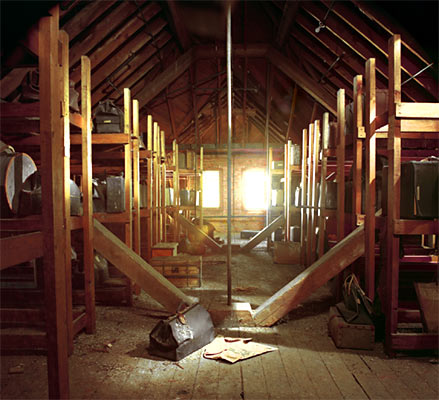
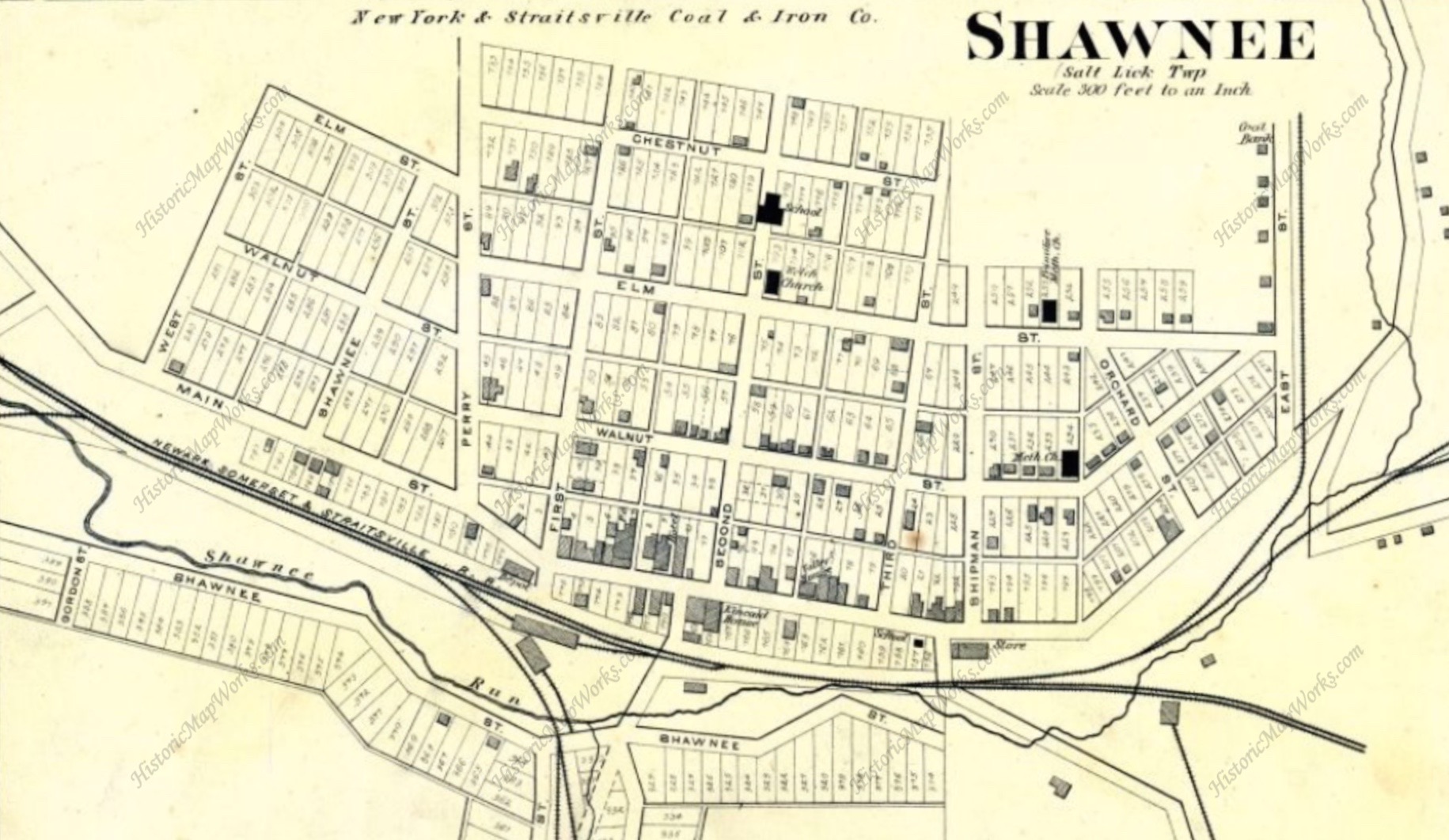
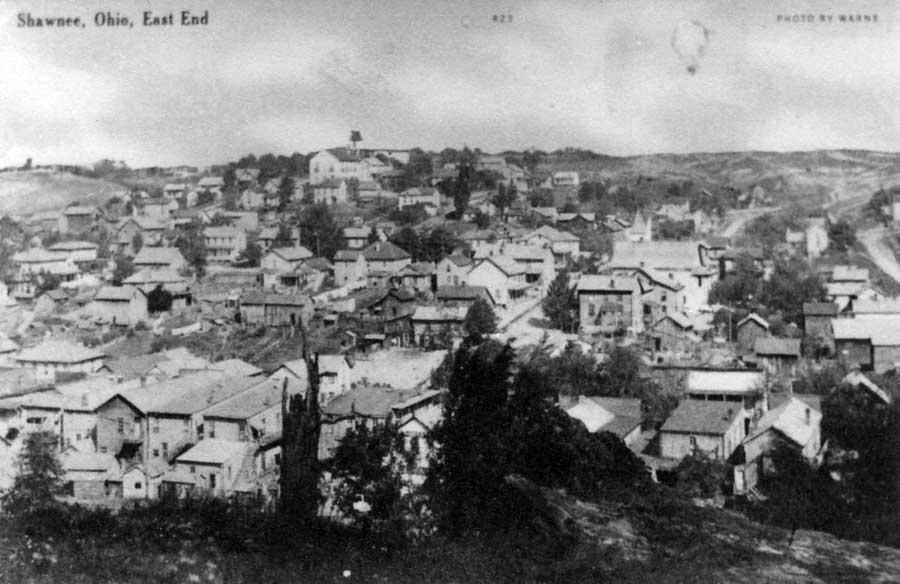
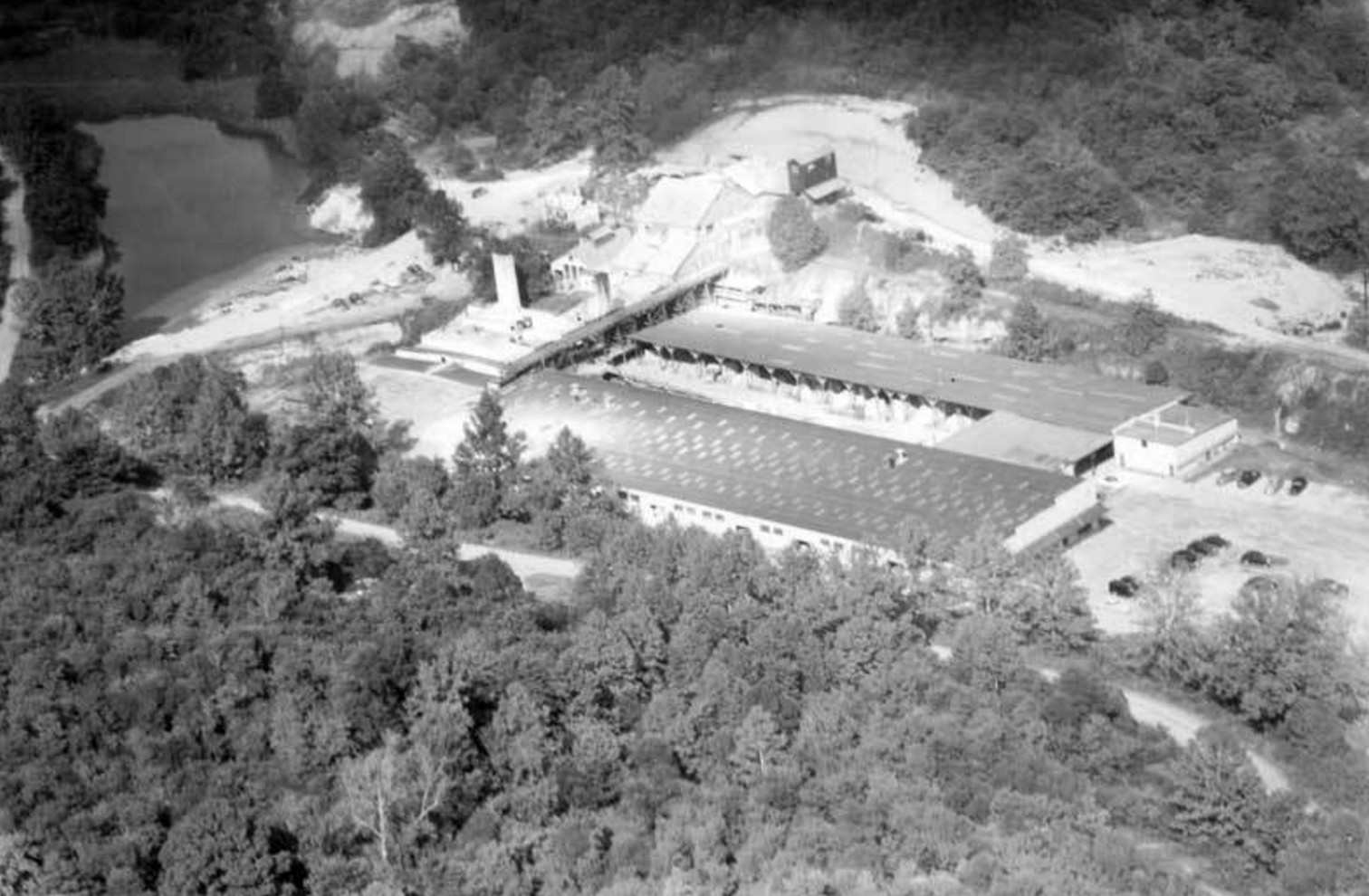
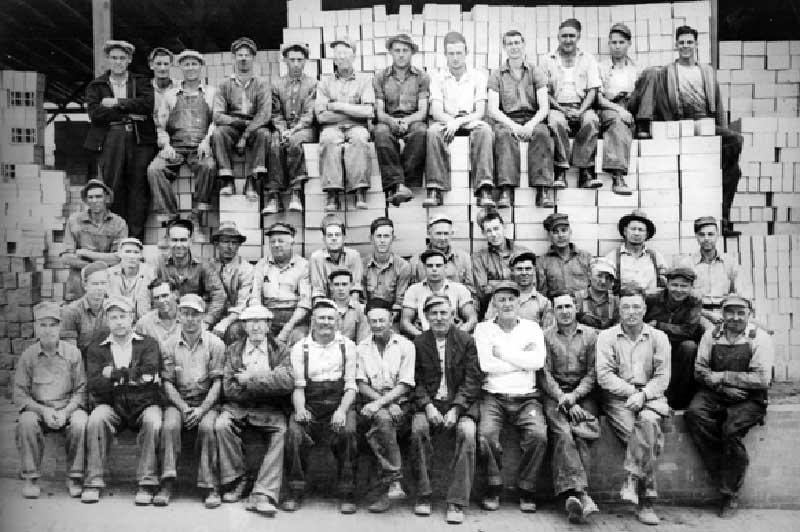
On August 14th, 1950, my great-grandfather John Guzzo, an unskilled brick maker at the Claycraft Brick Manufacturing Plant, was walking home from work, as he did every day for well over 40 years.  When my mom was visiting the small town of Shawnee, Ohio to spend time with her grandparents, she used to wait at the edge of the backyard right by the railroad tracks – knowing that her grandfather would soon be seen walking home on the tracks.  She would love to grab his black metal lunch box and carry it for him back into the house.  On this day, though, John didn’t arrive home.  He had a heart attack and died on the railroad tracks somewhere between the brick factory and his home. He was buried in the Shawnee Cemetery.
Screen Shot 2016-05-02 at 5.54.51 PM
LC-PH-77


My grandfather was born in 1883 in Sicily, immigrated from Palermo around 1902 and shows up in the US census of 1910 as a 27-year-old living with his immigrant wife in Shawnee, Ohio.  As was generally the case across America, new immigrants were seen with fear and thought to be untrustworthy.  Unfortunately for my grandfather, Sicilians were seen as the most untrustworthy – giving rise to the commonly cited quote: “Trust family first, relatives second, Sicilians third, and after that, forget it.”  Because of this distrust, my grandfather and his young family were forced to live outside of the town limits of Shawnee in an area labeled as “Italyville”.  This Italian ghetto contained 4 houses, all occupied by Italian immigrant families whose livelihood was tied to either the brick making factory or the coal companies.

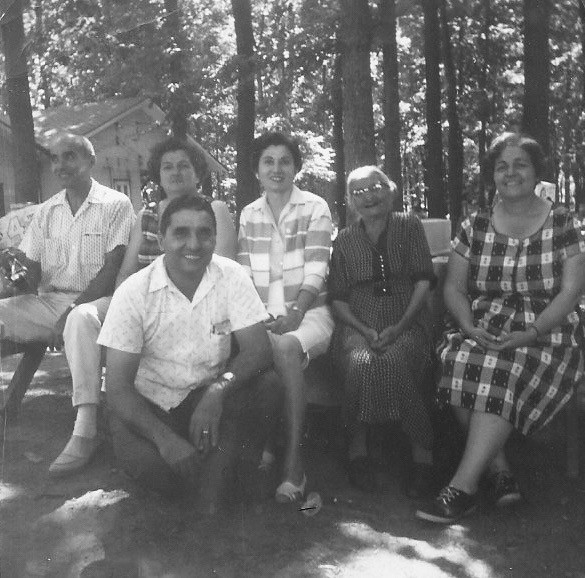
My great-grandmother, Mary Rose Guzzo, never learned to speak or write English, but she managed to raise 6 children and outlive her husband by almost 20 years. Both she and John were buried next to one another, some 4,865 miles away from where they were born.

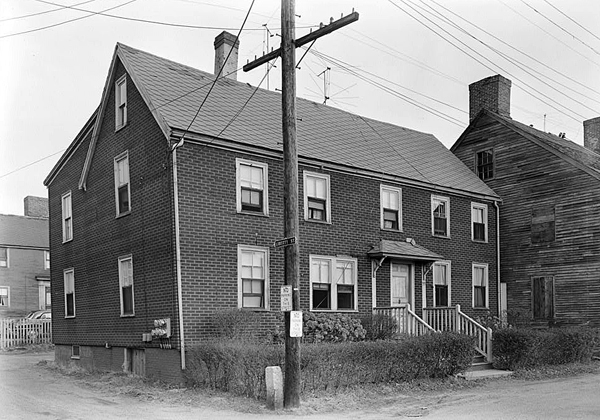
Screen Shot 2016-05-02 at 8.13.32 PMThe DeCarlo/Guzzo Family four-square house in Columbus, Ohio. After leaving Shawnee, Ohio, Sarah Guzzo moved to Columbus, went to college, married, bought this house, and had three children.
famil pics (1)

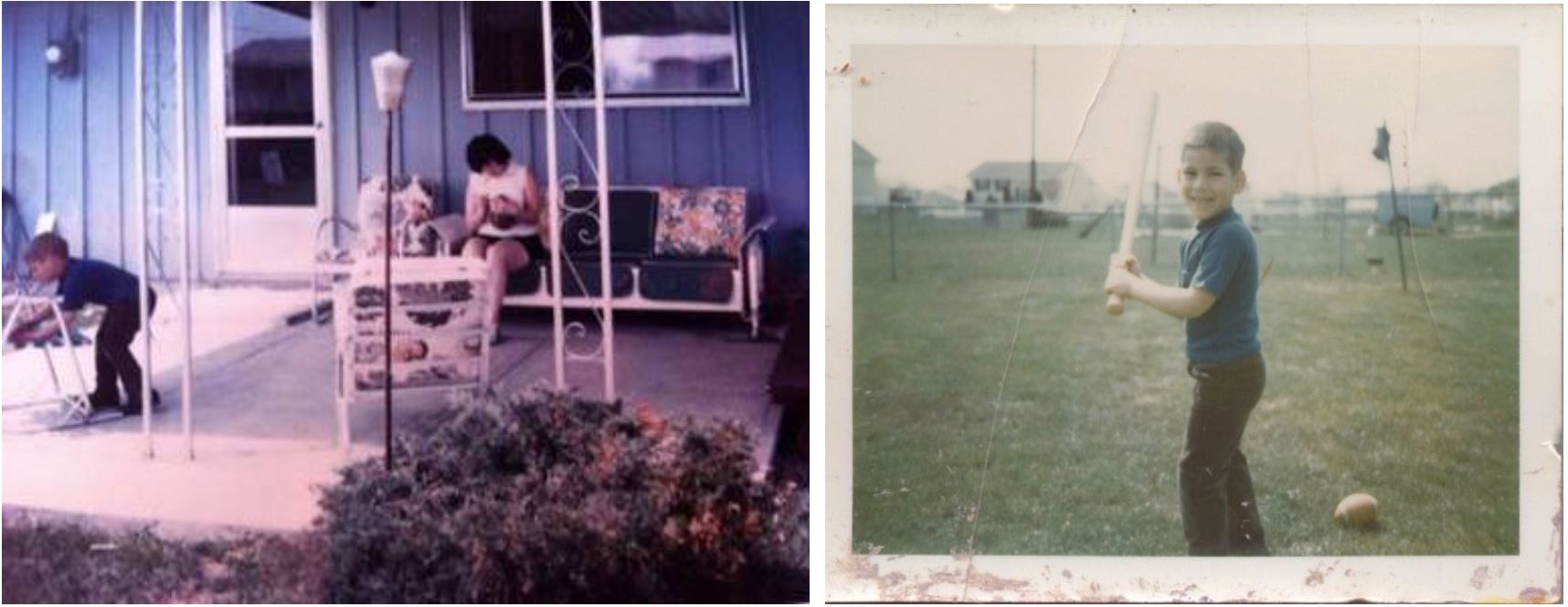
Neither John or Mary Rose Guzzo had an education, but all of their children went on to gain a solid education.  Although not achieving success at the level of the Glessner’s, my grandmother Sarah, after moving from Shawnee to Columbus, Ohio in 1930, went on to get her college degree, got married, become a professional accountant, bought a big four-square house, raised three children and lived a middle-class life.  My generation of descendants was the first to go on and gain a Master’s degree education.

The significance of this personal family story to my “one-night stand” in the Glessner House may seem tangential, but that is quite the point.  My Italian immigrant family had nothing to do with the Glessner House in Chicago, but most certainly represents the  backbone of those who brought Glessner his wealth.
Screen Shot 2016-05-04 at 10.52.05 AM
shawneebw5

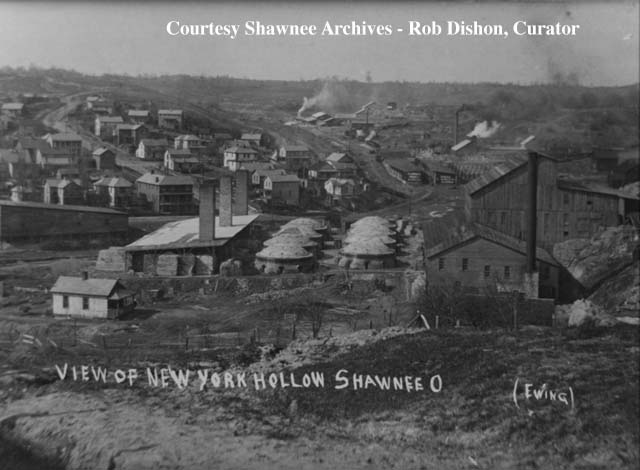
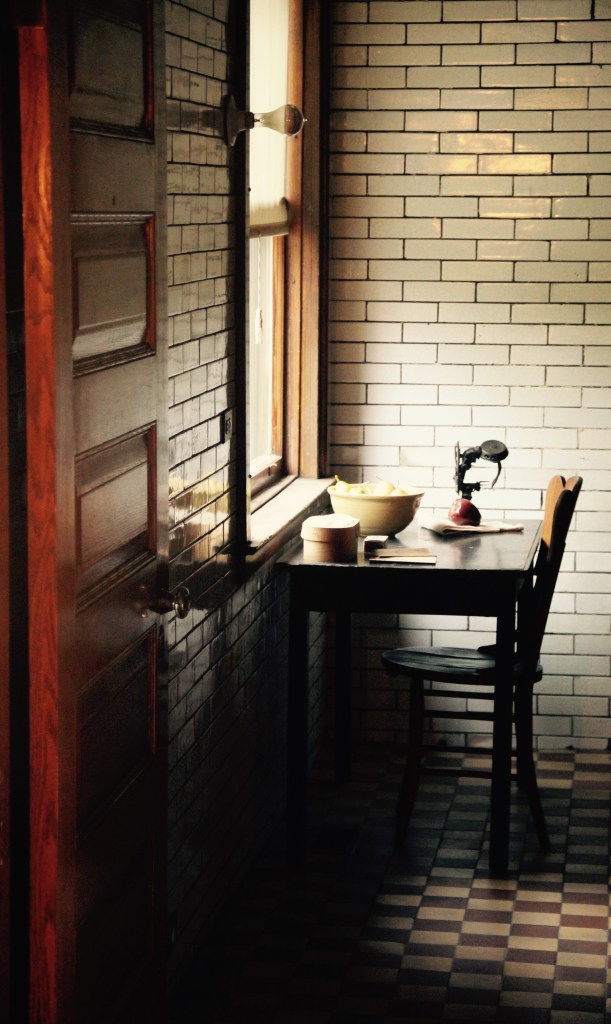
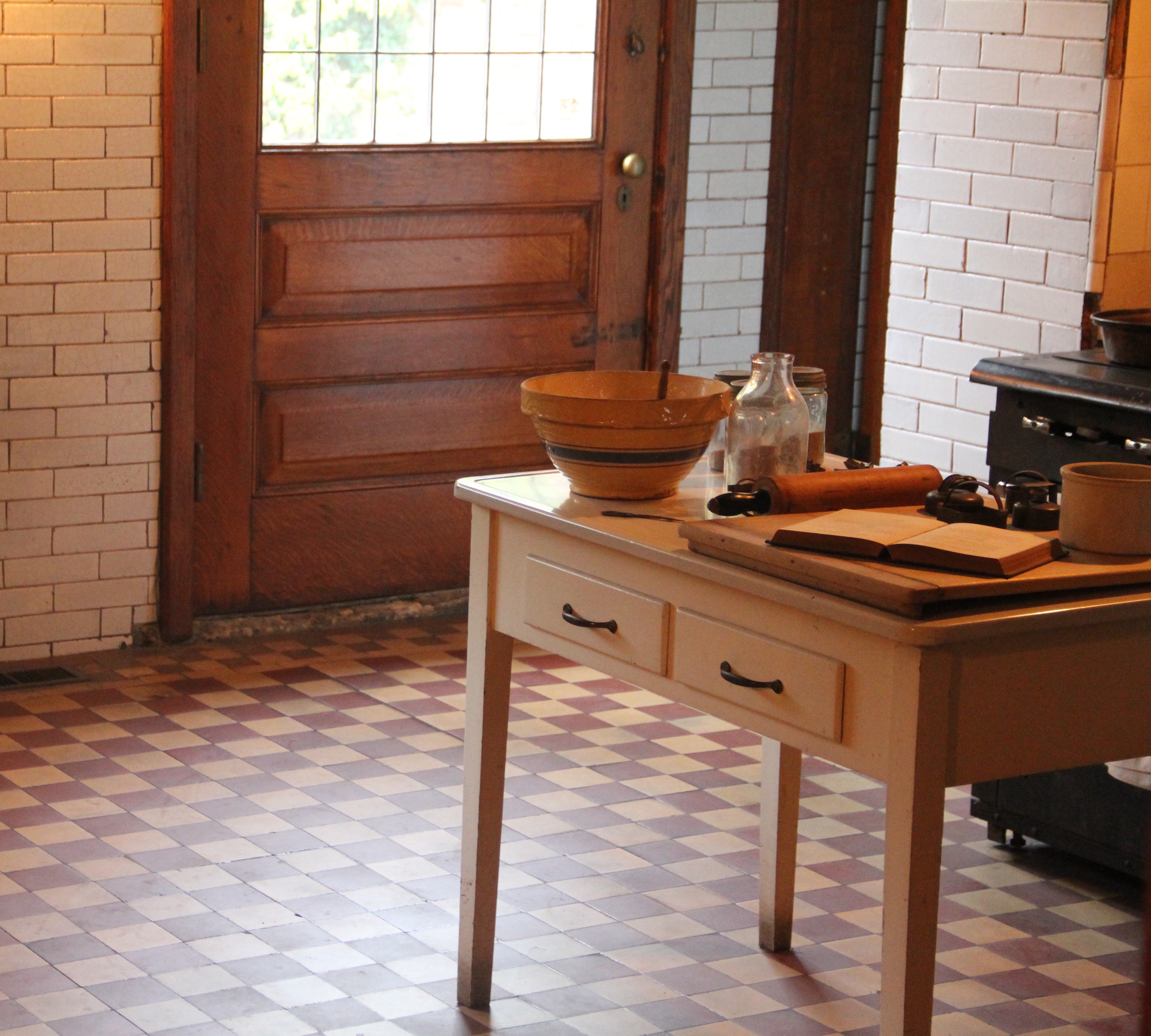
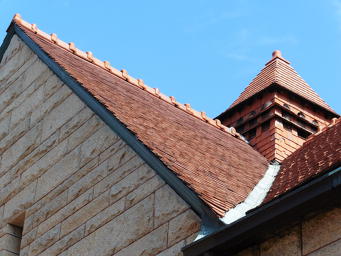
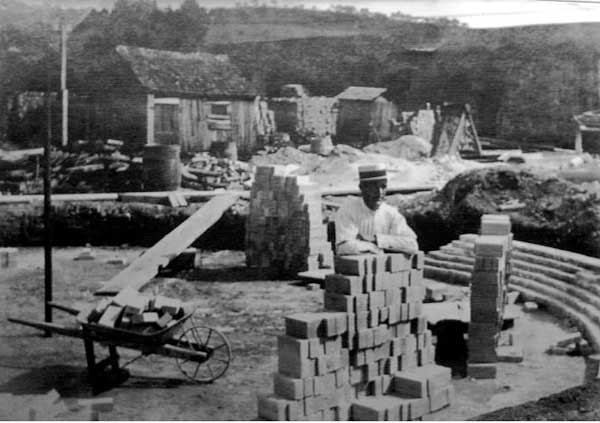
One other loose connection in my story is that my family’s American hometown,Shawnee, Ohio, is less than 30 miles away from Zanesville, Ohio – the birthplace of John Glessner.  The Claycraft brick plant in Shawnee (which my grandfather John Guzzo worked for decades), along with others in this region of Ohio, produced brick and terra cotta for buildings throughout the country, including New York City & Chicago. In fact, parts of the Glessner House (the kitchen/servants floor; and the roof tiles) were built out of products produced by manufacturers from this very region of Ohio. Perhaps it was a gesture from John Glessner in acknowledging his upbringing.
IMG_3375
4434af_1a75646611b34a5dbb322be1a45ffd90


My experience at the Glessner House was, in some ways, tied to my great-grandfather – the brick maker, and all of the other immigrants who produced what John Glessner’s farm equipment company manufactured.  As I walked around the house, I was strongly aware of all of the immigrant’s hands that produced most of the materials that came together to form this architectural gem.

To me, that is the story of my Glessner House “one-night stand” – how the vision of the Glessners combined with the hand of the immigrant produced the very foundations of our cities – and how this great-grandson of an unskilled, Italian immigrant, brick-maker from Sicily ended up spending the night at the Glessner House.  It is this story, within the very walls of the building, hiding behind the William Morris wallpaper and fabrics, under the priceless artworks hanging on the walls, and under the feet of the Glessners and their guests, that the Gilded Age of America exemplifies.
do-ph-991claycraft-workers
do-ph-737-new-straitsville-brick-plant-1905


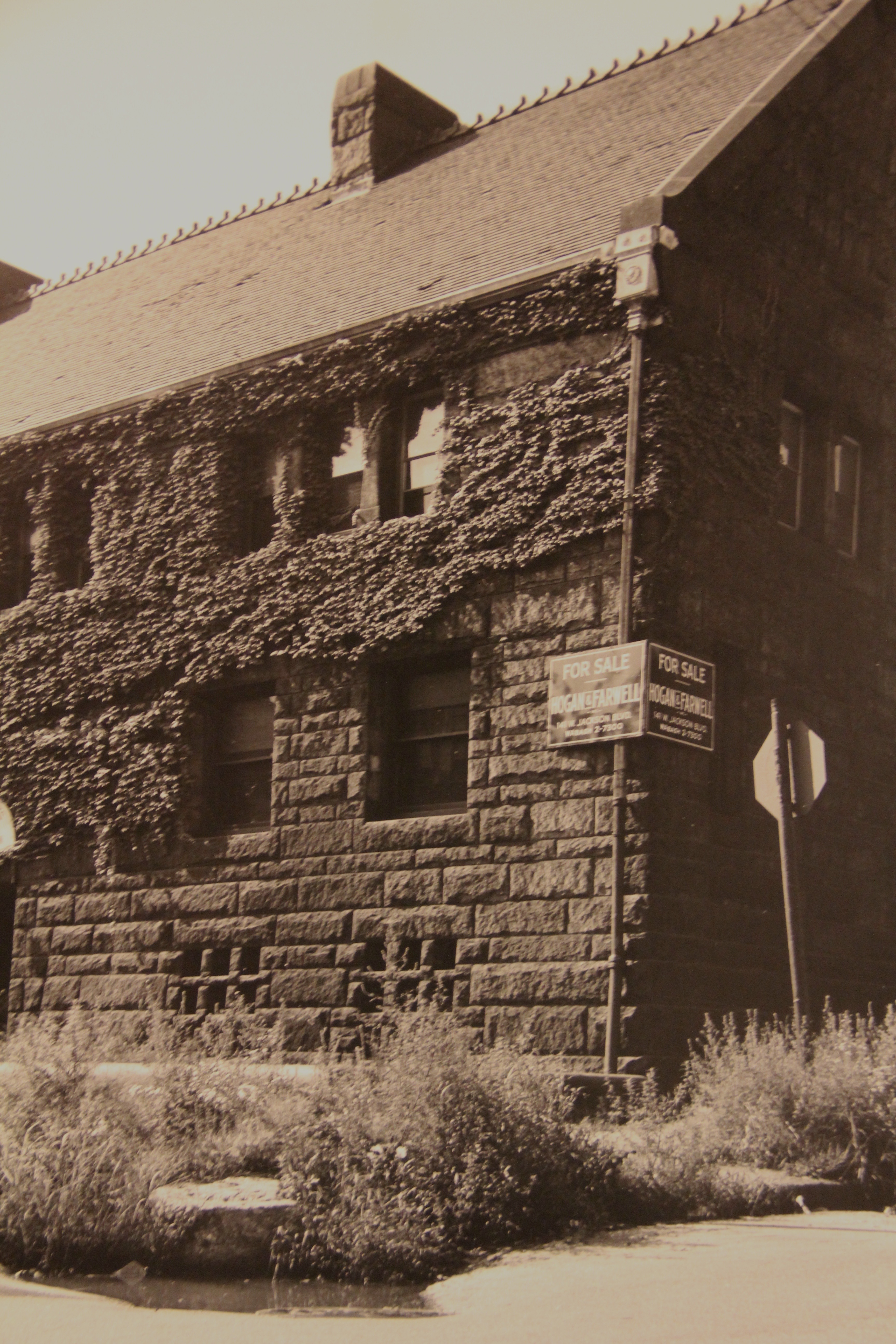
I have long known of the Glessner House, but I have never actually visited.  Like so many important historic house sites, it exists in books and images long before you actually visit.  I did not have a clear idea of its location within the limits of Chicago, so I grabbed a taxi from my hotel and gave the driver the address.  I assumed that it was in an older section of town, one that had been the best location, and later descended into manufacturing.  The Glessner House came very close to destruction, but now remains one of the few still standing on the once fashionable street of Prairie Avenue. I pulled out my camera so that I could document the urban changes that would take place as we drove closer to the house’s corner lot.

My vision of the city changed from a major interstate to multiple-lane avenues, to smaller two lane city streets.  The landscape began to be filled with large factories, bridges, and a mixture of building types.  It all seemed quite jumbled – not similar at all.  I have always suggested that historic sites need to do a better job at interpreting the current environment that surrounds the site.  I feel as if site management wants us to pretend that it doesn’t exit, that somehow that 10-minute drive through Chicago didn’t matter.  In fact, I would argue that it is the basis of a visitor’s comparative relationship – It is the most recent visual record they bring with them as they enter the site. I say use it – you really have no choice.

The taxi dropped me off directly in front of the house.  All that I had heard about its imposing and somewhat “un-welcoming” facade was true.  This thing could have been a water pumping station or some other public utility structure from the same period.  It was alright, though; I knew what was waiting or me inside.  For an Arts & Crafts nut like me, it was to be Nirvana.

I was warmly welcomed by the very hard working team at Glessner House and we started chatting before the massive front door had been shut.  Right away, I had an overwhelming sensation that this house was about living, and not about show.  I can’t justify this feeling, but I felt it nonetheless.  I walked up the wide entrance hall steps and stood in the foyer for a few seconds.  I have to admit that my hosts were talking, but I didn’t hear a damn thing.  I couldn’t get past the visual music of the house that enveloped me.  I am not exaggerating to suggest that this house is an architectural symphony of the highest caliber.  I was totally ill prepared for the spatial complexity and the livability of the interior spaces.  Honestly, I expected a fancy house whose rooms were scaled by aspirations – I was wrong.  These rooms were scaled by a family interested in the meaning and value of human life.  You wouldn’t get that from just the outside, but once you enter, nothing prepares you for the combination of beauty, comfort, and honesty.
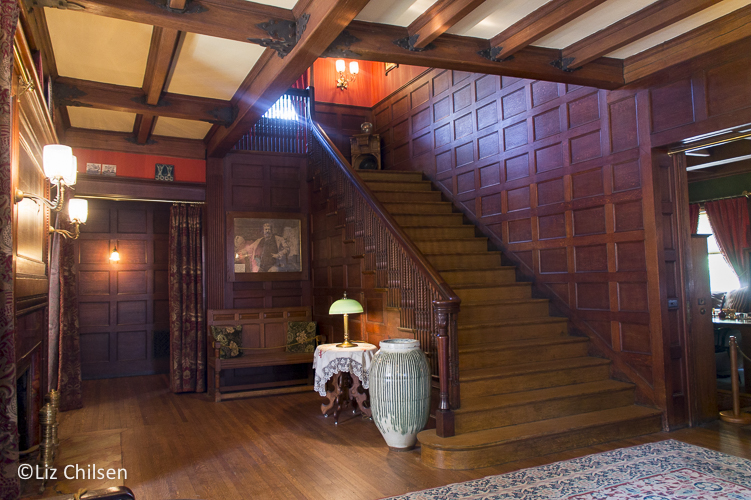
Glessner-Chilsen-0211

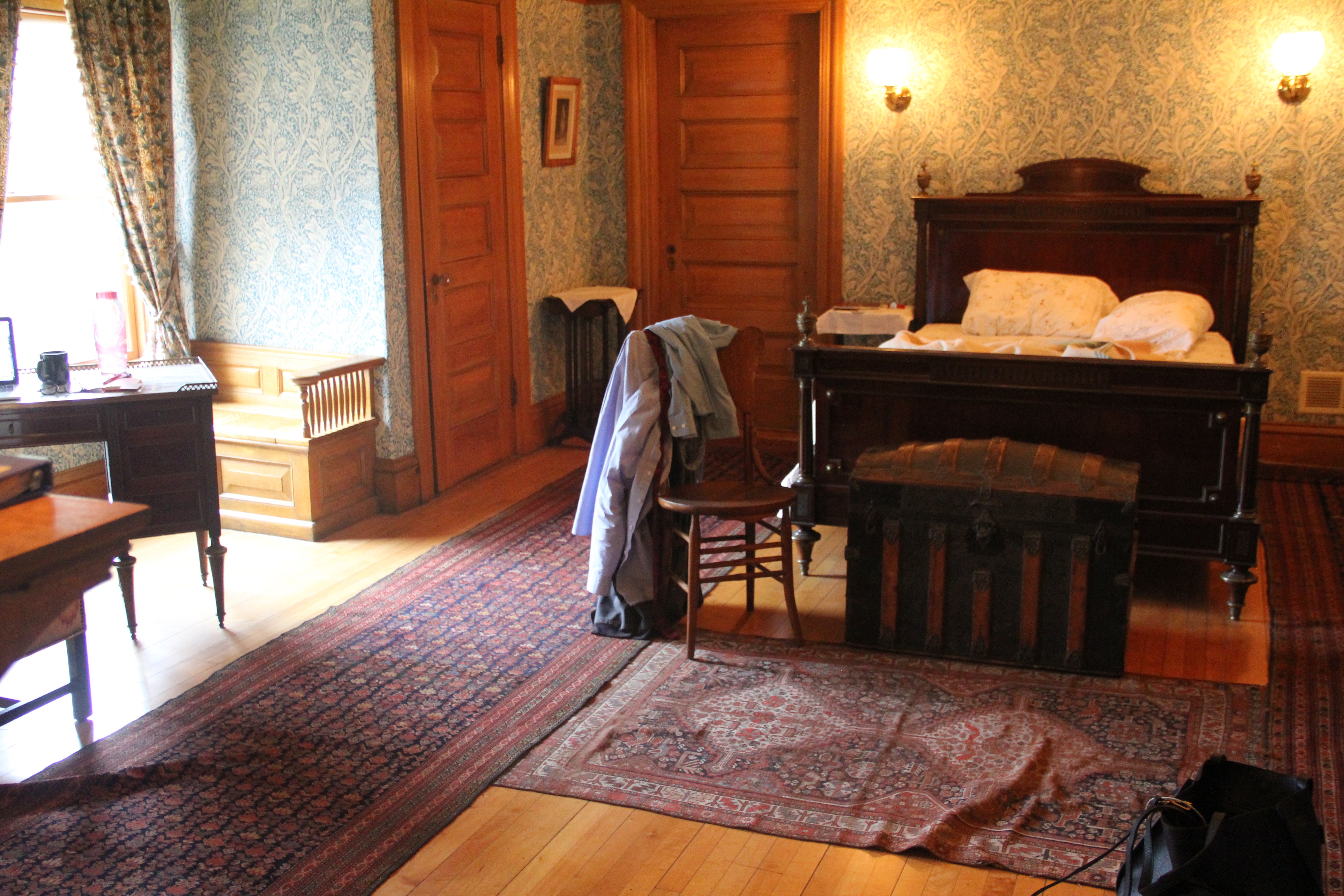
 I asked my hosts to direct me to my bedroom.  I wanted to get my bag out of the way and begin a sense of “landing” into this wonderfully foreign house.  As I was escorted up the big stair, I was informed that they were going to place me in the corner guest room, but decided to place me in the second guest bedroom because I would have the courtyard as my view and not the city streets.  My room for the night had a window seat nook with a writing table, a large bed, several tables, and a fireplace.  I plopped my stuff down and then asked for a tour of what I could and could not sit on, open, and use.  Surprisingly, there was very little that was off limits to my “one-night stand”.  This made me very happy.

After my house tour, we moved into the dining room for dinner.  In the planning stage of this visit, I suggested that pizza in the dining room would be just fine, but instead they prepared a very nice dinner with wine.  I brought some Greek pastries from my trip to Chicago’s Greektown earlier in the day.  We sat at the table, and while eating, and listening to their comments, I realized how dedicated and overworked the staff at Glessner House is.  It is a staff of three, utilizing a very small budget, and managing a very important house site.  It was also clear that they had a real understanding of this historic site beyond the beautiful things that surrounded me – the Glessners seemed like “fish out of water”.

pullmanmansion1902
Screen Shot 2016-05-04 at 3.47.00 PM


Across the street were the Pullmans, down the street were a long list of Gilded Age Millionaires (which the Glessners were also), but the house clearly stood out against the ostentatious, ornate confections of the other estates.  In fact, I was told that the Glessners greatly reduced the ornamentation on the house and nearly eradicated a showy tower that would have topped a servant’s stair.  These changes produced a house massing and aesthetic that is somber and in direct contrast to all of the homes that surrounded.

I became interested in why this conscious retreat from the social norm of the street and I asked questions of family background etc.  This is when I was told the story of John and Frances Glessner’s birth and education in rural Ohio and how their modest attitude toward wealth permeated every level of their existence. This family  clearly had the wealth and the contacts that placed them dead-center of not only Chicago social society, but also national power and influence, but somehow they kept behind the scenes and instead focused on other matters.  This is where my great-grandfather John and his wife Mary Rose become part of my experience.
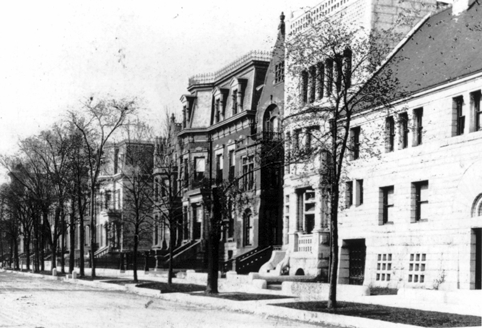
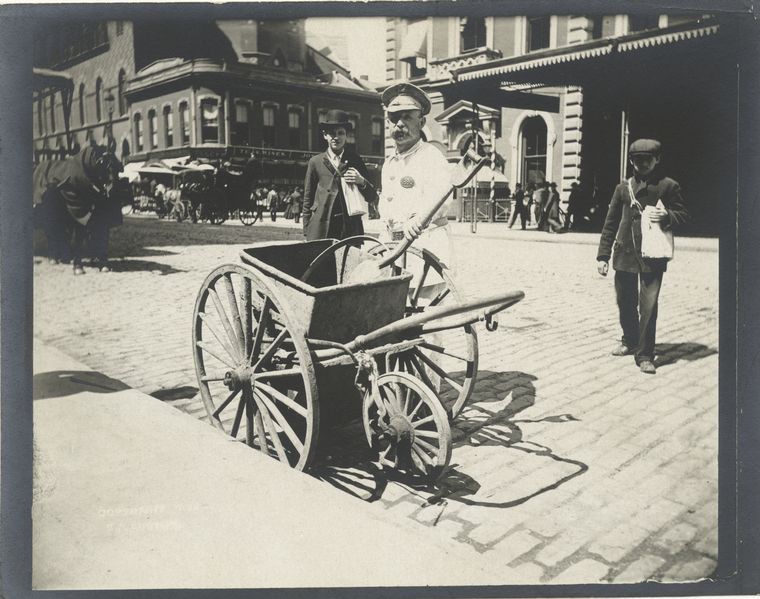
(l) the tidy street of Prarie Avenue showing The Glessner House on the far right; (r) By 1900 almost 90% of all of Chicago’s street cleaners were Southern Italian/Sicilian.

In preparation for this “one-night stand”, I was researching Chicago and kept hitting on the subject of Italian Immigrants, mostly Sicilian, who ended up in Chicago starting in the 1880’s. The Sicilians were considered the lowest class of Italians.  The Northern Italians saw the Sicilians as little more than illiterate, dirty peasants.  So when Italians immigrated to the USA, the non-Sicilians did not like being grouped into the same label as the Sicilians and along with everyone else, began severely limiting the Sicilians access to education, political and economic power.  This resulted in Sicilians taking on many of the most degrading and unskilled work positions. By 1900 almost 90% of all of Chicago’s street cleaners were Southern Italian/Sicilian.  Of course, just as my family had been pushed to the “Italyville” ghetto of Shawnee, the Sicilians in Chicago were also pressured into forming their own enclaves of communities.  Eventually, this area of Chicago became known as “little Sicily”. This economic and cultural isolation is one of many factors that eventually led to the establishment of the Italian- American mob culture, whereby, the primarily Sicilians, formed their own political and economic “nationality”.

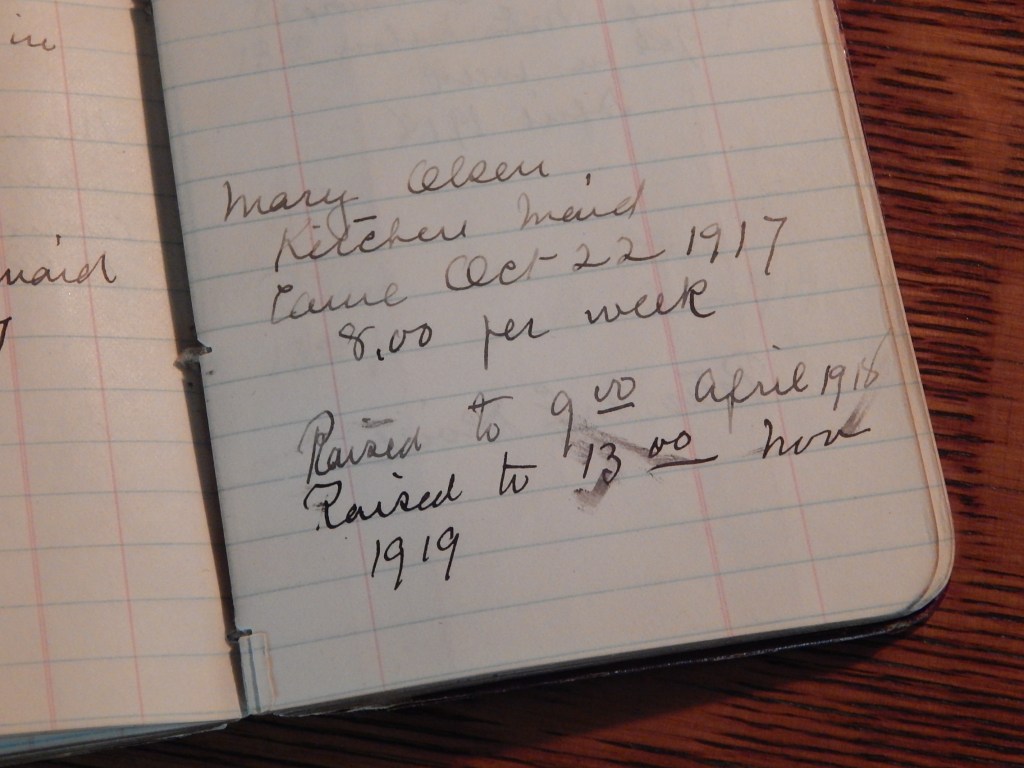
In analyzing Mrs. Glessner’s servants journal (provided by the Glessner House), out of the 156 house servants between the years 1874 – 1929 not a single maid or butler was Italian.

In taking oral histories from my family, I asked if they had a history of being house servants or landscape crew members for wealthy families.  The answer was always “no”.  It was clear that even for my family, to others, us Sicilians were not to be trusted. In analyzing Mrs. Glessner’s servants journal (provided by the Glessner House), out of the 156 house servants between the years 1874 – 1929 not a single maid or butler was Italian.  The Glessner’s remained true to this cultural stereotype, most of the servants were Irish females, but in the later years, most of the staff appeared to be Swedish or at least Scandinavian.  You didn’t hire Italians to work as servants.

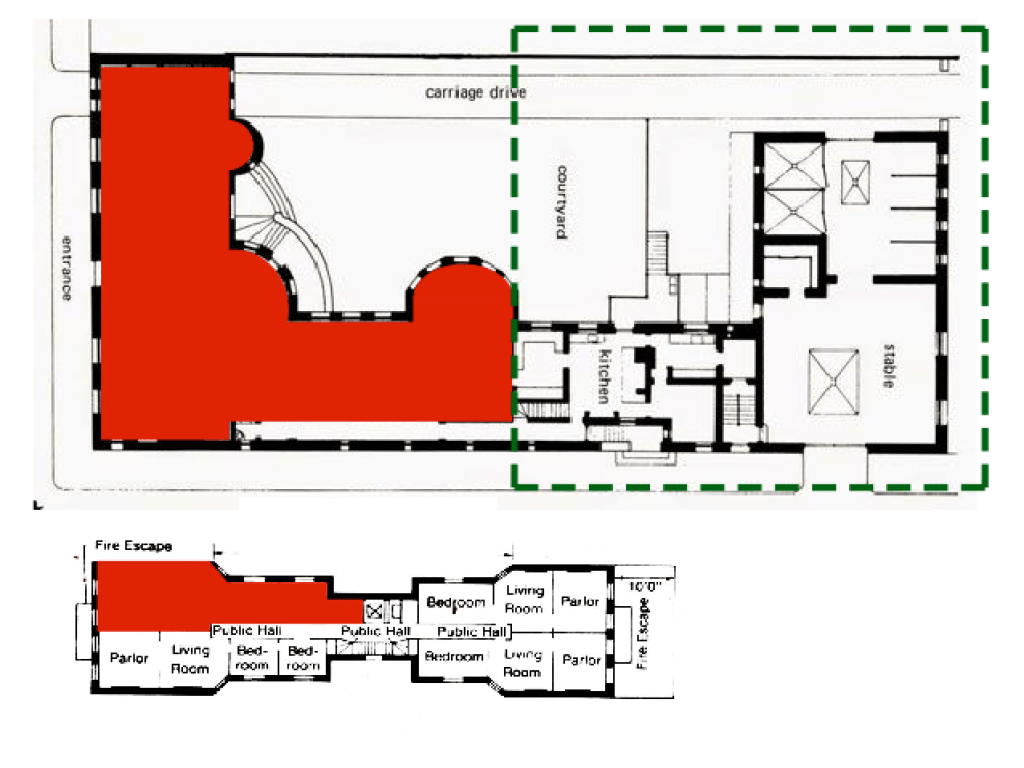
After spending a bit of time relaxing in the house, I became very aware of how removed the servants’ activity must have been from the everyday functions of the house.  The house is 17,000 square feet (yes, I double-checked this).  Approximately 40% (6,950SF) is family use; the remaining 60% is servants’ work and living areas, basement, coach house.  At any one time, the Glessners could have about 10 servant staff in the house.  This is an amazing fact, given that there were only four family members.
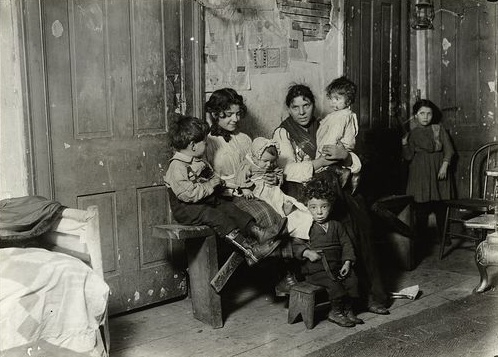
(l) image of Italian Immigrants in Near-North Chicago tenement; (r) a size comparison between the Glessner House and a standard post-reform tenement apartment building.  The red areas show living space per family.  Most tenement apartments held families of 10 or more people.  The Glessner’s living space held 4 people.

The Sicilians who moved to Chicago, generally were living in the Near North section of the city. It was not uncommon for entire families of 10 to live within a single apartment.  In comparison, Mrs. Glessner made specific requests to H.H. Richardson, the architect of the house, that every servant have their own room, a closet and a window facing the courtyard. One wonders if such demands were made by the Pullmans in regards to their servants’ quarters?

As I retreated to my guest bedroom and changed into my Gilded Age silk kimono night robe (I had to!), I started to think about how these servant positions were plumb jobs to have.  I mean, if I had the choice between being a street cleaner or a valet or driver – I’d chose the latter.  It did make me wonder how much of all of this was by choice, or by luck and connections? What kind of “upward mobility” was possible at the time of the Glessners’ occupation of the house?  I also wondered who the Glessners called friends, and what sorts of public, civic activities did they dedicate their time and money? I was later told that, among many other activities, Mrs. Glessner was active at Jane Addams Hull’s Settlement House and took silversmithing classes from the Hull House Settlement (placed directly in the center of a predominantly Italian enclave).  The class was taught by an important Italian jewelry designer, Annibale Fogliata.
IMG_3165

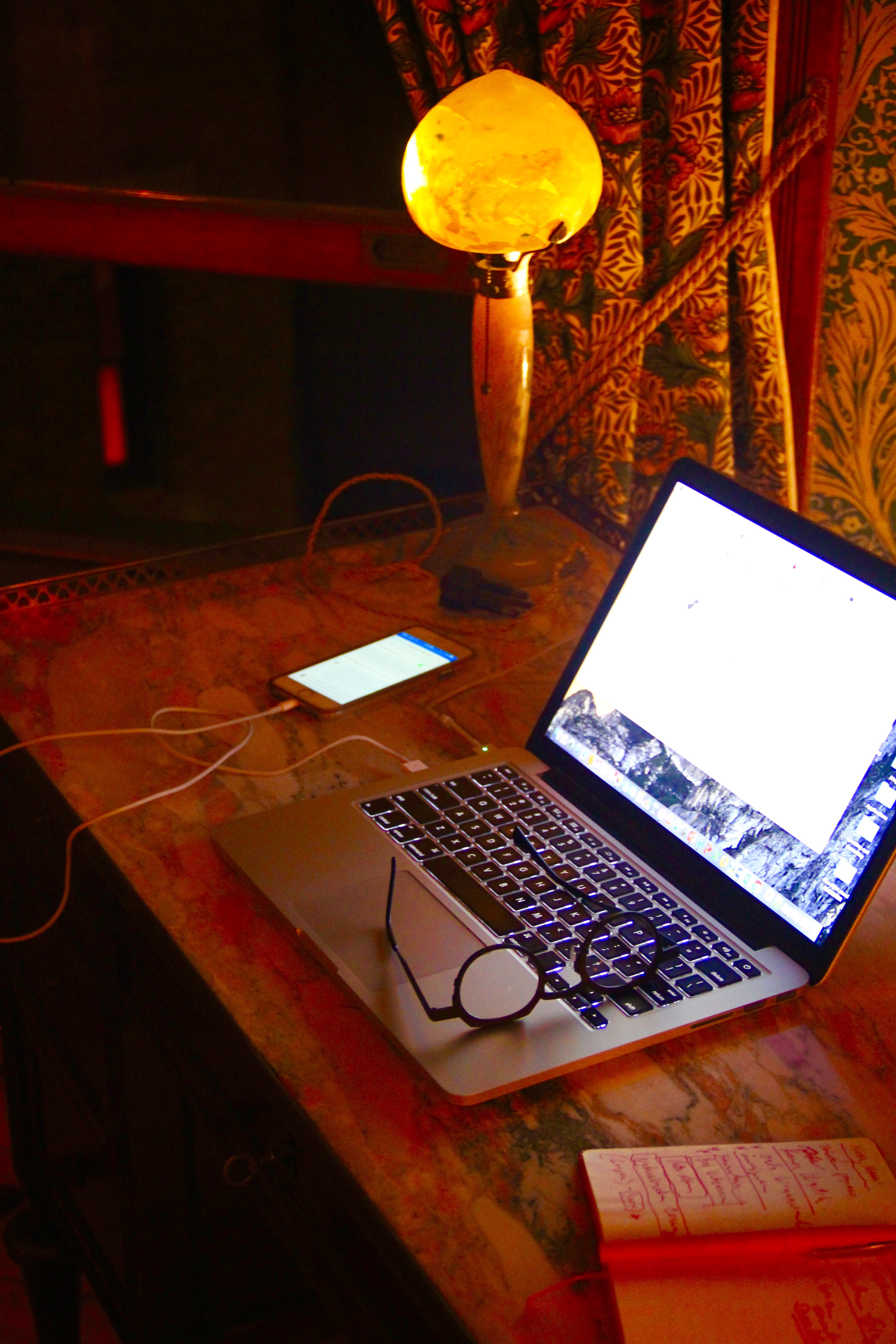
I pulled out my computer and set it up at the desk.  I sat down on the chair provided for the desk, and it was not comfortable at all.  I pulled over an upholstered wing back chair and made that my desk chair.  There was also a beautiful lamp on the desk that no longer worked.  It was made of art glass and I wanted to see what it looked like illuminated.  With a little ingenuity, I took a flashlight, placed it out of the way on a window sill, and aimed it at the glass globe.  Wow – it was beautiful.  The flashlight-illuminated art glass table lamp transformed the desk, the fabrics and reflected off of  the glass window.  I left the flashlight on for a while, and as I sat at the desk, I worked on my computer while I occasionally looked out into the dimly lit courtyard and felt the breeze from the open window.

To tell you truth, the bedroom was so comfortable, I had to force myself to get up and explore the rest of the house.  By New York City standards, this room was a really good sized apartment. I grabbed my camera and started out exploring.  I was alone in the house by now, and I felt completely comfortable.  As you can imagine the farthest away servant spots are a bit of a walk.  In fact, John Glessner cited this as a deficit of the house’s design.  He said it took too long for a servant to get from the back kitchen to the front door in a suitable amount of time.  I walked this path several times just so I could feel the drag of time – in fact, it was a distance. I started to imagine some poor house maid fearing for her life that it might take her too long to get to the door, and when she opened the door, Mrs.  Pullman would be on the other side giving her a face of disapproval for her tardiness.
IMG_3232
IMG_3237


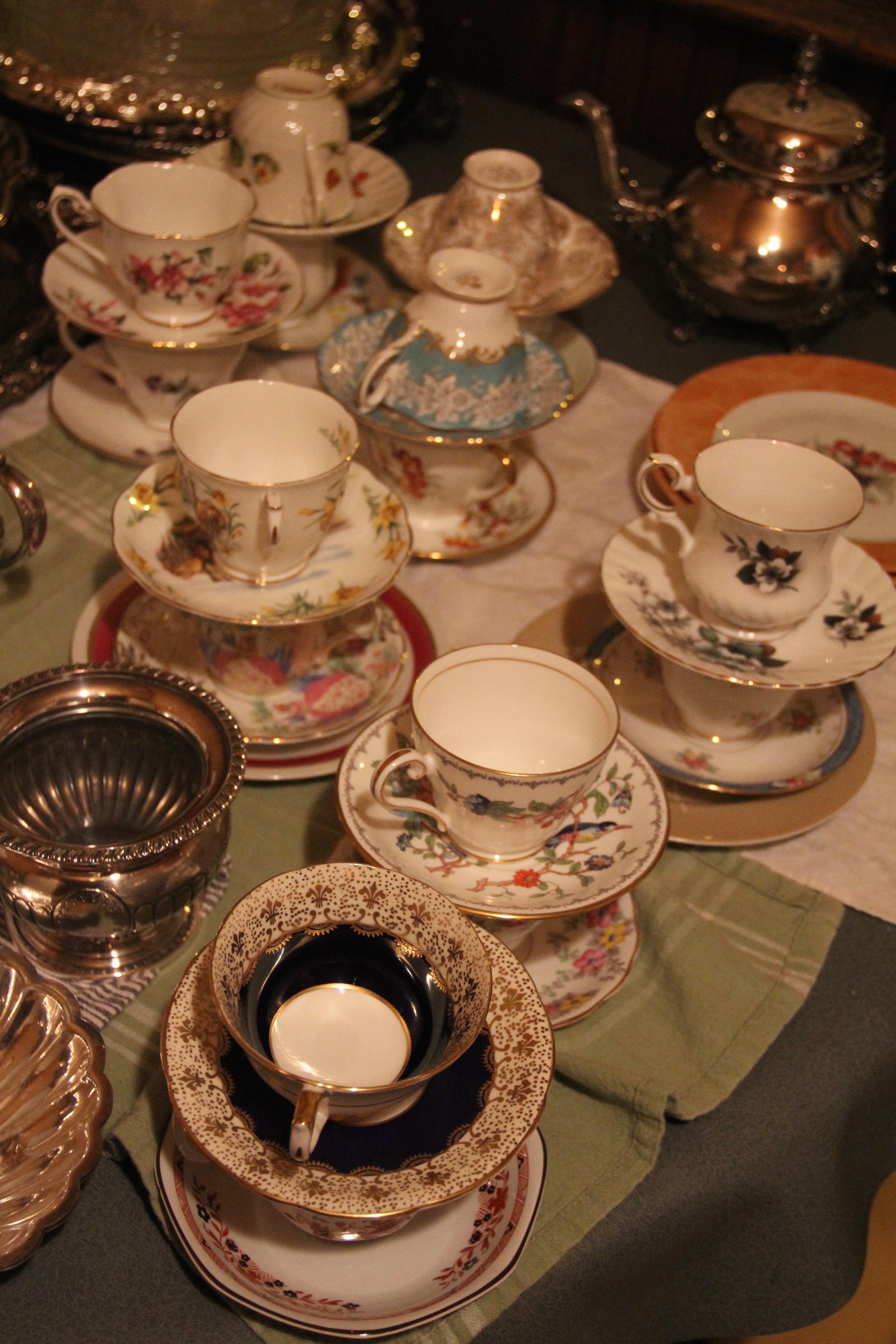
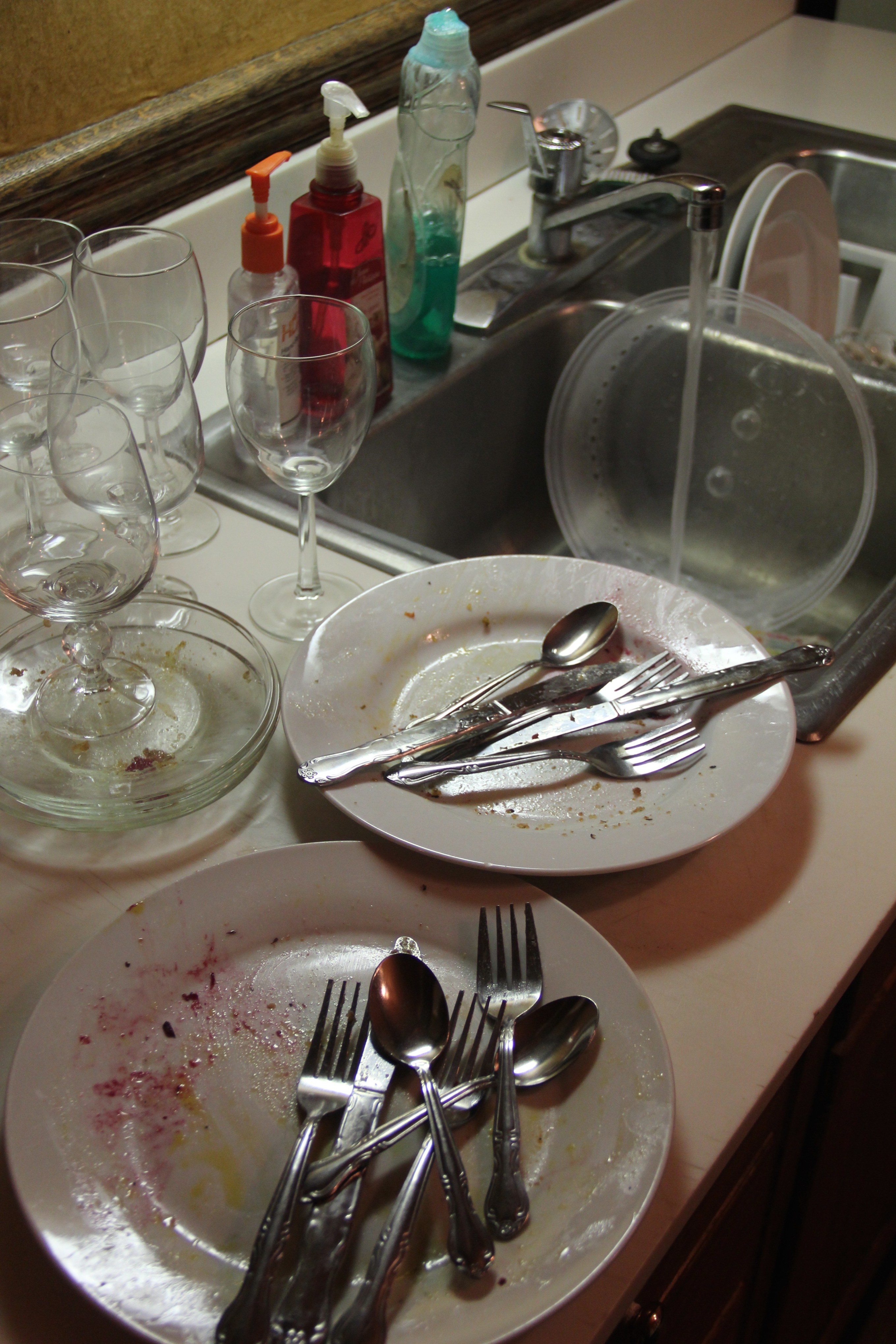
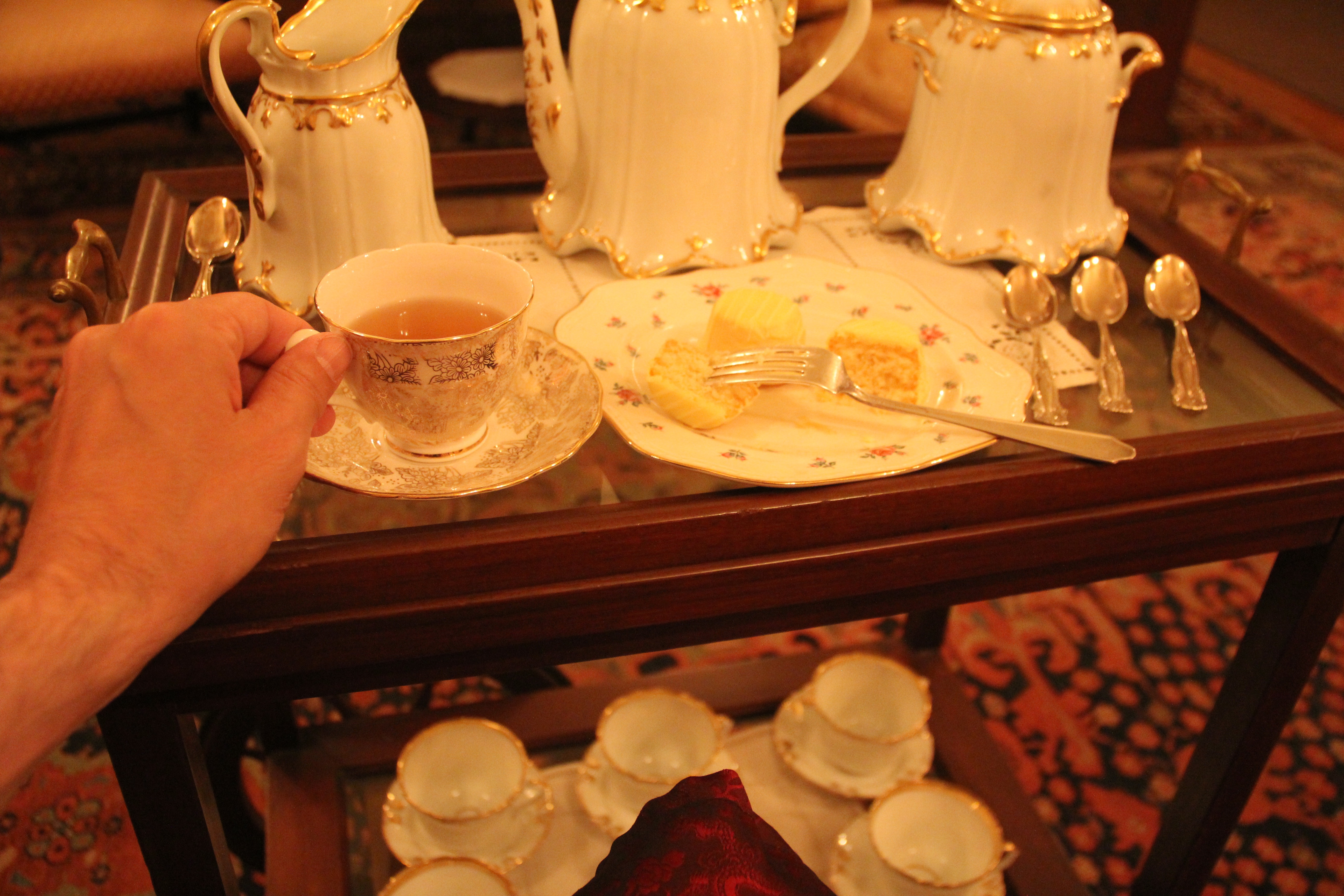
After dinner, I insisted to my hosts that I would clean our dishes from dinner, so I took the trek back to the servants’ kitchen and began hand washing the dishes.  It was nice to actually be doing something normal in such an extraordinary house. The kitchen was full of tea cups and silver from a tea party event the staff had just facilitated earlier that day.  The clean dish wear looked very festive and inviting, so I made some tea and headed out to the parlor.  I sat down on the banquette, placed my cup of tea on the tea caddy and started to look around.
IMG_3262
IMG_3351
IMG_3440

Everything was so beautiful.  Not aspirational, in-your-face beautiful, just simply beautiful.  I also noticed that I couldn’t tell if the room was masculine or feminine.  Normally historic houses have either a feminine feel (fancy, light painted trim, pink fabric walls, and uncomfortable French period furniture), or a masculine feel (simpler, dark wood trim, and comfy over stuffed furniture).  This space had both qualities at the same time.  In fact, the entire house had this hybrid sexuality about its spaces.  It felt like a true mix of attitudes.

After my tea, I walked around and sat down in various rooms.  I just stared out of the big windows as a gusty, rain storm made all of the trees bend.  Not a sound. Nothing.  My view out of the second floor windows felt almost like a TV screen.  I was watching a scene from a movie – separate from it, but still observing it.  Many people felt like the house appeared anti-social to the street, but in fact, I felt very aware of the street activity from inside of the house. Something you never hear is that all of the most private spaces are pushed right up to the street line – the huge windows are right on top of the sidewalks.  If you wanted to shield yourself from the reality of the city, this type of architectural placement would be the very opposite of what you would want.  But still, it worked beautifully.  I sat in the Glessner’s shared library (very unusual for the time) and watched the storm.
IMG_3280
IMG_3284
IMG_3190

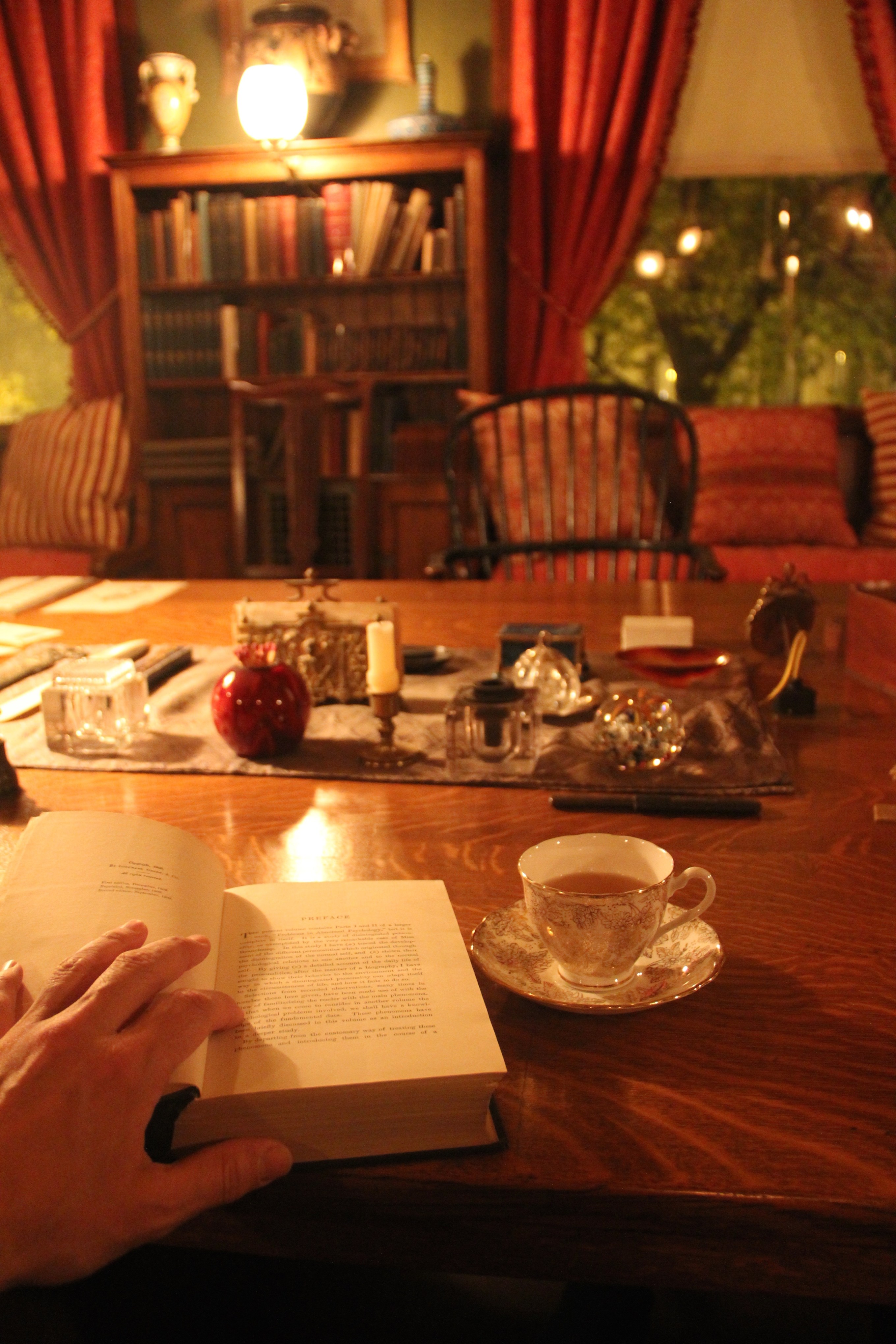
I loved that the Mr. and Mrs. Had a partners’ desk.  That seemed so fitting given how the house felt a combination of both sensibilities.  I grabbed a book from the extensive library, sat down at Mr. Glessner’s side of the desk, and started to read. Again, the room felt so comfortable and put me at ease that time slipped past very quickly.  I had to push myself to explore some more. I mean, I had all 17,000 square feet of house to find out about and only one night.  I was asked to try to turn off all of the lights before going to bed.  This was no small effort!  Each room could have had 6 or more wall sconces, all with different on/off switches.  I had to leave some on because I couldn’t find the switches.

Eventually, I gave up exploring and retreated back to my bedroom. I feel asleep quickly.

IMG_3303

In the morning, the light from my courtyard windows, and sounds of chirping birds, woke me up.  The winds from the previous night’s storm had ended and now all I felt was a soft breeze.  I got up, walked the long distance to the servant’s bathroom (way down the hall) and then went down stairs to make tea.  I have to say that I felt I was walking in slow motion, as the distances were so great and I was still waking up.  I made my tea and chose to take my first cup at the servants’ table in the dry pantry.  I sat looking out of the large window and thought how magical and safe this silent place must have felt to an immigrant. Sure, it was a job, but more than that, it was an existence that they, themselves, helped maintain.  There must have been some sense of gratification that came from being part of a team of servants that made the Glessners’ life possible -or did it piss them off?
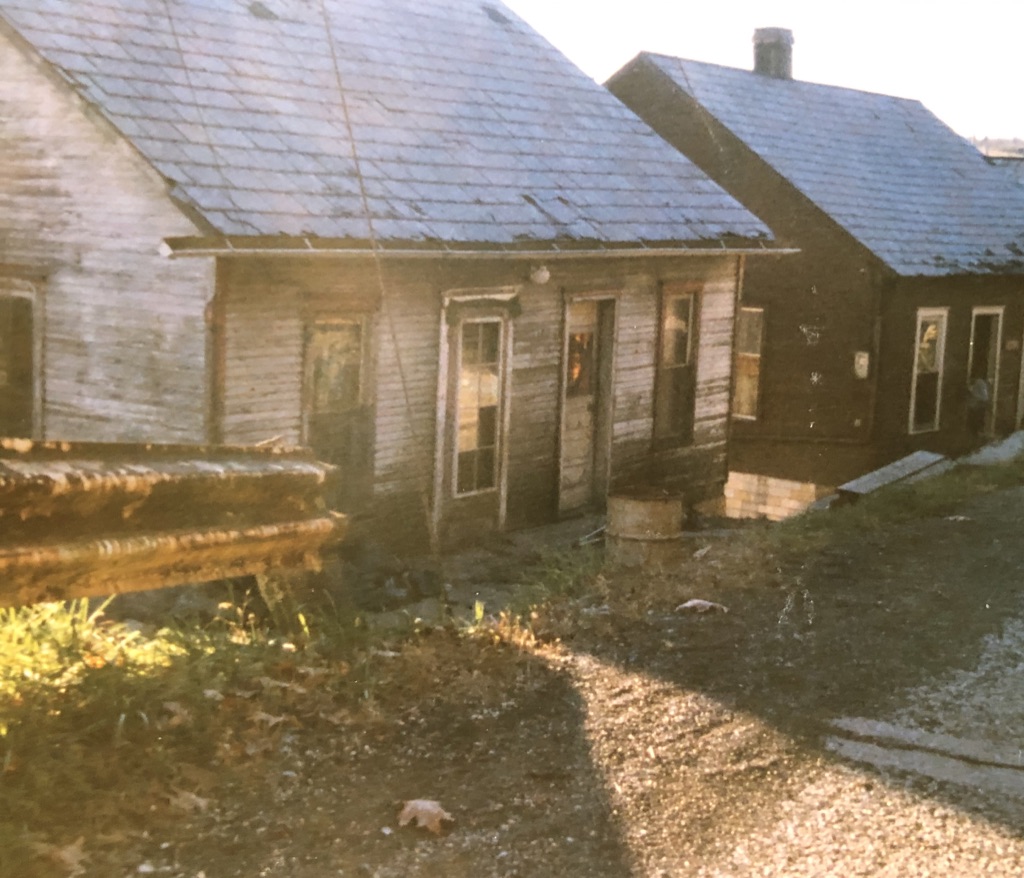
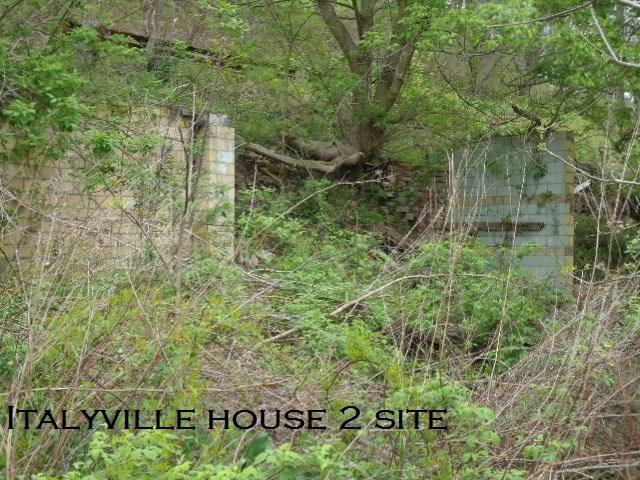
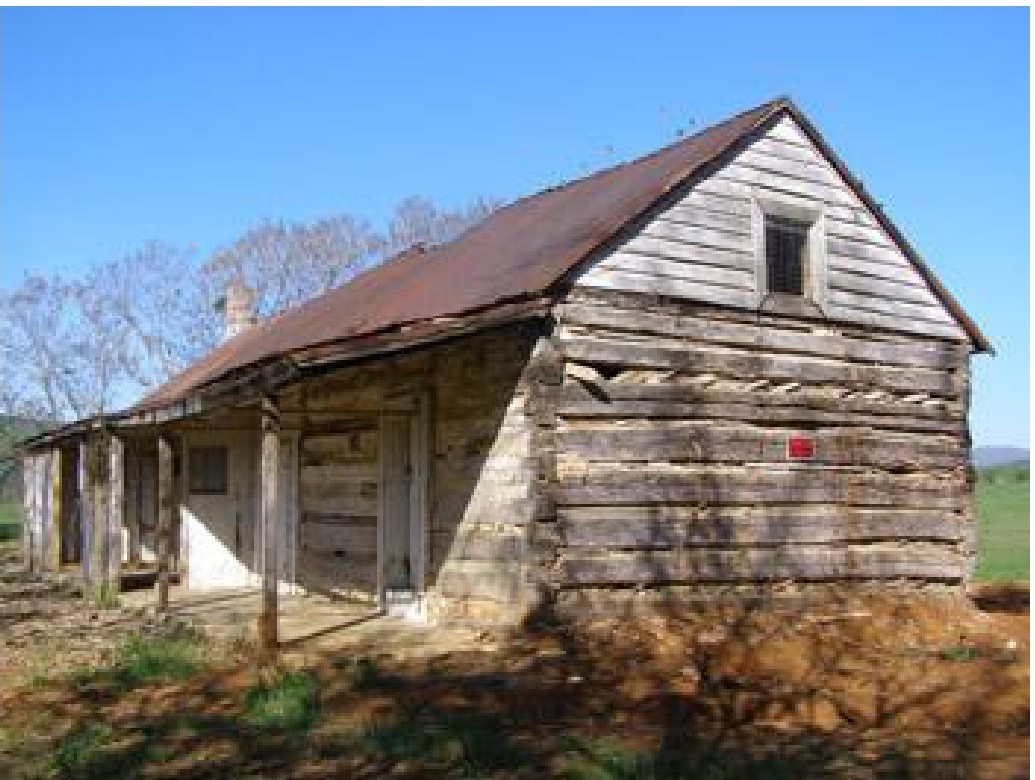
(top) photograph of the Guzzo Family Home c. 1950’s showing the line of segregated housing in “Italyville” for Italian immigrants located 50′ outside of the town limits (l) The remains of the Guzzo family home in Shawnee, Ohio c. 2016; (r) Surrounded by Ohio-made tiles, sitting in the Glessner House dry pantry (in the servant spaces) I had morning tea.

As I was sitting at the servants’ table drinking my tea,my bare feet on the Ohio-made tile floor,  I thought of my great-grandfather John and great-grandmother Mary Rose waking up, going outside to the “Italyville” community water well, getting water, heating the water up with a wood stove, and making coffee.  Mary Rose used to sit on the back porch of their house and watch John walk down the railroad track to his brick making factory.  John carried his black metal lunch box in one hand and waved goodbye with his other.  That porch and house no longer exist.  They collapsed in on themselves and all that is left is the brick foundation.   No one rushed to save, restore, and interpret it like the Glessner House.

Between the process of immigration, ethnic bias, language barriers, and economic hardship, John and Mary Rose did not have an easy life, but what they were able to do, was provide for their family and build the foundational structure for their children’s future.  Their efforts allowed for their family’s descendants to engage society at increasingly higher and higher levels.

My Glessner “one-night stand” had exhausted me.  I love beauty, and I was overwhelmed by the quantity. I didn’t want to leave.  But my greater realization was, that I could love the decorative arts, architecture, and still appreciate the less visual aspects of these iconic houses.  The narratives of these sites can, and should fully include both the John and Frances Glessners as well as the John and Mary Rose Guzzos.
IMG_3429

In Arts & Crafts philosophy, of which the Glessner House is a primary example, there is a belief that natural materials, worked subtly, and hand-wrought, through the marks of the creative process, retain some intangible quality of the craftsman who produced the “thing”.  Whether architecture, stained glass, furniture, metalwork, fabrics, jewelry, or through a myriad other creation – they all have the potential to speak and share with the user, some element of humanity. I imagine the conscious creation of a family in an unknown, foreign country might have had the same gratification that Mr. and Mrs. Glessner felt in seeing their symphonic house grow from a stack of bricks and stone.  The Glessners were social progressives and were involved in a number of organizations that helped the disadvantaged including the Chicago Orphan Asylum and the Chicago Relief and Aid Society.  Frances Glessner was a member of the DAR and the Colonial Dames and became involved in working with people in obtaining their citizenship

In many ways, the Glessners and the Guzzos shared an existence even without knowing one another.  It is not much of a stretch to see how the efforts of a brick maker in Shawnee, Ohio had an impact on the efforts of a millionaire in Chicago.  I’d like to think that the Glessner’s would have been proud to host me, the great-grandson of a Sicilian immigrant, in their beautiful home: the hand of the craftsman and industrialist continues to collaborate.

*And, no – the ghost of H.H. Richardson did not visit me.
IMG_3214
IMG_3212


*I am greatly indebted to Mr.Rob Dishon (Shawnee Historical Society), and William Tyre, Executive Director,  Glessner House; Becky LaBarre, Assistant Director, Glessner House

The “One Night Stand” ™ series of blog posts are an attempt at shifting our cultural perceptions of historic house museums away from viewing them solely as public venues and moving toward a more intimate and tactile appreciation of them as places of private, domestic life.  My attempt is to highlight more nuanced and latent understandings of these places as vessels for life, social issues, politics, and habitation – not merely as decorative arts objects and collections artifacts. I spend the night in the historic bedrooms, using the furniture and experiencing the combination of behaviors and interactions with a home in ways that can only be understood as an inhabitant.

Copyright © 2016 Twisted Preservation| “Twisted Preservation”, “One-night Stand”, “Sleeping Around” are trademarks of Franklin D. Vagnone. All rights reserved.
One Night Stand: News from the original “middle of nowhere”

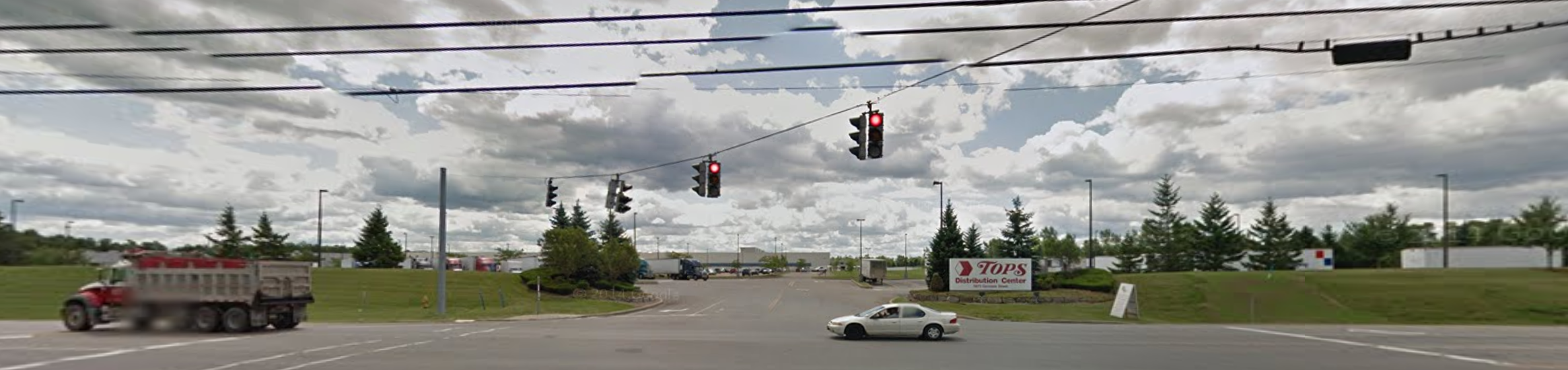
Driving East on Genesee Road in Western New York State, you pass a lot of large warehouses and truck distribution centers spotted among the residential houses and farms.  There were a number of 18-wheelers rushing by in both directions and, although not exactly rural, the Hull Family House and Farmstead is situated in an in-between landscape. It was certainty not a part of urban Buffalo, NY, but also not an entirely agricultural landscape.  In the great American tradition of progress and development, the vista has an almost non-descript, everywhere quality about it – in a state of transition from one type of landscape moving toward another.  And that is perhaps the most valuable word for this “one-night stand”– MOVING.

Screen Shot 2016-04-27 at 12.05.46 PM

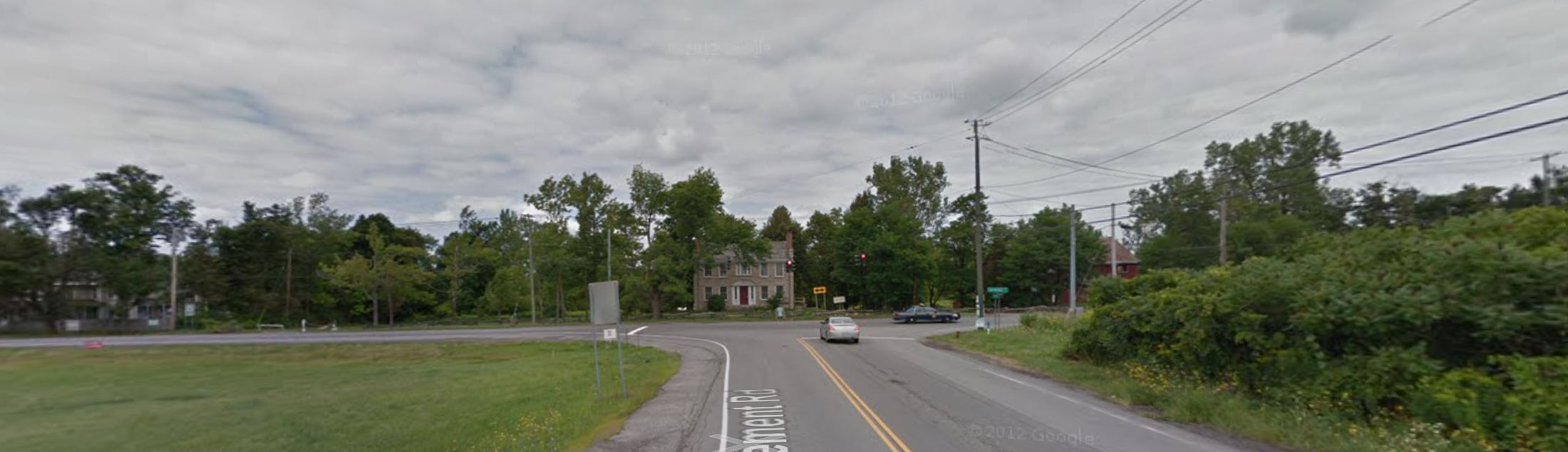
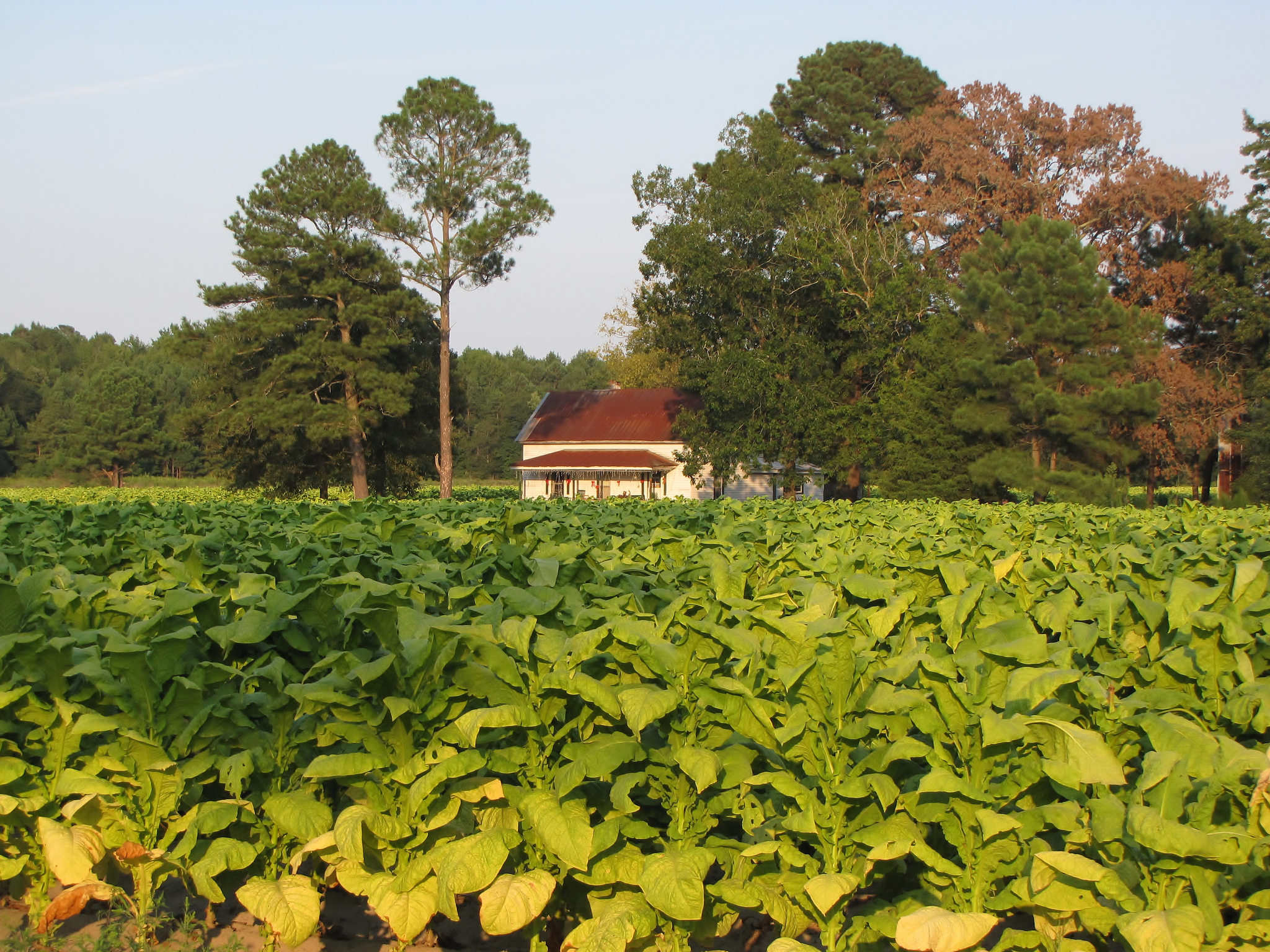
The Hull Family Farmstead is quite noticeably placed dead-center at a T-intersection of two perpendicular roads.  Spending most of my childhood in the rapidly-changing agricultural landscape of North Carolina, my understanding of old farmstead placement was that both houses and farm buildings should be set back away from the street.  You would tend to get a glimpse of them through long rows of bright green tobacco plants.  Reflecting the hot sun, the houses seem to float on the algae-like surface of the tobacco fields.

Screen Shot 2016-04-27 at 12.10.48 PM
15064827921_ade5e4d861_k


In upstate New York, that is not the case.  Almost all the houses hug the roads – as if you could exit the front door of the house and step directly onto the pavement.  I wondered why this was the case.  Weather? Rectilinear parcels? Tradition?  In any case, Hull Farmhouse is no exception – the front door is no more than 30 feet from the road.

Upon arrival, several thoughtful and excited Hull House Board members welcomed me warmly.  After being shown to my bedroom, I given a tour of the house, highlighting the mostly recent restoration work.  The all-volunteer group deserves a great deal of praise for their dedication and high-quality work bringing this site back to a functional and usable condition.  The ongoing work being facilitated by the Hull Family House board is top-notch.  Both their strategic plan and their cultural landscape report indicate close attention paid to the restoration work. Keep an eye on these guys, because once they get formally up and running, they will be the ones to watch.  These accomplishments are in large part due to the consistent and strong leadership of Board President Gary Costello.  In fact, this “one-night stand” wouldn’t have occurred without Greg’s support.

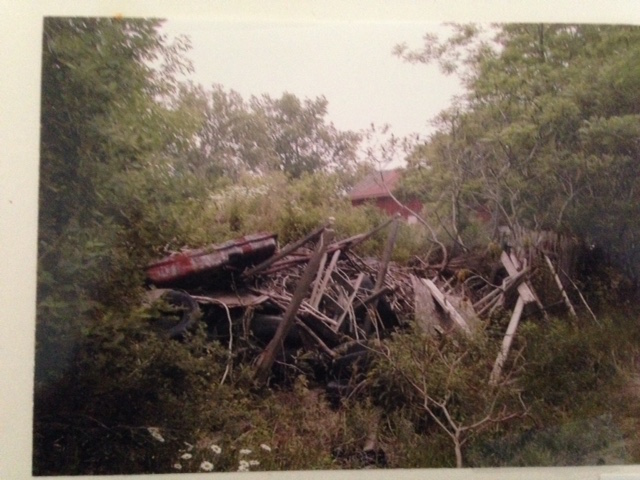
I loved hearing the stories about tons of tires, automobile parts and debris being removed from the site, the clearing away of brush, and the constant surprises they are finding in the family cemetery restoration.  The most obvious question is – why were these piles of tire & car debris here in the first place?

IMG_2438
IMG_2439


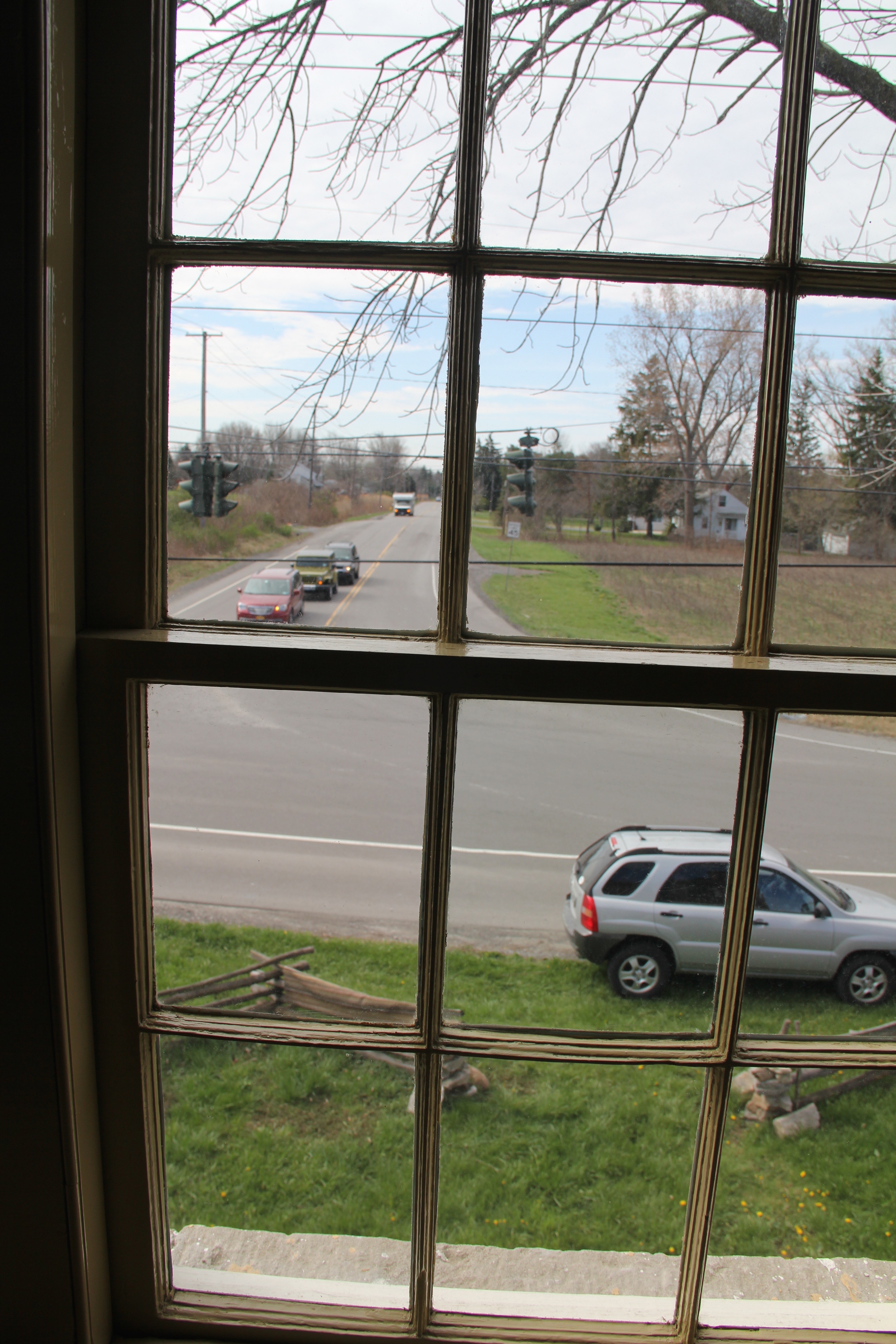
Sitting in the front parlor, my new friends and I discussed the site’s history, and where they wanted to take it as an historic, public venue.  Having been led to the second floor stair-hall window, one of my hosts pointed to the busy intersection and lamented the house’s proximity to the two very busy thoroughfares, and the resultant traffic noise.  I assumed that the historical narrative of the site had been agricultural, and therefore a selective conceptual “erasure” of the present landscape (noise, visual clutter, and activity) would be preferable in order to better convey the farm narrative.   After this short interaction, not much more was said of the roads.

Continuing to chat, we walked outside of the stone farmhouse and proceeded to visit several nearby spots on the grounds.  We first crept into the Civil War-era barn. From there, we made a beeline to the back of the site to appreciate the recently-cleared, and beautifully restored,  family cemetery. Adjacent to that, the neighboring Victorian House has been repurposed as a visitor’s center.  Outside in the warmth and sun of the visitor center porch, we sat and chatted about possible scenarios for the site.  Being at a distance from the house location was beneficial to this conversation; we could discuss the site from a more removed (physically as well as mentally) perspective.

The discussion narrowed quickly, resting on the frequently polemic topic of what defines a correct period of interpretation.   The selection of a period of interpretation can be both conjectural and arbitrary – and the concomitant debates, anxiety-producing. Without going into details, the present stone house was constructed somewhere between 1810 and 1830.  Personally, I do recognize the value of the 1810 period of interpretation – it is a unique and very solid base for the site’s narrative – and one that no other site in the area is telling.  I get that.

RANT WARNING AND DISCLAIMER: The following RANT has nothing to do with the Hull Family House restorations in particular – rather my discussions with the group brought up one of my consistently reoccurring concerns about historic site management.  By now, you may know this about me – I see the specificity of dates as a smokescreen for larger, more latent cultural narratives. Often it feels to me that we are simply trying to bolster our intuition and conjecture with historic facts and dates, thereby validating the larger choices. More honestly speaking, I don’t much care whether the construction date is 1810 or 1820 and I don’t think that most visitors make a distinction between 10 years.  My rant is not at all about WHEN a house was built, but more about the overemphasis of a specific period of interpretation to the exclusion of everything else.   RANT COMPLETED

As the conversation continued, I started to ask questions regarding the curious placement of the house, and the possible relation to when the roads were built. Was it a random coincidence that the house was centered on these two perpendicular roads? – I had assumed at least one of the roads came in after the house was built – a kind of “if you build it, they will come” mentality.  I thought the house acted like a magnet for growth.  I was wrong.

As it turns out, both of the roads were constructed before the house was built. Interesting.

The house’s placement was a conscious choice on the part of the Hulls.  In fact, the footprint of the house straddles two distinct parcels of land.  The Hulls had purchased both parcels and built directly on the property line. As a crazy museum anarchist, my mind starting running amuck with questions and conjectural thoughts.

800px-Great_Genesee_Road
Screen Shot 2016-04-29 at 10.10.44 AM


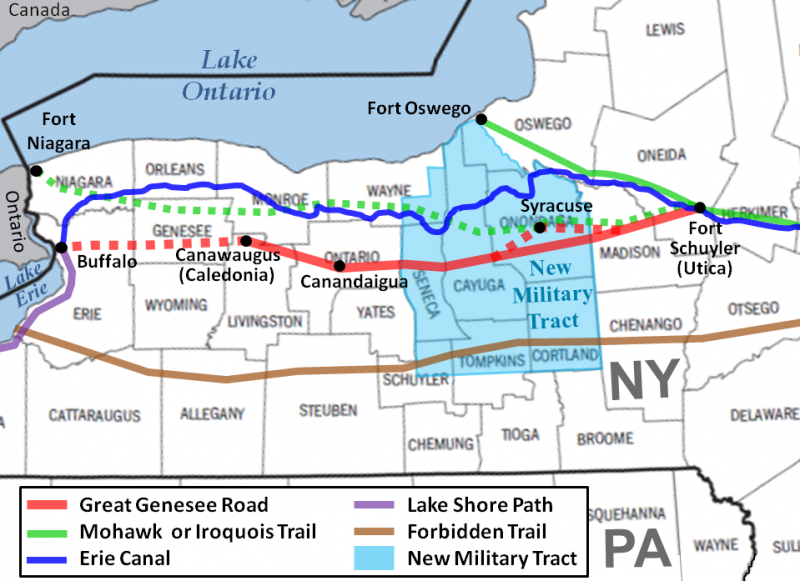
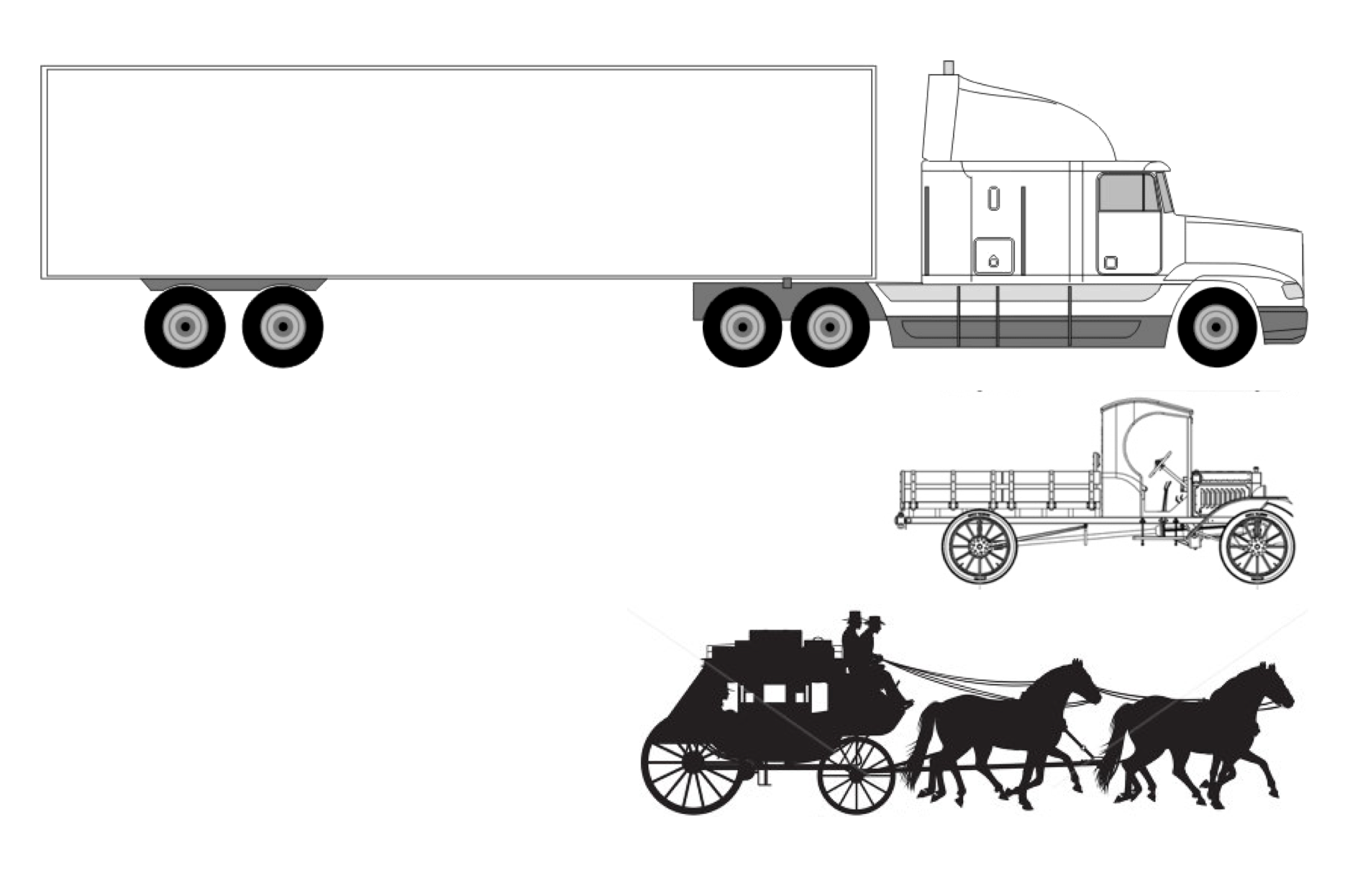
It was then mentioned that some believe (although others disagree) that the house served as a small tavern for stagecoach travelers between Buffalo and cities East.  A side door into a large room with two smaller rooms adjoining may suggest a stagecoach traveler’s rest stop.  The “Old Line Mail” road ran North of the new Genesee Road (onto which the Hull House abuts) and was long considered a very difficult road to traverse via stagecoach.  The new Genesee Road held great promise of faster and less stressful passage.

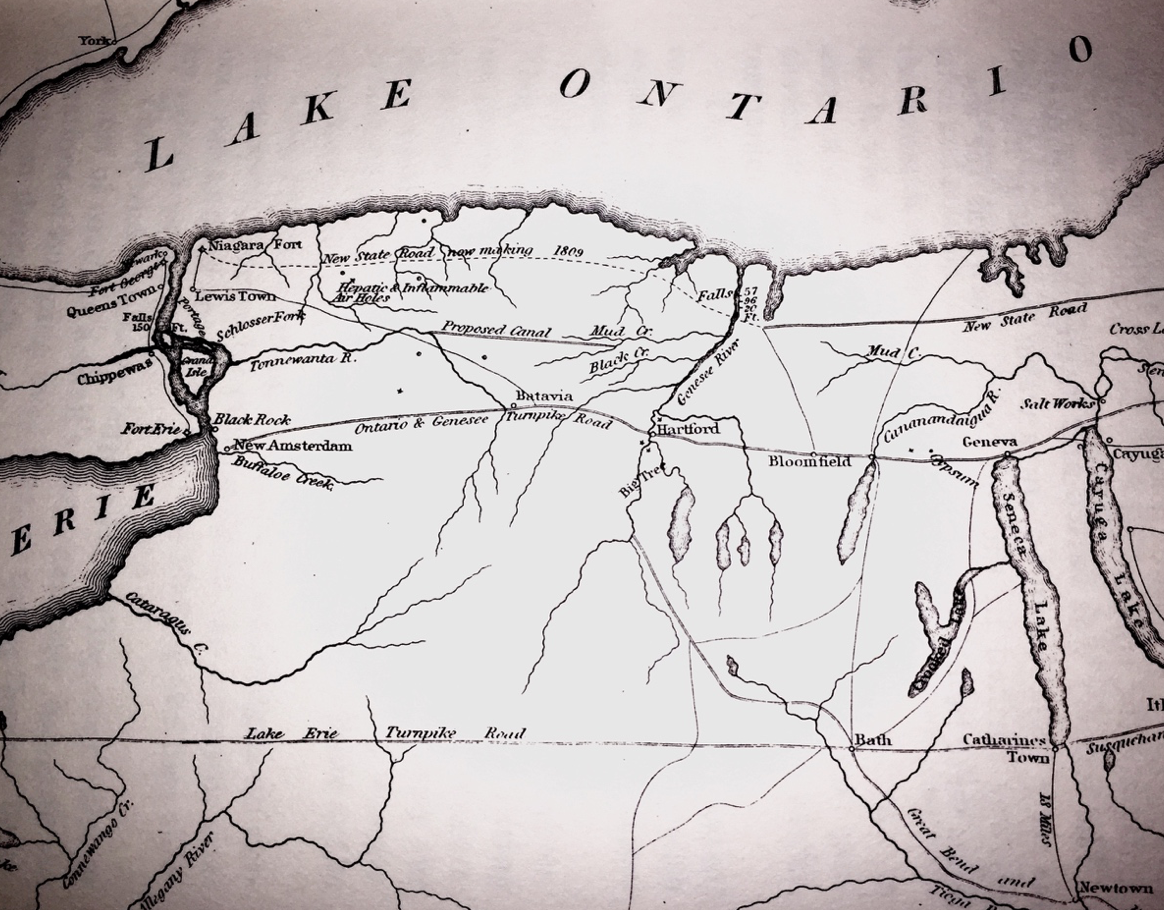
Genesee Road was in many ways, the edge of European-American settlement in the very early 1800’s. In 1810, very little settlement had occurred in this part of New York State and the Hull Farmhouse was literally, as I was told by New York State Historian, “in the middle of nowhere”.  By the 1830’s settlement increased dramatically and the “middle of nowhere shifted further west”.

All this new information I had garnered, really piqued my curiosity and interest, and was putting everything in a new light.  The house was purposely built at the intersection of two roads (one the single primary passage to Buffalo), it may (or may not) have been used as a tavern, the house’s architecture and layout are similar to other taverns, and it is one of the very few residential buildings built out of stone in the area (another indication that it was perhaps of a more commercial quality). However, there were still some pieces of the puzzle that hadn’t quite come together… yet.

IMG_2710
IMG_2714
IMG_2706


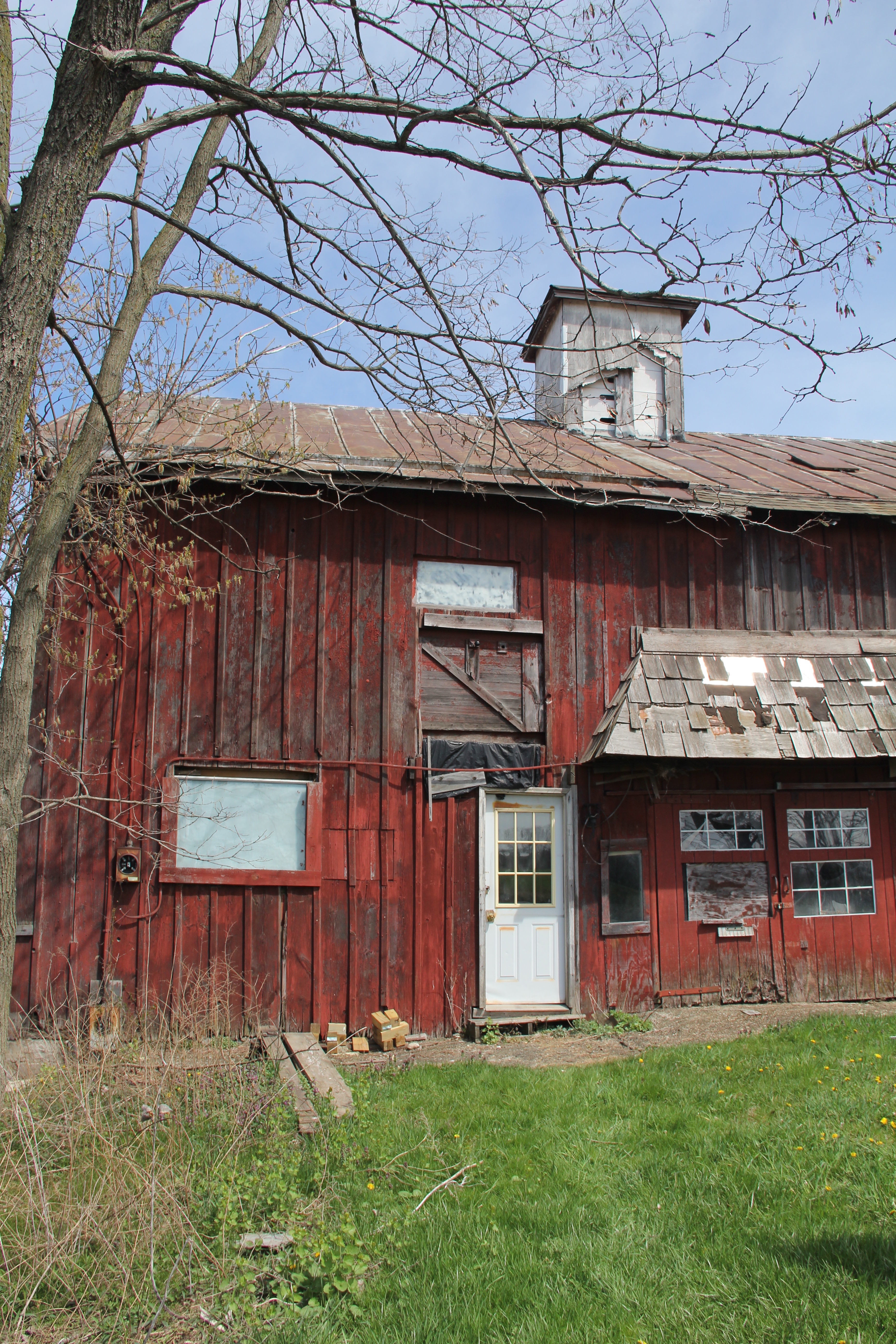
Following our porch discussion, we continued to perambulate.  I felt compelled to go into the barn and requested permission to snap some “ruin porn” pictures.  The barn dates back to around the civil war.  There was a strong debate among my hosts as to whether the barn should be moved, as it does not adhere to the 1810-20 period of interpretation.  Though I had opted not to weigh in at that moment, I had still decided the barn itself was a very cool structure.  We walked around the barn and then up to the upper floor. There I was shown where a previous owner had constructed a dwelling inside.  So he had moved out of the solid stone house to live inside of his barn. Odd, I thought – but I am sure he had his reasons.  We exited the second floor of the barn, out of the upper large doors that opened up directly to the street.  With this passage, I began to get a sense of connection to the street that I hadn’t when I entered from the back lower level.  The lower level opened up to the farmland and felt very agricultural, but when I got upstairs, it felt very commercial – almost industrial.

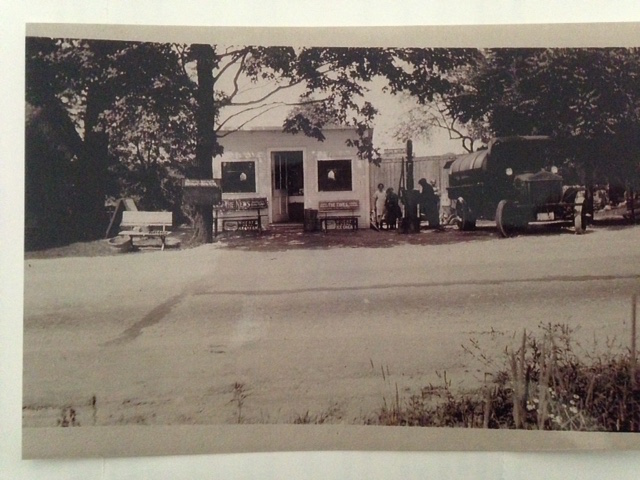
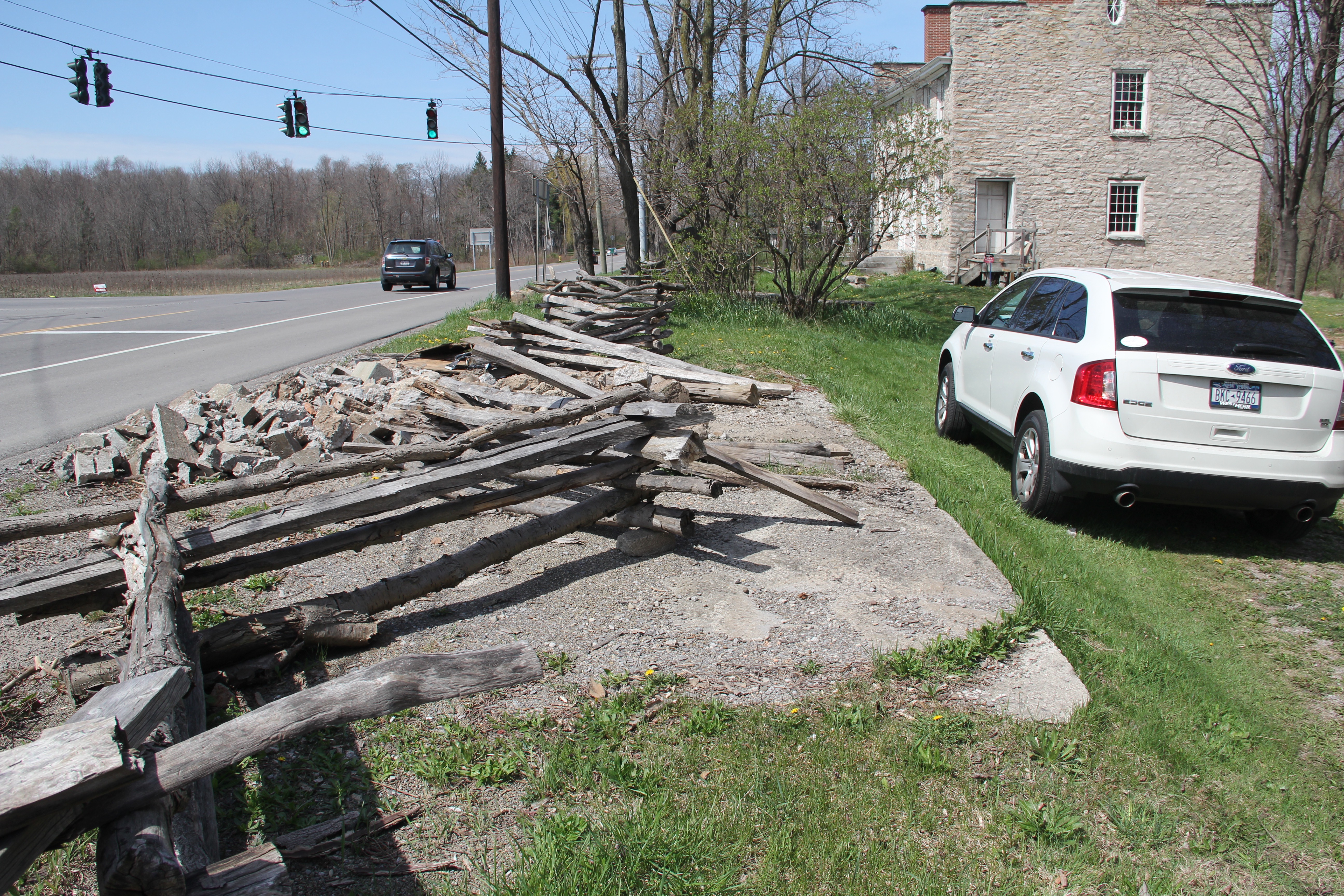
Once I exited the barn’s second floor and stood on the flat ground leading out to the main street, I started to have more thoughts about the odd placement of all of these buildings.  Then, the final puzzle piece came into place!  While pointing to a barely noticeable rectilinear concrete slab abutting the road, my hosts told me that one of the previous owners had placed a one pump gas station & retail snack building up at the road.  I asked when this might have been built – they answered maybe around the 1920-30’s.

IMG_2437
IMG_2722


Things started to make sense to me.

With trucks and cars roaring by, I stood and listened to my hosts discuss the site’s gas station era. They remarked that it was clearly outside of the 1810’s period of interpretation, and for that reason, the foundation remnants should be removed.  But yet, the more I thought about it, there was also something highly compelling about the role of transportation with this stone house’s story – why not integrate it into the narrative?

My hosts suggested we part company so I could have time on my own to explore and fully experience the house and site.  Wandering throughout the house, I noticed the odd little rooms on the conjecturally tavern side of the house. I opened windows and doors, letting the air and the sun become a part of my experience.  I also invited the traffic noise into the party.  Instead of trying to restrict it to the outside, I embraced it.  I wanted to honestly feel how the two busy streets effect on the house.

IMG_8624
IMG_8627


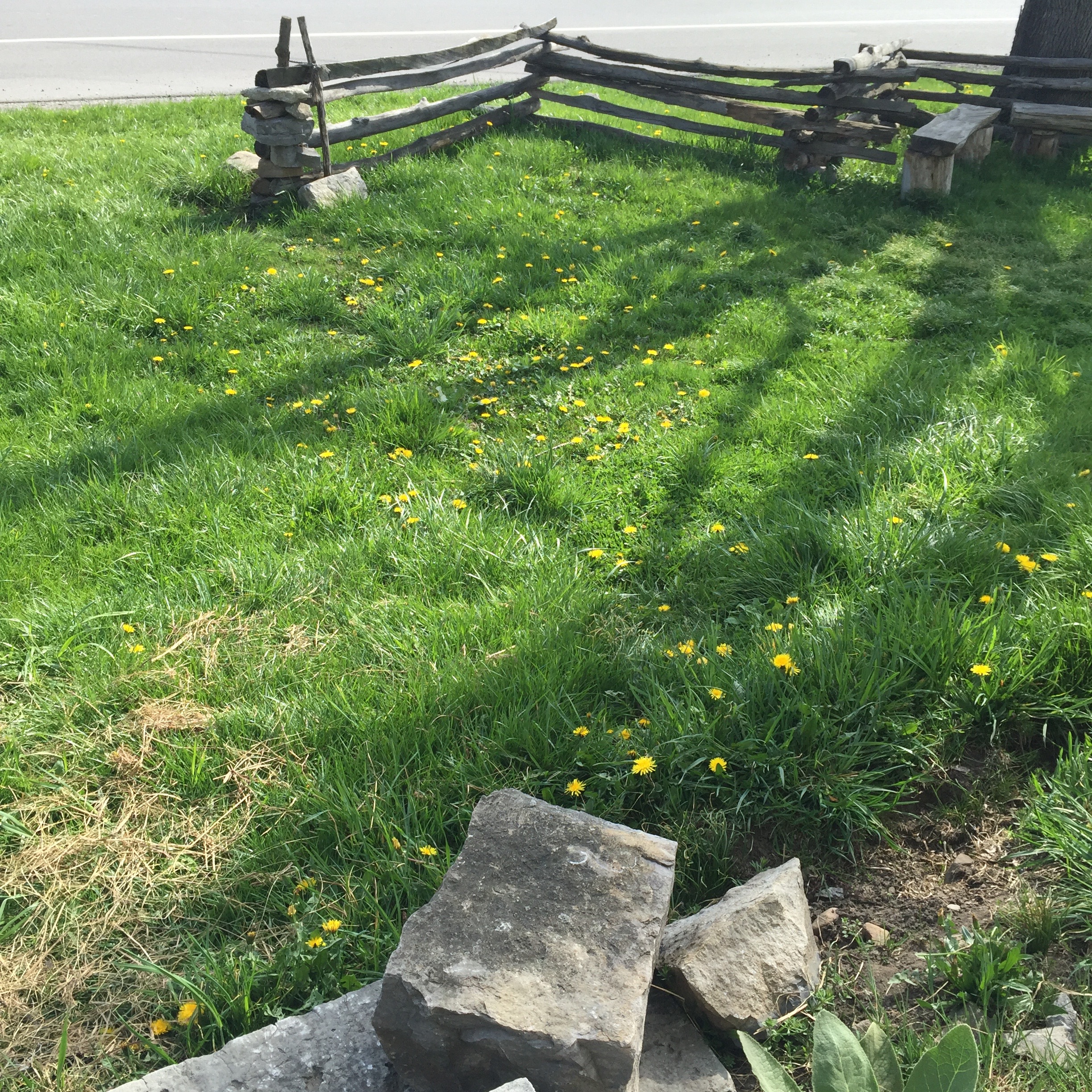
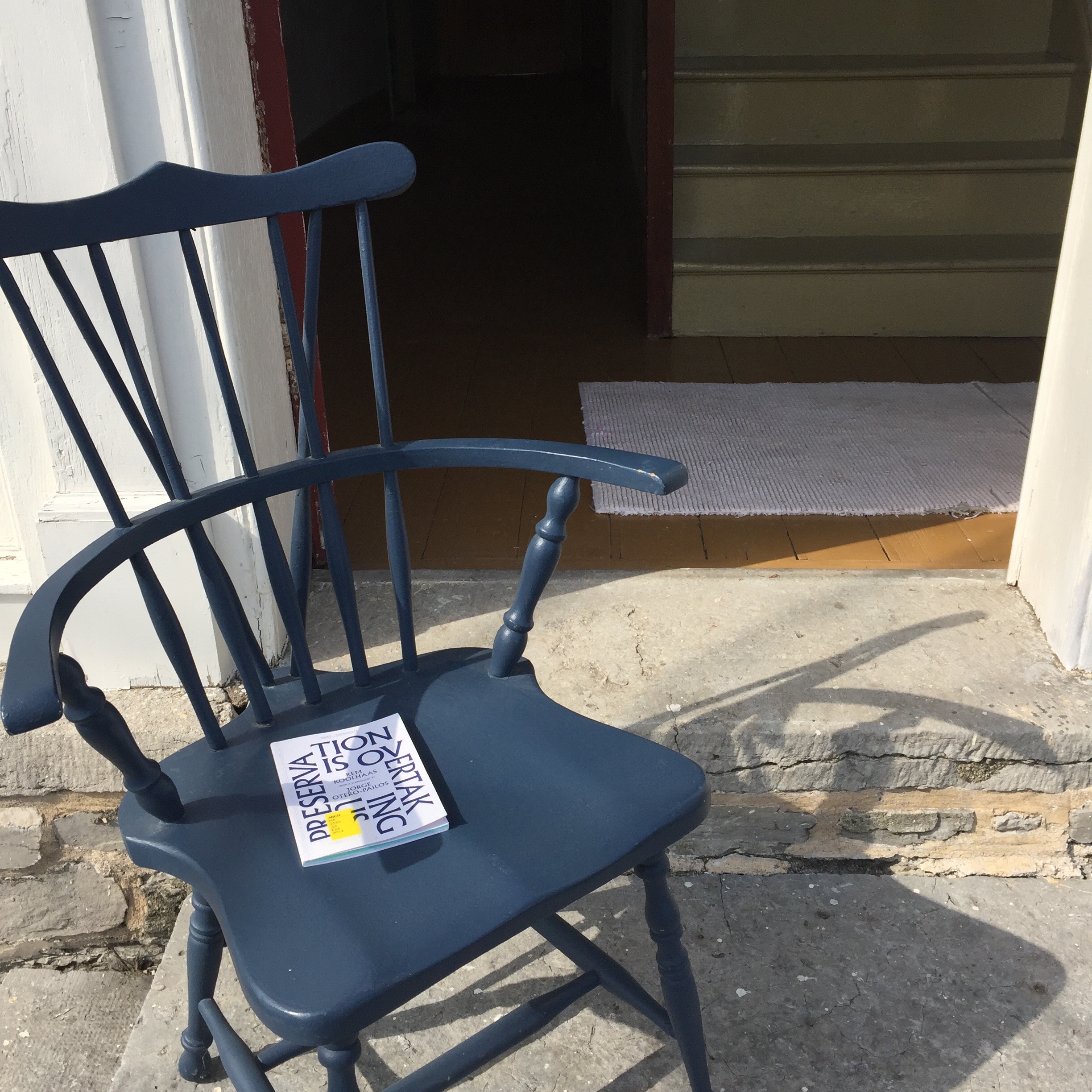
Having opened the front door, I brought out a parlor chair, and sat out in the sun to read my Rem Koolhaas book “Preservation is Overtaking Us”.  From where I was sitting, the road lay just beyond a patch of rich green grass with dandelions.  As if on a stage – there I was, dead smack at this T-intersection of two major roads.  Large traffic lights were hanging on wires practically above my head. I wondered, at what point, the intersection became so busy that it required a stoplight?  After a while, the sun dipped down, and I moved back inside.  Every room hummed with the sounds of cars and trucks passing just outside the stone house.  My considerate hosts had placed me in the back bedroom so outside street noise wouldn’t compromise my sleep, yet despite that, I could still clearly hear the traffic, interspersed with the sounds of birds chirping.  Oddly enough, the mixture of sounds was comforting, letting me know I was not completely alone.

IMG_2802

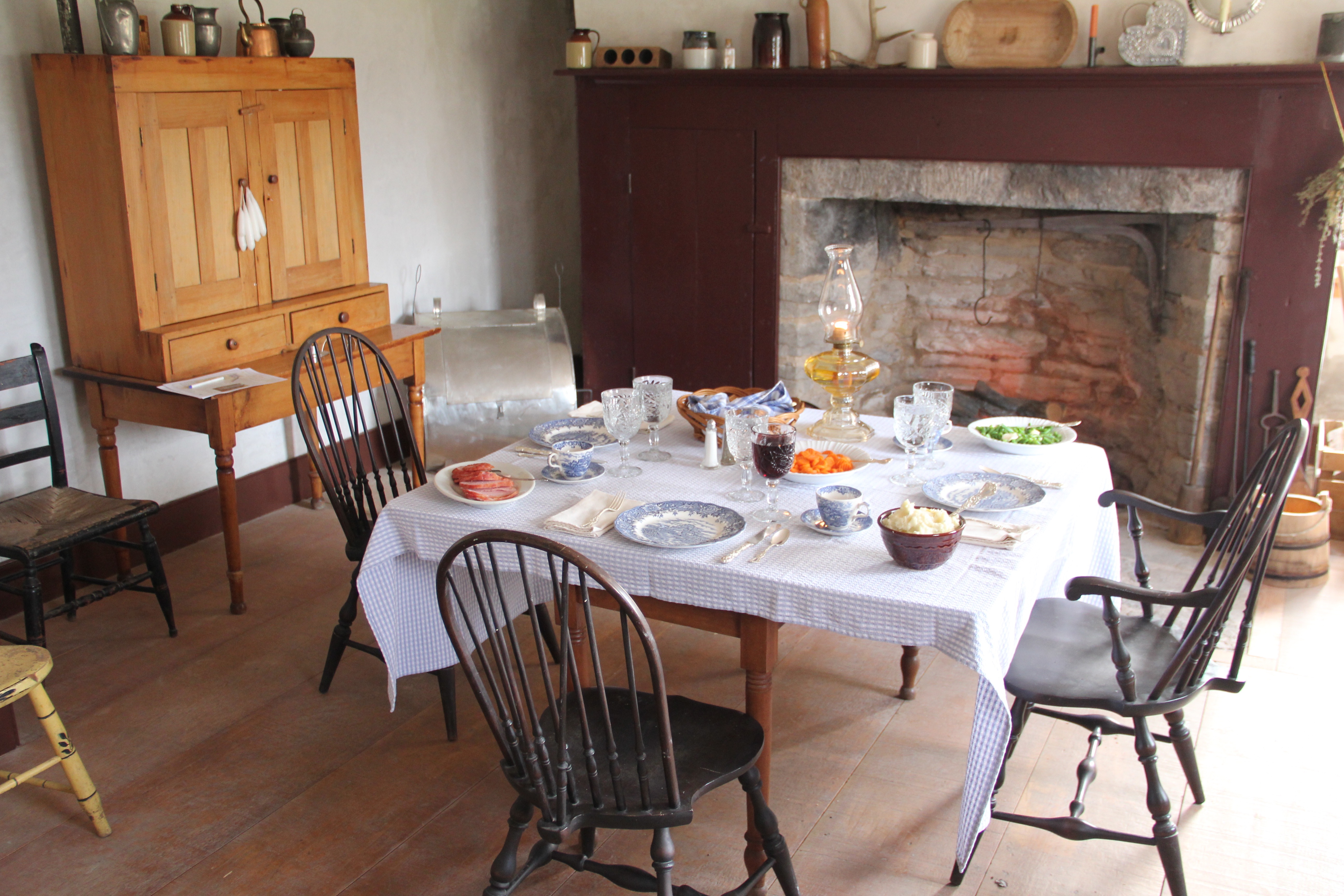
A bit later, my new friends came back over and we were all in the basement dining room. They had brought a simple yet fantastic dinner (ham, green beans, carrots, mashed potatoes) and topped it off with a delicious cobbler. Over dinner and wine, the historic setting seemed to recede and fade into the background. We discussed everyday items, like families and work – and a variety of current political topics including the election, and the legalization of marijuana.  Of course, I had to have seconds of this great meal.  Afterwards, while helping to clean the dishes, I was able to chat a bit more with one of my hosts, Donna – and also express my gratitude for the person who had not only polished the silver and set the table, but prepared the entire meal. Over the drying of dishes, we spoke about our pets, love lives and politics – I knew I was in “Trump Country”- 65% of the Republicans voters there had voted for Trump – it was nice to talk about meaty contemporary issues and not only interpretive history.

The sun was setting and I wanted to walk around the site one last time before dark.  Grabbing my camera, I set out of the house and visited the family cemetery. From there, I went into the barn again, and back out around the property.  All the while, you could hear the subtle (and sometimes not so subtle) sounds of passing trucks and cars.  The din of all these vehicular sounds simply refused to be ignored.  It then dawned on me that this constant “intrusion” was actually a message of sorts – a call not only to be recognized – but asking visitors to ponder the reasons for its very existence.  Those siren calls from the road, it t occurred to me, might just be the very thing that makes the Hull family House and Farmstead unique.

Personally, I have never appreciated the step back in time mentality of a lot of historians, who appear to be romanticizing a perceived “golden age”. To that I say, the golden age is now, stop looking only to the past – meld today’s experiences with those of the past and form a new understanding.  The past cannot inform our future choices if all we do is think of it as a set of facts and figures, historic documents and dead people.  We have to make these connections – as historic site stewards, we have to seek out these overlaps, even if they run contrary to our strategic plan or museum “best practices”.

Walking back to the house, as the sun set, I was able to get a glimpse of the stone structure, perched practically on top of the highway, acting almost as a retaining wall for the traffic.  The front façade of the house seemed very public, formal and two-dimensional, while the back of the house looked informal and familiar.  This house and farm site had much to say to me about the complexity of settling in unchartered territories.  It was hard to fully appreciate how this street (now full of traffic) was at one time considered to be the edge of civilization.  The Hulls were Western settlers, pushing the limits of occupation and habitation.  This road was the conduit through which safety, supplies, comradery, and revenue was transported.  Of course you would hug this road – It was the artery through which the life blood of your existence would flow. Siting this remote house back from the road would have meant further isolation.

IMG_2821

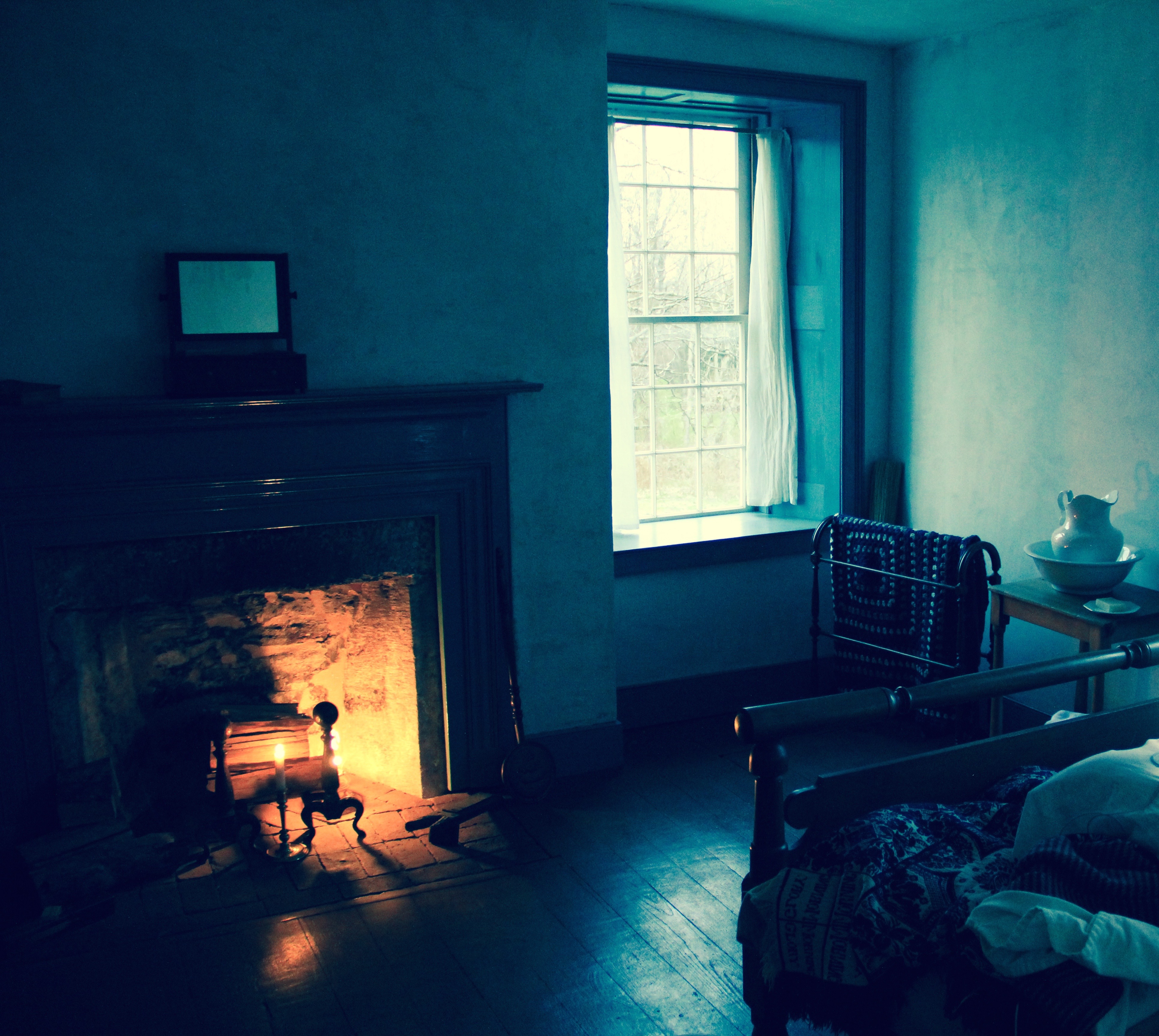
Having retired to the back bedroom, I prepared myself for what I hoped would be a night of blissful slumber.  The windows were still open and the breeze was blowing the thin draperies into the room … and then sucking them back out – the lungs of the house seemed happy that I was using it.  The sounds of the street never fully abated, but they were comforting reminders that I was a part of a larger whole – a comradery.

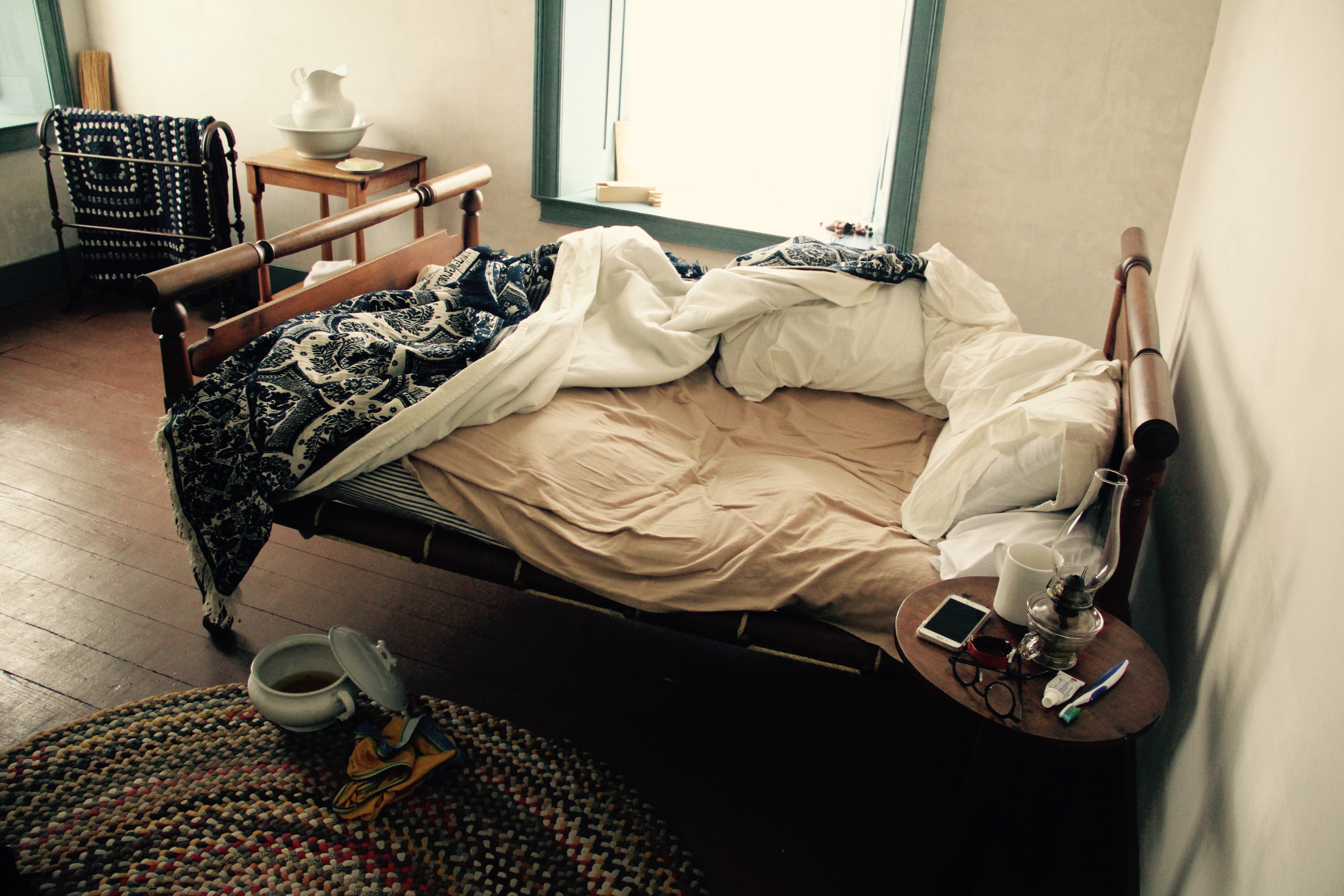
Using a kerosene lamp and candles as my light source, I began to figure out the best way to sleep on a hay filled matrass.  Getting in and out of the bed was a bit of a challenge, once you are in it – all is well.  The hay was dense like a futon.  With each turn in bed, I would hear the sounds of the hay rubbing together – then they would quiet down.  The simplicity of the room, its furnishings and the bare plaster walls all united to form a magical spot.  I have slept in other “one night stands” where the architecture was so strongly felt that the experience was defined by the building.  That was not the case at the Hull Family Homestead.  The bedroom felt like a secure stone barrier to the outside world. It was not least bit spooky or uncomfortable.

IMG_2822
IMG_2848


The grandfather clock, at the top of the stairs right outside my bedroom door, periodically chimed in over the traffic sounds, which continued through night.  Once again, the clock sounds (both the ticking as well as the joyous chimes) were a check-in of sorts.  I was not alone and there was something larger keeping track of my existence.  I fell sleep to the combined orchestration of sounds: crickets, traffic, and the grandfather clock ticking & chiming.

IMG_2899

IMG_2693
IMG_2686


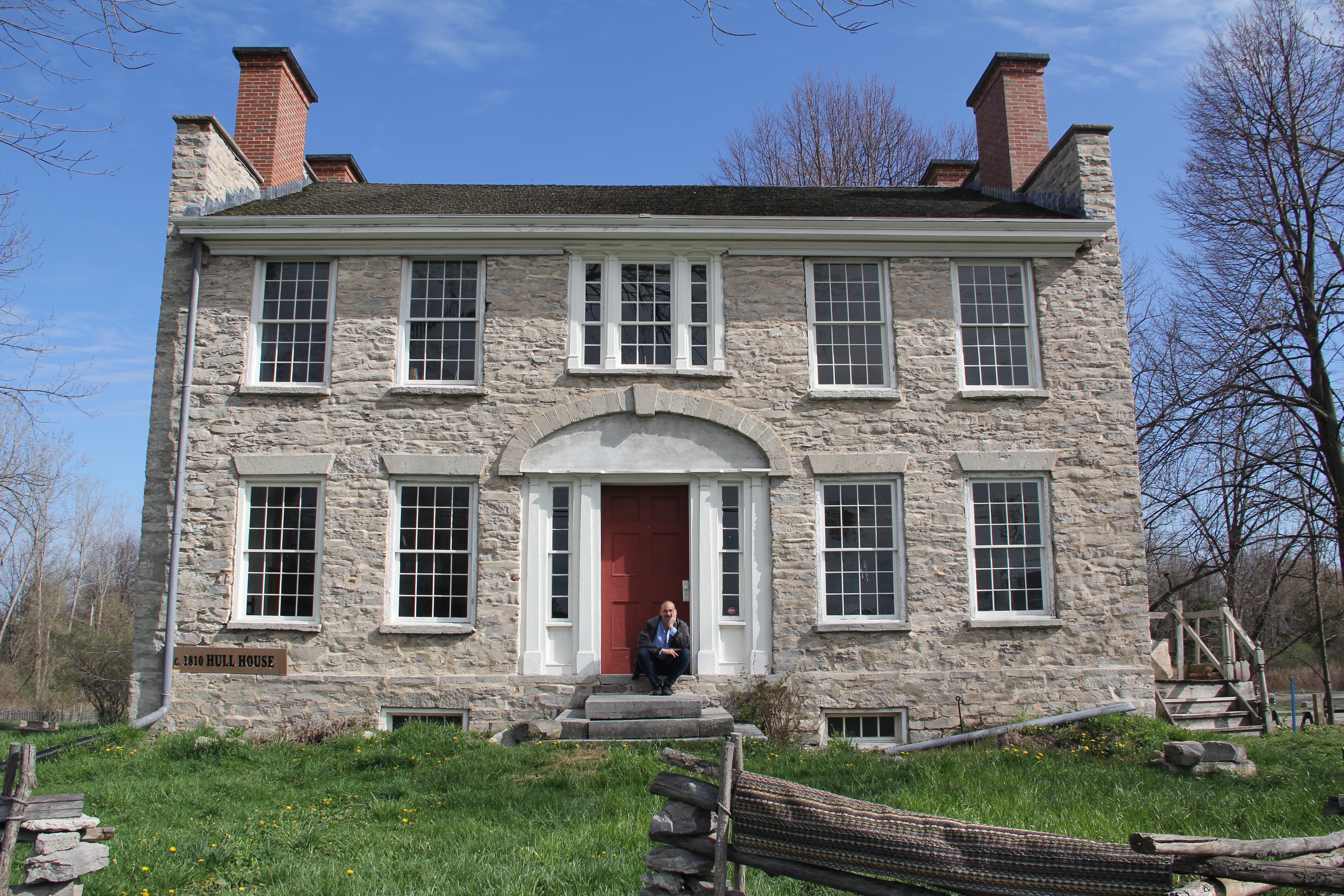
The following morning, I woke up early to get a ride to the Buffalo airport.  Tidying up the room, I emptied the chamber pot and then got dressed. Every so often, I peered out the window of the second floor stair landing to see if my ride had arrived.  My host drove up the busy street, and then pulled over directly in front of the house’s front door. Before getting into her car, I asked if she would take a photo of me in front of the house –  to which, she happily agreed,  Standing at the side of the busy street next to her car, she snapped this shot.

Screen Shot 2016-04-27 at 1.10.29 PM

Once at the airport, it occurred to me that in that moment – the taking of a photo in front of the house – we had experienced the narrative of the house and the busy roads.  My host didn’t even need to drive into the property, she simply pulled over onto the shoulder and spoke to me from her car.  Imagine that! Her car was so close to the house that I could communicate with her easily and without yelling.  It seemed to me that the relationship of the house to the street was the core component to the Hull Family House Narrative.

The landscape now seemed conscious and not at all forced upon the stone house.  Everything about this site pointed to commerce – in fact, it seemed to me that the Hull Family site had always been fully integrated with the transportation system of its day.   The roads existed before the house, and the Hull’s chose to place it directly where it rests today.  It is not as if the road was placed following the houses construction, perhaps destroying a romantically beautiful agricultural setting – No, the house was always intended to be a part of the greater tapestry of civilization.  Nothing romantic about that.  In fact, rather pragmatic and straightforward.  After all, The Hulls were transplanted Yankees from Connecticut.  The road was a life raft.

Throughout the historical situations that this site has experienced, the one continuous element has been the two roads – the intersection.  The narrative of this site is about the intimate relationship between the lives of its many inhabitants and the roads that gave them sustenance.  Not to be ignored or wished away as some unfortunate byproduct of progress, the roads and traffic were fully integrated into the historic narrative.  From the original Hull family in 1810-20 building directly at the road intersection, to the later Hull descendants who opened a truck farm to supply Buffalo with goods, to the small gas station erected between the stone house and the barn – and even the 10 tons of tire debris – the life of the Hull Farmstead relied heavily on the connections provided by the roads. The Hull Family Farmstead is a story about normal people, working hard, utilizing the resources they have acquired to make the most out of those two little roads.  I like to think that the Hull’s would actually appreciate the sounds and movement of the passing traffic.  It validates all of their original reasons for settling and building a beautiful stone house in the middle of nowhere (that is now somewhere).

+ I would like to thank public historian Jessie Ravage for her guidance in understanding the nuances of New York State urbanism.

The “One-Night Stand” ™ series of blog posts are an attempt at shifting our cultural perceptions of historic house museums away from viewing them solely as public venues and moving toward a more intimate and tactile appreciation of them as places of private, domestic life.  My attempt is to highlight more nuanced and latent understandings of these places as vessels for life, social issues, politics, and habitation – not merely as decorative arts objects and collections artifacts. I spend the night in the historic bedrooms, using the furniture and experiencing the combination of behaviors and interactions with a home in ways that can only be understood as an inhabitant.

Copyright © 2016 Twisted Preservation| “Twisted Preservation”, “One-night Stand”, “Sleeping Around” are trademarks of Franklin D. Vagnone. All rights reserved.
The Decapitation Of Meaning

“Upon the face of this old queen of the French cathedrals, beside each wrinkle, we find a scar.” Victor Hugo


For me, PRESERVATION is a strongly political act. It doesn’t have to be, but usually, it is a result of a political process, collective funding, and committee-derived narrative. What this means is that preservation must validate a much larger and complex political landscape. Constructed historic interpretation can never really be unbiased or authentic, the facts are always pressed through the meat-grinder of a cultural perspective; harshly joining discrete elements into  a “chicken mcnugget” of history.

Screen Shot 2016-04-07 at 8.52.13 AM
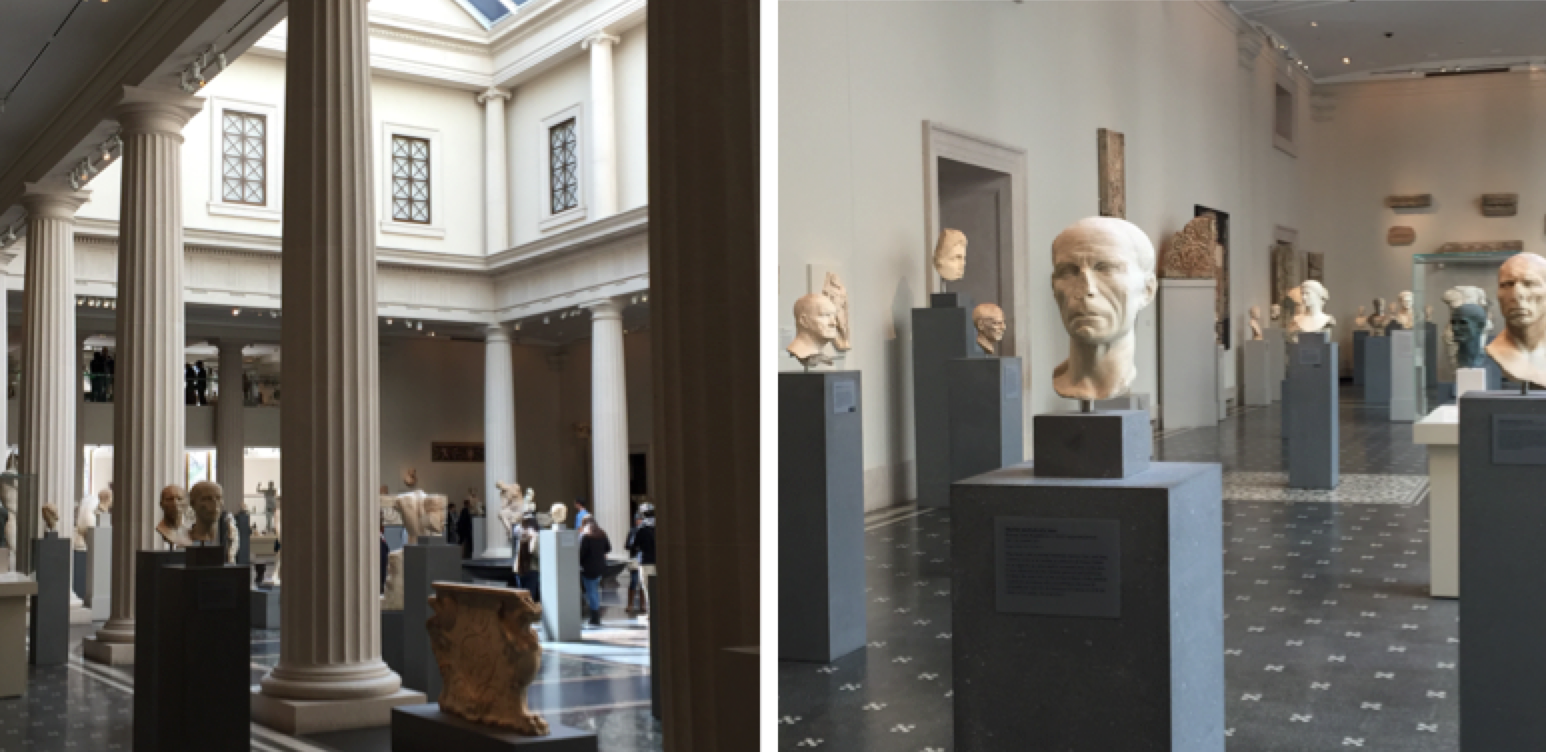
Before, in what seemed romantically an “objet d’antiquité”, now seemed kind of creepy. I was unexpectedly struck by the multitude of unattached heads displayed in the rooms. Photographs used for educational and non-commercial purposes only.

This idea came to me last time I was at the Metropolitan Museum of Art in New York City. I normally just walk around and see where my interests take me. In this childishly un-disciplined (but fun) manner, I found myself seated in the Greek and Roman Galleries enjoying the sun afforded the large atrium skylight. Scanning the expansive room, among the many tourists trying to take selfies without including other tourists taking selfies, I started to comprehend something that I had never really considered. There were a lot of headless torsos and disembodied heads. Before, in what seemed romantically an”objet d’antiquité”, now seemed kind of creepy. I took note of my feelings and slowly ebbed through the galleries and finally ending up in the Medieval Hall. Again, I was unexpectedly struck by the multitude of unattached heads displayed in the rooms.

Why did these things freak me out so much? I struggled to ascertain what these disembodied heads and destroyed faces were saying something to me. I wondered if all of this destruction of  artifacts was intentional or from natural decay? And if intentional, why some things contained such meaning, that they would become objects of ridicule, hatred, and to some, angry destructive religious outrage. Why would a piece of carved stone be seen as so dangerous that it needed to be destroyed?

As I was sitting there, I kept being reminded of a news story from earlier in the day. The story and photographs illustrate the condition of Palmyra, an official World Heritage Site, after ISIS had been forced out of the area. One of the images showed a large sculpture, The Lion of Al-Lat statue, which stood at the entrance of the City Museum. The sculpture, in an attempt by ISIS to destroy the artifact, had been pushed to the ground and the face of the lion was violently battered. In many ways, this image looked like a forensic photograph of a homicide. In trying to compare before & after photographs of the lion, it took a while before I began to see small shadows of what it had been. For me, it wasn’t until I recognized the antlers at the base of the piece that I began to grasp the level of destruction. The head of the lion had been mutilated beyond recognition.

Most recently, the city has been under occupation by ISIS and the old city archeological remains have unfortunately been systematically attacked and destroyed because they were seen as degenerate.

I began to wonder – why had the head of the Lion been so vigorously attacked and not the other parts? ? Is it just because the head of a statue is the most detailed or the weakest because of the neck being a stress point in the actual form of the sculpture? It seemed more than that to me So much of this damage seemed conscious and the destruction felt all the more powerful because it was concentrated on the head and face.

De-contextualizing meaning

The head and face is an identifier – it individualizes and contextualizes a generic body – it places it in within time and place. It provides a sense of ownership. The removal of a face or, in many cases, the entire head, separates specificity & identity from meaning & concept.   In severing the intellectual concept from the physical form, a break in reality is achieved. There is a long history of mythology and religious tradition that illustrate the significance of the head and face. In these stories, decapitation becomes the ultimate act of de-contextualizing power and meaning from the form.

Screen Shot 2016-04-07 at 8.55.36 AM
(left) Perseus with the Head of Medusa, Canova, 1804-06; (right) David (with the Head of Goliath), Donatello, 1430’s, Photographs used for educational and non-commercial purposes only.

In many ways, it is similar to the separation of intimate “love” from carnal “sex”. This can so easily be seen in contemporary smartphone match-making sites like GRINDER or TINDER. Although there is a slow evolution toward societal acceptance of these forms of matchmaking (and thus full face profile pictures), there still is plenty of headless torsos as profile pictures. In “severing” a head, all specificity and individuality are removed. What are left are simply a de-contextualized stereotype of an idea and a shadow of meaning: This is not a person, this is “sex” – this is not the titan God Apollo, but merely a man’s torso. Removal of the face and head allows for an objectification such that emotion and caring are removed.

Screen Shot 2016-04-07 at 8.56.30 AM
(left) Anonymous headless torso of a youth, Greek & Roman Galleries, Metropolitan Museum of Art, NYC; (right) Anonymous headless torso of a “Grinder” profile. Photographs used for educational and non-commercial purposes only.

The Jewish Museum in New York City got into legal battles when they exhibited a show by Marc Aldman that pictured profile shots from these “hook up” sites that were all taken in the Berlin Holocaust memorial. The problem was contrary to the need of anonymity, many of the exhibition images showed the faces of the profile members. The Jewish Museum was forced into removing the exhibition. In this case, showing the faces provided specificity to, what most saw, as anonymous sexual bodies. The generalized stereotype (anonymous) was acceptable, but a specific identity became troublesome on many levels.

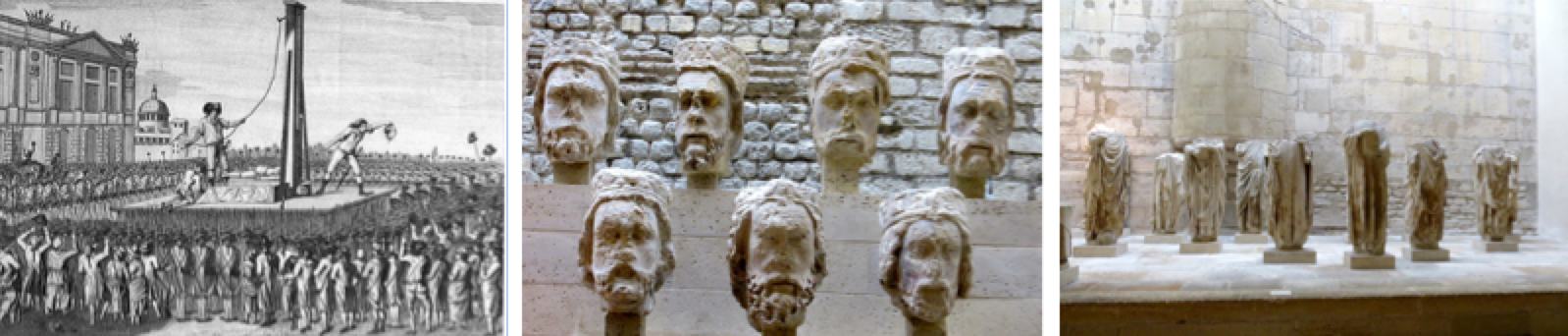
The intentional, destructive removal of the head from cultural artifacts is an ultimate gesture of a new dominance structure.  Conversely, to chose anonymity ,as in hook-up sites, is to retain power. In either case, the head is the seat of power. The entire situation becomes multiplied, when, as in images of John the Baptist, the sculpture depicts the act of decapitation. At the MET, the decapitated heads (due to the destruction of cathedrals during the French Revolution) of sculptures of saints once located on Notre Dame Cathedral are displayed next to a sculpture of Saint Firmin holding his own head. Is this a curatorial joke?

Screen Shot 2016-04-07 at 8.57.22 AM
(left & right)  Removed heads of sculpture from Notre-Dame Cathedral, damage occurred during the French Revolution; (middle) St. Firmin holding his head, 1225-75, Amiens, France. All Metropolitan Museum of Art. Photographs used for educational and non-commercial purposes only.

In these acts of destruction (either real or mythological), the collective mind of one culture is being removed and a new power structure is filling the void.   Whoever currently “owns” an object, decides how it is interpreted, used, and ultimately if at all maintained. This always seems to run back to the very basic notions of “preservation”. The objects and artifacts are simply the materialities used to express one’s interpretive power. The objects are the raw material in political, social and religious debates. Their use and physical condition are regulated by outside conditional forces. The ebb and flow of these social conditions become marks, fractures and, much like the guillotines of the French Revolution or the hammers of the Protestant Reformation, they result in disembodied parts of sculptures representing a catastrophic shift in cultural perspective.

Screen Shot 2016-04-07 at 8.58.28 AM
Much like the reality of the guillotine, in its desire to erase all traces of feudalism, The French Revolution systematically and seriously damaged the decor of the cathedral of Notre Dame of Paris.  In 1793, the twenty-eight statues of the kings of Judah on the main facade were taken down and then sold to a building as scrap material. Photographs used for educational and non-commercial purposes only.

As I sat in the MET and look at all of these headless sculptures I couldn’t help but think of the real destructive acts that have brought the sculptures to this point.

I see the fragmented physicality of these sculptures as a metaphor for the slow processing of cultural re-framing. It is as if the physical shape of these sculptures are literally being re-formed through erosion, attacks, and cultural appropriation, such that the attempt, either intentional or not, is to hammer away prior ownership. All of these artifacts were ‘amputated”, through destruction, from their contextual meaning of origin and appropriated by another power. Through removal of the head and face – cultural identity was erased.

Arriving home, I began to take note of all of the headless and damaged artifacts that I had collected over the years. I have kept hold of these things because they seemed to tell a story that was outside of the accepted narrative. These now flawed artifacts, broken shards and “missing” faces are the witness to an erasure of meaning – a narrative of fabricated incompleteness.


Photographs used for educational and non-commercial purposes only.

One Night Stand: Leaving Crumbs Behind

Gadsby’s Tavern & Hotel

Alexandria, Virginia

March 16th, 2016

NOTE: This is part of a long-term series of “One Night Stand” ™ blog posts that will document overnight stays in actual historic house museums.  I want to understand these sites as more than merely decorative arts galleries – I am interested in them as places of habitation, not museums. I want to thank Gadsby’s Tavern Museum and the city of Alexandria for their willingness to be a part of this experiment.

I got the email less than 24 hours before I was to travel to Alexandria, Virginia. The organizer of the gathering for which I was to speak, informed me that the Mayor of Washington D.C. just made an announcement that the city was performing emergency repairs to the subway system and the entire D.C. Metrorail would be closed down at midnight that day. The expectation was, of course, that automobile and bus traffic would be a nightmare, and that I needed to make sure that I gave a lot of time to get from New York City to Alexandria (through Washington D.C.). My plan was to arrive at the D.C. Union Station and then hop on the Metro to Alexandria – easy peasy – except not today.

12651298_10209289096332481_2517259734422065172_n
MGR-post1-image2


A day earlier, knowing that I was traveling to Alexandria, I was contacted via Twitter by the staff at Gadsby’s Tavern and, as part of my ongoing “One Night Stand” blog series, offered an evening’s rest in their historic lodging, third floor dormer rooms following my presentation. I was delighted to be asked, and I accepted.

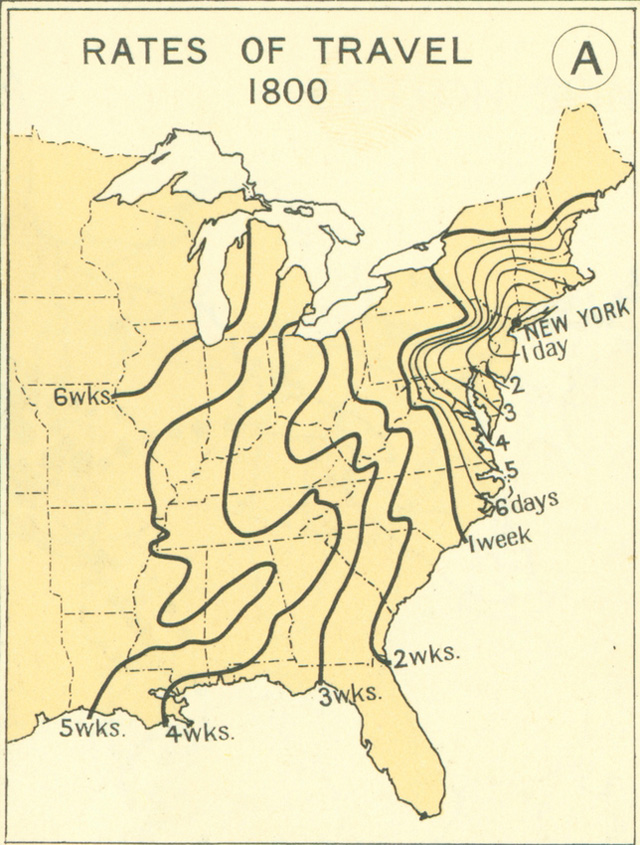
Excited about not only my presentation, but also my “One Night Stand” at Gadsby’s Tavern and Lodging, I hastily switched my travel plans (and increased the cost from $15 to $130) to arrive directly in the Alexandria train station and bypass the need for vehicular travel within D.C. itself. The train would take about 4.5 HOURS. I wondered how long it would take in 1790-1800 to travel from NYC to Alexandria? I pulled out my handy smart phone and found out that it took about 4.5 DAYS to travel the same distance. Same number, but a different scale. I also imagined the level of anxiety and thought that must have been needed to make such an extended journey.

IMG_7451
IMG_7463
IMG_7435

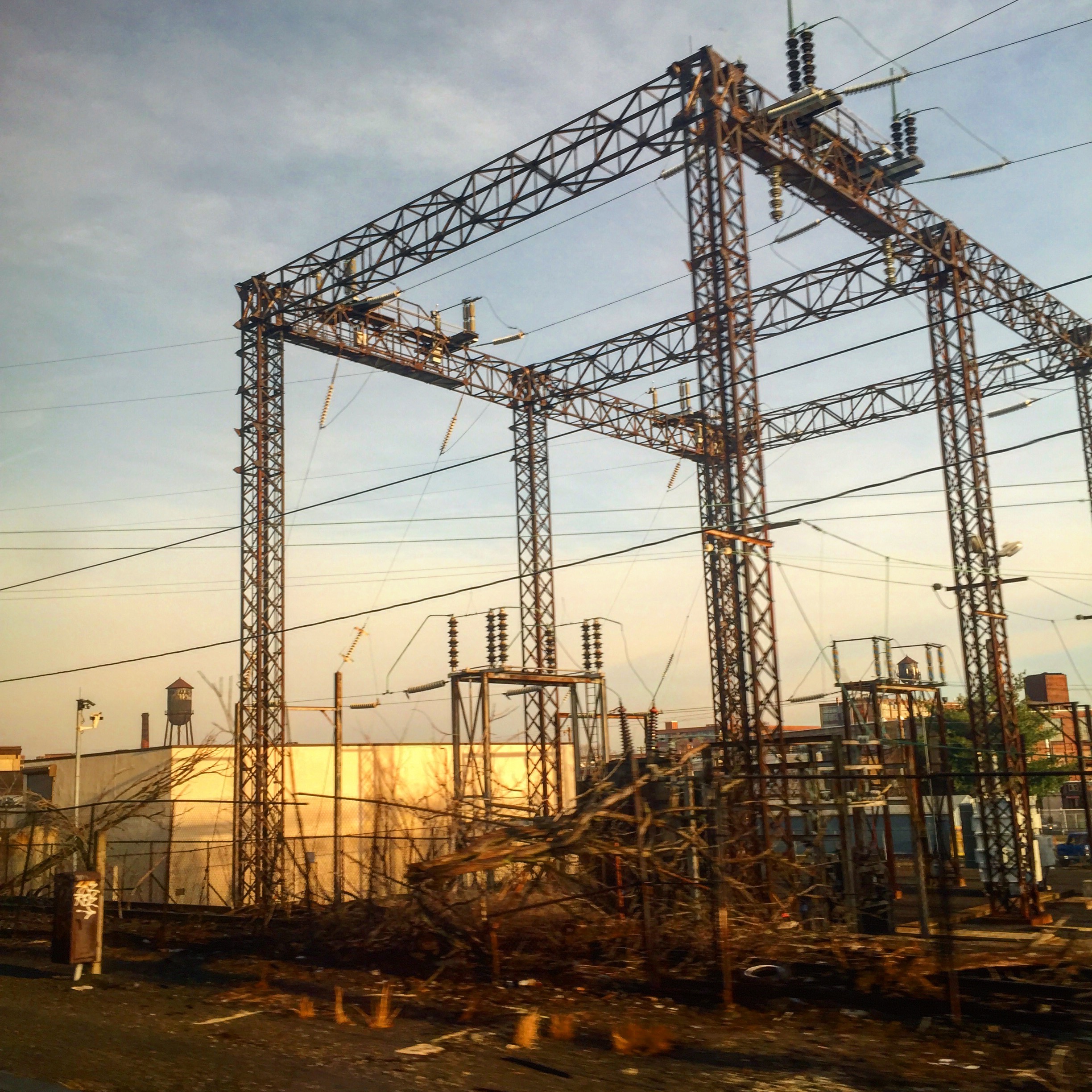
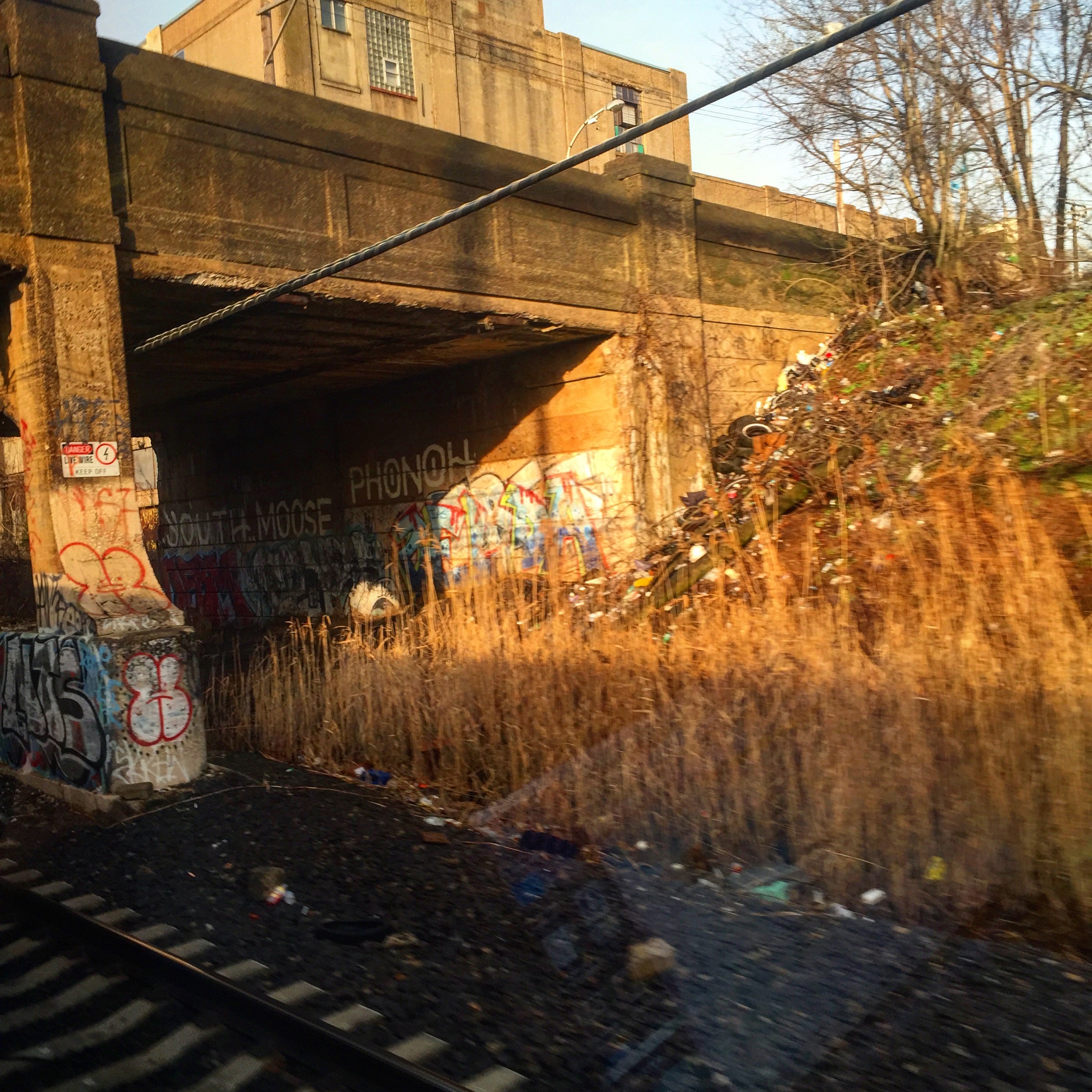
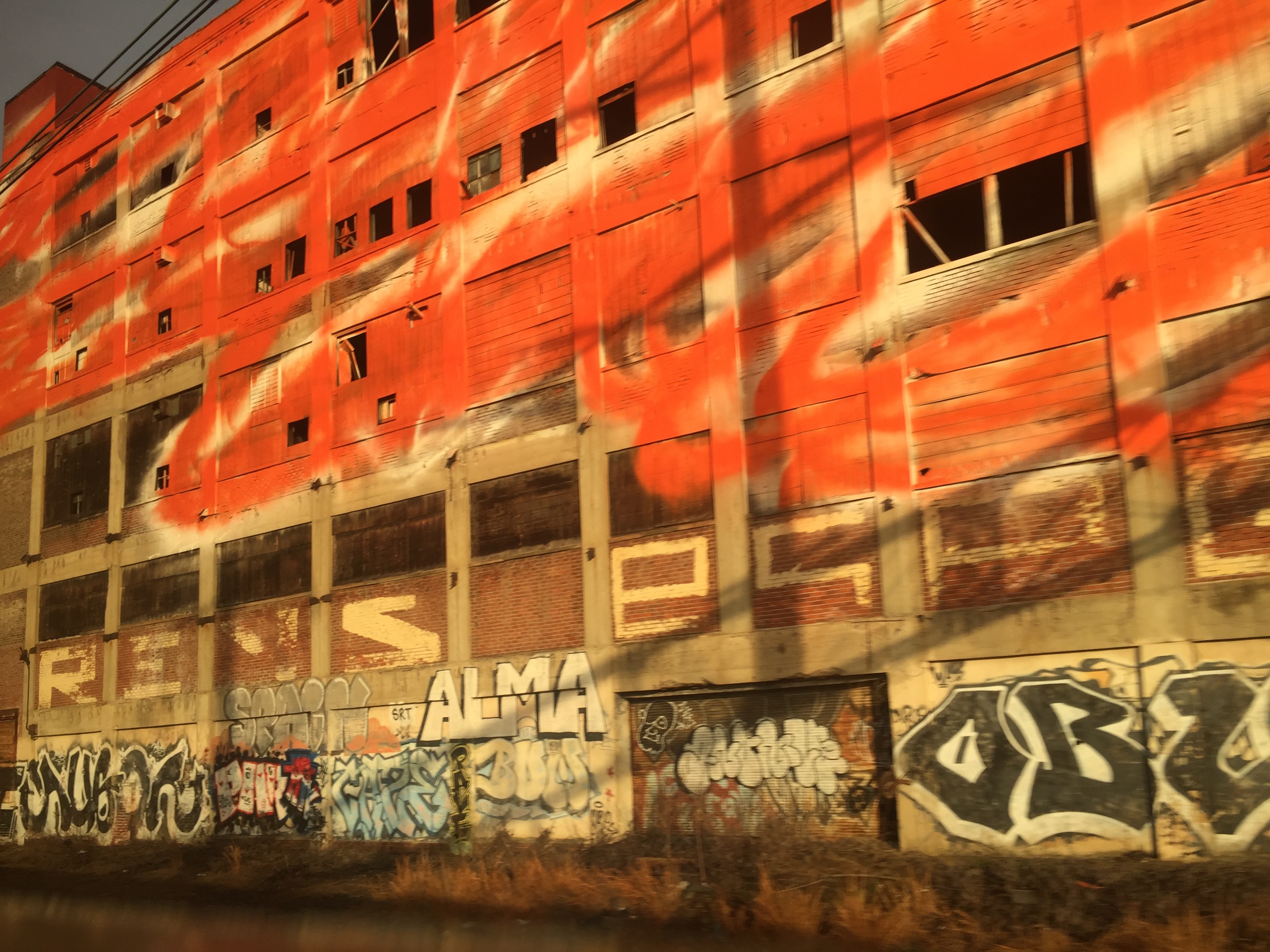
The train travel was fine. It allowed me the quiet time to sit back and view the passing landscape. I love the decayed, industrial ruins of the properties directly fronting the Northeast train track line. There is a visual clarity and honesty about these landscapes. When I got near Philadelphia, I began to see a wonderful contemporary overlap on top of the existing aged warehouses and industrial buildings. Bright pink and orange paint was sprayed on these witnesses to our past – as if to re-make them.

I was happy others found these landscape worthy of interpretive re-assessment. These public art/history projects were executed by the artist Katharina Grosse and facilitated by the Mural Arts Advocates. I imagined what types of things travelers in 1790 would have encountered as they made the journey to Alexandria, VA.? Did the landscape, as in these contemporary public art projects outside of Philadelphia, hold local uniqueness that signified a threshold or boundary between one location to another? Did the landscape and the built environment provide an ephemeral political or social demarcation that was manageable and clear? Or was it fuzzy?

IMG_7466

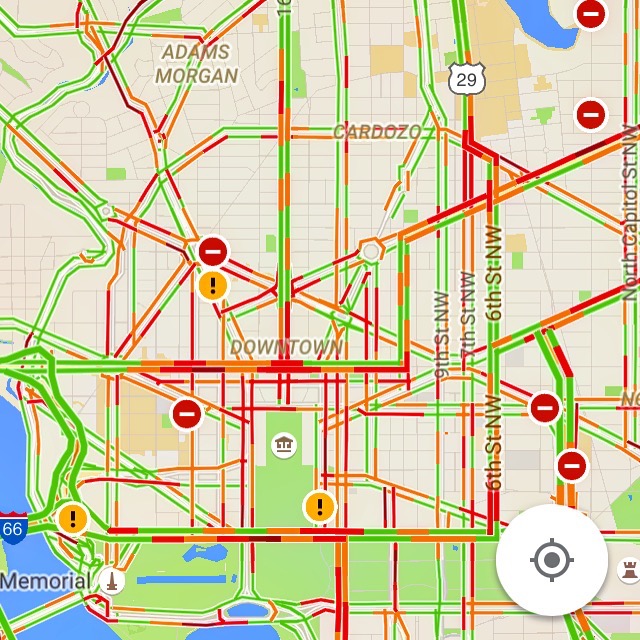
Once we entered the D.C metro area I logged onto my social media news outlets to see how the traffic situation was resolving itself. I checked out the Google traffic map and I was verified in my quick travel methodology switch. There was a lot of red on that map. I wouldn’t have made my required arrival time.

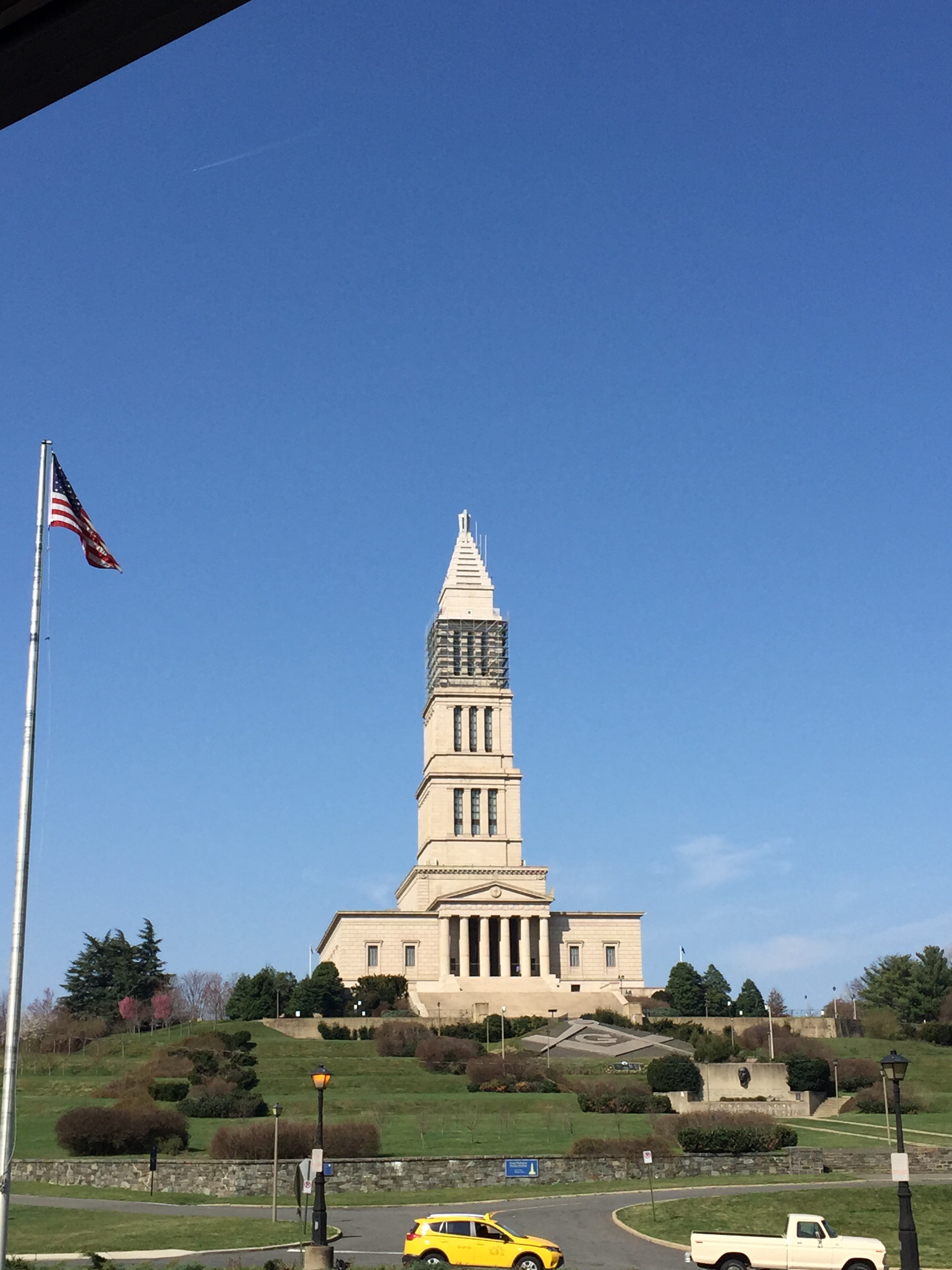
After leaving the train in Alexandria, and as I crossed under the train tracks, something happened to the built environment – my 4.5 hours of decaying industrial landscape changed. Concrete disappeared, building maintenance increased, and things got “colonial-ly”. The most dominant landmark was, of course, that weird and highly visible masonic monument to old George Washington himself. As a history nerd, I have always wondered about this phallic pile of stone, but because the Masons are a secret society – it was secret – and nobody was going to tell someone like me any secrets. Oh well.

IMG_7473
IMG_7474
IMG_7475

Beside the “Emerald City of Oz” Masonic Shrine to GW, my first realization that I was no longer in a decayed industrial corridor, came when the sidewalk turned from regular, old concrete to special brick walks. Although the walks were made of southern clay red brick and not yellow, it was clear that I was walking toward a historically curated town. The brick surface made my roller-overnight bag hop and jump as I walked. In another OZ comparison, my bag seemed animated, as if dancing down the yellow brick road to Alexandria.

I wanted to walk to Gadsby’s Tavern, so I located it on my Google map app, and my New York walking shoes pushed on. There were a lot of cute retail stores, beautiful residences and attorney’s offices. Everyone was quite friendly and there were a lot of dogs.

The afternoon progressed with my consulting and presentation efforts, and, following the evening public presentation, my “One Night Stand” at Gadsby’s Tavern began.  My  hosts were, from the start – fun and full of interesting facts and juicy gossip, and I was told that they had planned an entire evening of fun experiences. They also told me that they saw themselves as continuing in John Gadsby’s legacy– they were simply the keepers of the Tavern and Hotel. The first event of the evening was a dinner in the historically atmospheric, and beautifully appointed Tavern. The table was set with pewter plates, candles and linen appointments. Because it was often the drink of choice at the tavern, it was suggested that I order the rum punch to start off the evening– and I did. Ye Olde Menue read like a possible history text of conjectural, hypothetical yet marvelous food options. I chose the Gentleman’s PYE. It was a kind’a meat stew with this big puff pastry thingy on top of it. It looked fancy. I was hungry. I drank my rum punch, ate my PYE and we chatted. It was a really pleasant dinner.

IMG_7547
IMG_7550
IMG_7551

Now, here is where I started to freak out.

For those of you that know me, “period of interpretation” and dates matter less to me than the substance of the narrative. Don’t get me wrong, dates are important, but not in themselves. We discussed the complicated machinations of Gadsby’s Tavern, and later Hotel, and later & highly disputed (but interesting nonetheless) occasionally cited for activities associated with ill repute. This all was so complicated, that I pulled out my red pen and memo book, and tried to write it all down. Still not successful in gaining even the most marginal understanding of the timeline – I, out of frustration just asked them to either “put me in a bedroom that has a date that I can understand, or just pick a date and pretend that it is all “documented” from your archives”. We all laughed at ourselves and they happily agreed (we also had been drinking our rum punch, so that helped).

IMG_7949

But honestly, as I sit here now writing this “One Night Stand” blog post, I can’t for the life of me remember the year that I was supposed to tell you all for the “period of interpretation” of my lodging room. I think it was sometime between 1785 and 1800 (I had to check my little red notebook).   Also, you must understand that there are two buildings, both with different dates of origin and different dates of leasing periods, with different ownership deeds. So there – I have done my due diligence to my fact checking readers. Let’s all just agree to not care from this point on in my post. Even with all of this “period of interpretation” stuff going on – It was a grand dinner in Ye Olde Tavern.

After dinner we headed to the lodging spaces. We wandered around a bit and chatted as I looked through the rooms and asked questions. They directed me to the basement and I followed. What I found was the staff room. It consisted of a really crowded, storage filled, space with a big community table at one end. There was a makeshift kitchen with a fridge. The table seemed to hold an element of detraction for all of the stuff surrounding it. In return, the stuff released any ownership of the space around the table and there was just enough room to grab a seat and relax.

IMG_7731
IMG_7736
IMG_7733


The truth is, that this is where the Colonial Oz analogy stopped, the “period of interpretation” was fuzzed, and the moment simply became about people chatting around a table.

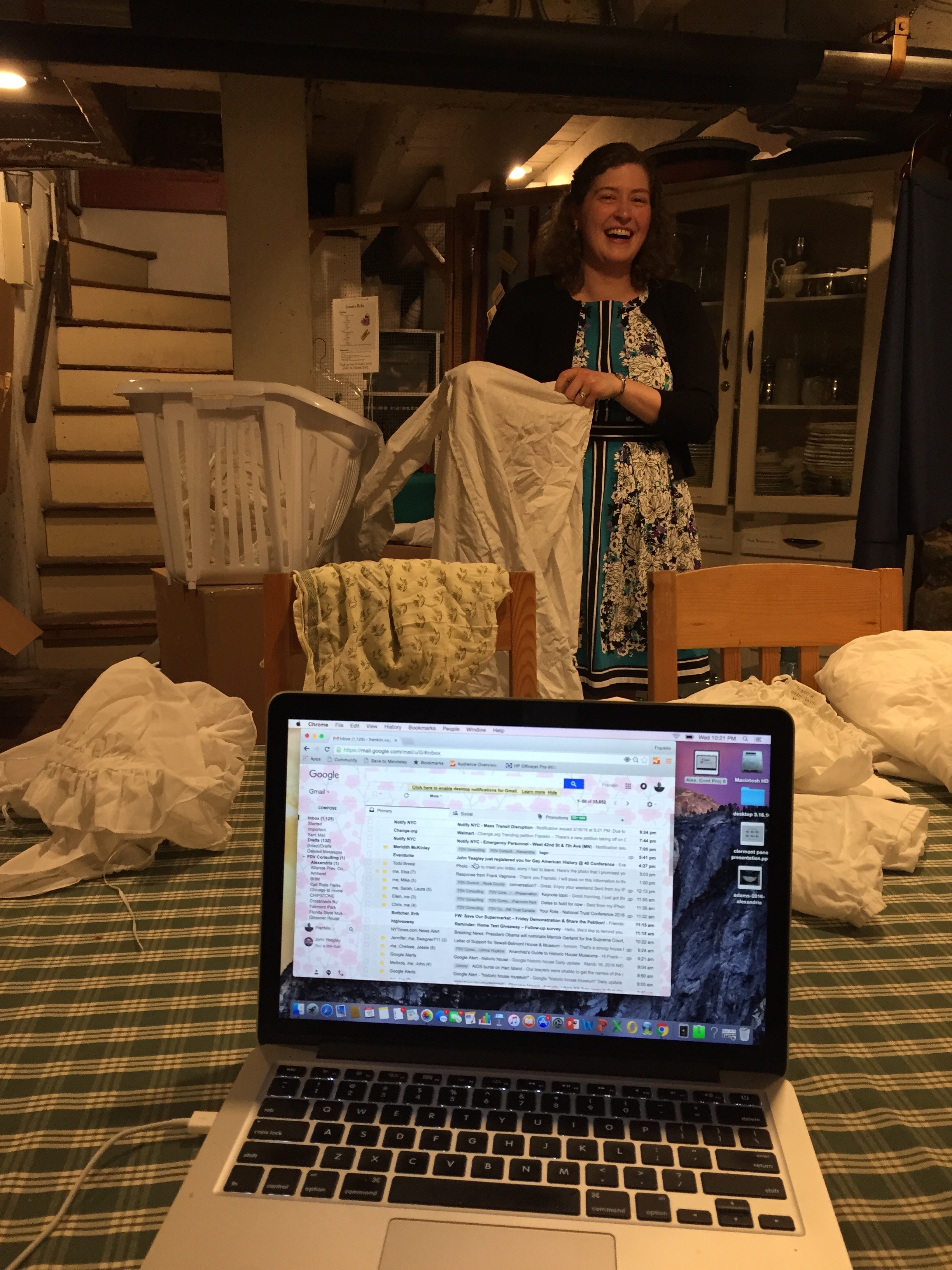
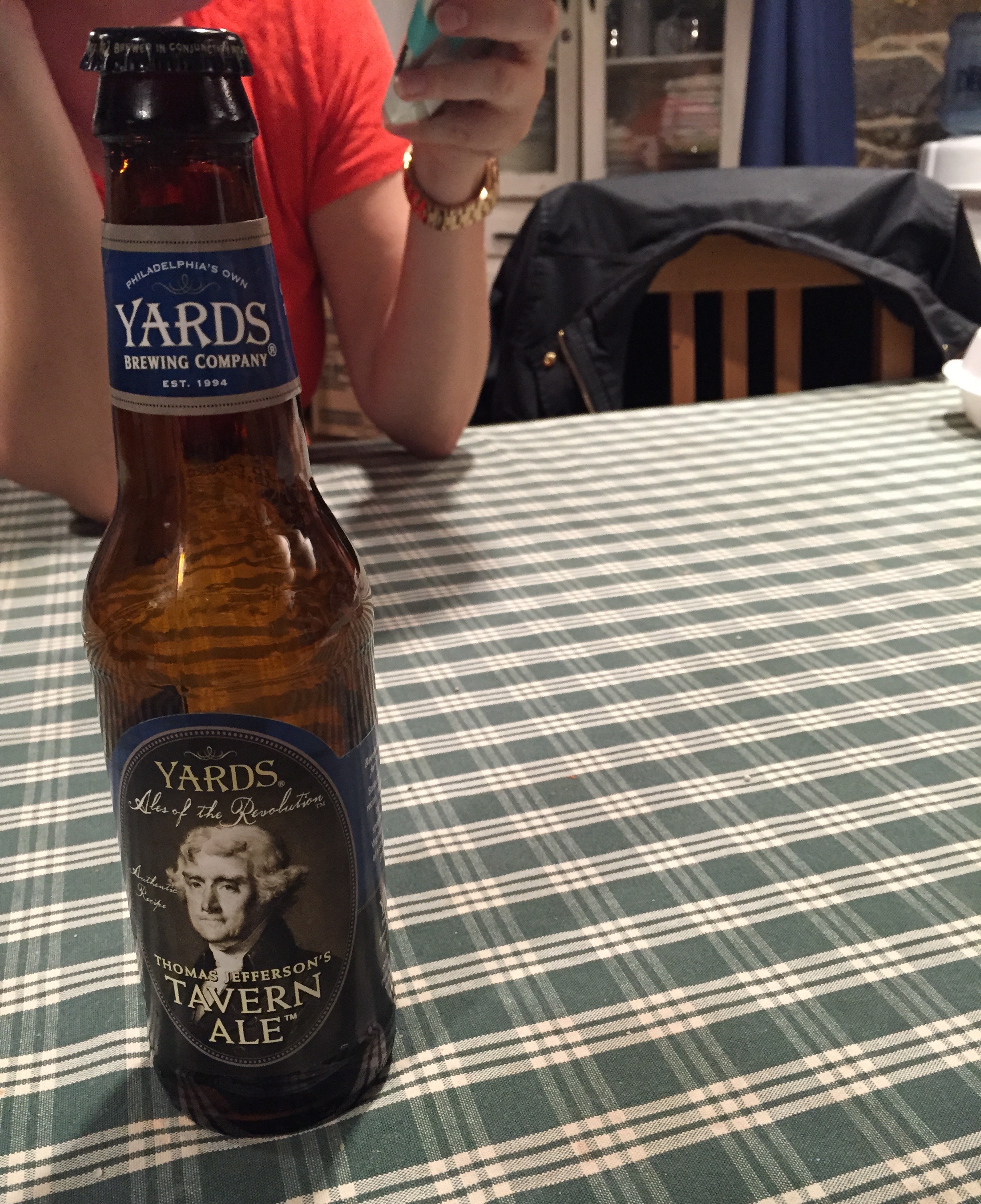
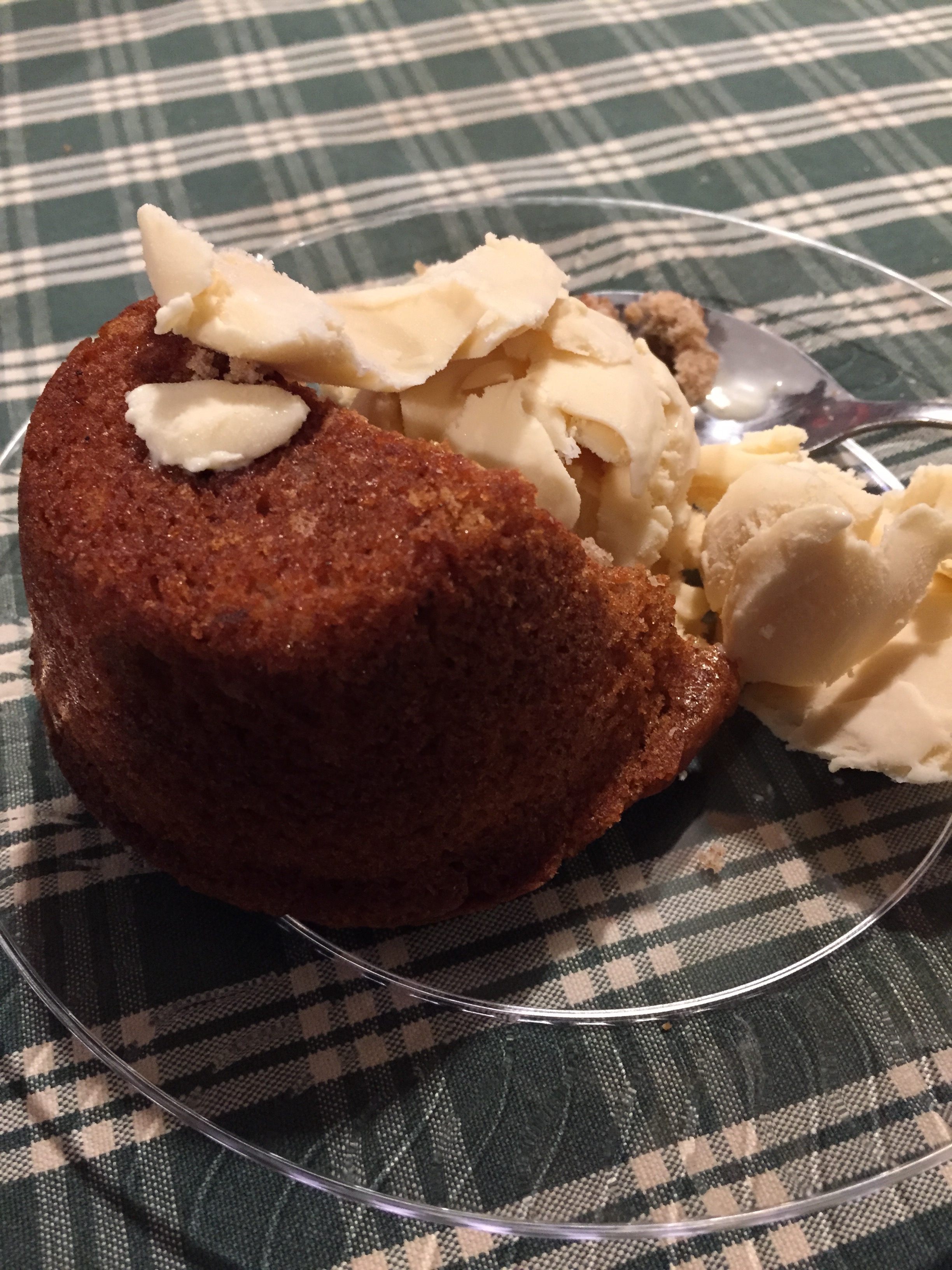
Effortlessly and without anyone directing, beers were pulled out of the fridge, a hamper of clean “COSTUMES” began to be folded, I checked my email, and the chit-chat started flowing. Laughter and a generous amount of real hospitality filled the tight space around the table. My hosts had ordered some gingerbread dessert from the Tavern “to-go” so we opened the Styrofoam containers while others grabbed spoons. To my surprise, a big tub O’ something was pulled out of a freezer and they began to cover the gingerbread with what looked like ice cream. I was into it and asked why the huge tub O’ Ice cream? They told me that the ice cream was left-over from an event.  What was great about the ice cream was that it was BEER-ICE CREAM; That flavor was neither an historic recipe nor anything I had personally eaten before!

The evening just kept getting better and better.

The table was not set up in any pretty way. In fact it still had crumbs on it from previous gatherings. There was nothing curated or special about any of this environment. We sat, eating our ginger bread and beer ice cream for well over an hour. We discussed Bernie; Hillary & Trump, slavery, the difference between a “dealer” and a “user”, COSTUMES vs. clothing, my travels around the country and what other historic sites were doing, allergies to wool dresses, our families; kids; and pets. Without trying, we all just fell into a natural, intimate experience that I seriously suspect is quite indicative of how it must have been historically for a New York City Traveler arriving to Alexandria in the 17-somethings. As a traveler, not only were you hungry and tired, but you were also in need of conversation. You wanted to share news, hear about their town, discuss what was going on in the colonies or the new nation, and just plain gossip. I imagine these discussions were current, relevant and immediate. I suspect that they were full of anxiety, companionship, intimacy, and, of course, leftovers from the previous day’s meals. The authentic Gadsby’s Tavern was to be found in the basement, not in their period rooms upstairs.

I loved my leftover dessert, the conversation, and the people.  Gadsby was smiling.

IMG_7762 (1)
IMG_7764
IMG_7810

I told them that it was past my bedtime. We climbed the winder stairs to the third floor. It got much darker as you stepped up. I was imagining this being the end of a very long journey and how these contorted stairs would feel like an obstacle course for the traveler’s tired feet. It was really dark in the dormer rooms. The only light came from an illuminated distant city hall steeple through one of the dormers. We were going to try and have me sleep on the rope bed, but the ropes needed re-roping, and we had too much rum punch and beer, so we just said to-hell-with-it and used the floor pads. We were tired and it was dark. We haphazardly gathered sheets and blankets and pillows from anywhere we could find them, set up the pads and got changed for sleep.

IMG_7765
IMG_7768
IMG_7806

One of the distinctive things about this particular “One Night Stand” was that I was not sleeping alone. I had a handful of “stranger-friends” sleeping with me. It would have been very common to have the lodging spaces full of multiple travelers, sleeping several to a bed and on hay-stuffed pads on the floor. The reason for this was that, by law, if an establishment wanted to sell alcohol, the also were required to offer lodgings. Although the lodgings were a regulated necessity, they did not have to be fancy. For this reason, I was sharing the dormer lodging space with “Rob”. I put his name in quotations because I want to keep his anonymity – and “Rob” seems like a generic name that you would chose. But, the truth is that “Rob’s” name was actually “Rob”. Now, I didn’t know Rob, but he seemed like a cool guy. It was not required by my hosts that we share a rope bed, although historically that would have been expected, so they gave us each our own filled mattress to sleep directly on the wood floor.

The room was chilly, but still comfortable. I just pulled two linen sheets from the neighboring bed, placed them over me and I feel right to sleep. So did “Rob”. I knew this because he started snoring almost immediately. It was in an odd way comforting to have the shared humanity of this stranger “Rob” snoring.   I was given a chamber pot for the evening’s sleep, but I chose to make my way down to the staff bathroom. If I were alone, I would have used the pot, but I didn’t want to put poor stranger “Rob” through that uncomfortable humiliation. Imagine trying to wake up the next day after our group’s “one night stand” and having to pretend that you didn’t just hear me piss into a bowl. I saved him that humiliation.

You are welcome “Rob”.

Like Dorothy, I woke up to a room that was transformed from the appearance of being a very dark, small closet, to a full on, brightly illuminated & colored space. The dormers were oriented east to west – so the morning sun streamed directly into the spaces. Oddly, I noticed, that the sun also shone on the neighbor’s metal roof and windows and reflected back into the Gadsby’s Lodging room. I was seeing the effects of two suns!

IMG_7875
IMG_7926

As I watched the sun rays making patterns on two opposing walls, my “One Night Stand” at the Gadsby’s Tavern and Hotel started to manifest into some clarity. The evening had been full of episodic conversations. Some of those parts were fact-based and even driven by dates and genealogy, while other parts of the experience were tactile, emotive and humanly intimate. For me, the combination of these experiences fleshed out a Gadsby’s Tavern legacy. My new “one Night Stand” friends had done a fantastic job of making me, not only understand Gadsby’s legacy, but also feel Alexandrian hospitality.

The third floor had sun coming from both sides – illuminating my experience from several perspectives. As I lay there on my stuffed pad waking up, it made me think of the quote from Emerson, “The rays that stream through the shutters will not be remembered when the shutters are wholly removed”. That is kind of the way I feel about the intimate lives of those who occupied these fragile sites – when we remove all of their humanity, we have only facts, dates, Alexandria chairs, blue & white bowls and documented periods of interpretation – what are we remembering? What’s left?

As I boarded the train back to New York City, “Rob” sent me a tweet. It read, “I survived the 1785 (1792?, 1802?) Night”. I “liked” his tweet. At least I know I am not the only one who couldn’t keep the damn dates straight.

IMG_7945

The “One-Night Stand” ™ series of blog posts are an attempt at shifting our cultural perceptions of historic house museums away from viewing them solely as public venues and moving toward a more intimate and tactile appreciation of them as places of private, domestic life.  My attempt is to highlight more nuanced and latent understandings of these places as vessels for life, social issues, politics, and habitation – not merely as decorative arts objects and collections artifacts. I spend the night in the historic bedrooms, using the furniture and experiencing the combination of behaviors and interactions with a home in ways that can only be understood as an inhabitant.

Copyright © 2016 Twisted Preservation| “Twisted Preservation”, “One-night Stand”, “Sleeping Around” are trademarks of Franklin D. Vagnone. All rights reserved.
One-Night Stand: Making Friends With The Shutters

Lincoln-Tallman House: The Rock County Historical Society

Janesville, Wisconsin

March 4, 2016

323janesville
Abraham Lincoln stayed at this home after delivering a series of speeches in Wisconsin in 1859. Now known as the Lincoln-Tallman House, it contains more than three-quarters of its original furnishings, including the bed Lincoln slept in, and is open for tours.

I asked to stay in the house – it was my idea.

Like Abraham Lincoln, by the time I actually dropped my overnight bag in the Lincoln-Tallman House bedroom, I had just experienced an extended and unexpected travel experience. Lincoln was asked to give an unplanned election speech in Janesville, WI on Saturday, October 1, 1859. After the speech, he was offered a bedroom in the Tallman house for the evening.  The story is, that he left his boots outside his bedroom (as was the custom), and didn’t find them there in the morning. Because he was embarrassed to leave his room in stocking feet, he missed his train.  As a result,  Lincoln then stayed a second evening and caught a train to Chicago the following day. Such is the narcissism of details for the Lincoln-Tallman House:  Not only is it architecturally significant, it is the only Wisconsin house that Lincoln ever slept in.  It is now a historic house museum and run by the Rock County Historical Society.

IMG_7052
IMG_7108
12829341_973134492733967_2502376273656914446_o

­

Not to make too much of a comparison between me and Abe (I am only 6’ 1” tall, bald and I am not Presidential material) nor go into great detail of my travel, suffice it to say that after waking up at 5:00am to get to the airport, my flight was cancelled and I was placed on another flight.  I sat on the runway for 3 hours with mechanical problems, then fumes from the plane entered the cabin, forcing us to finally leave the plane the old-fashioned way – via stairs that look like it’s 1954.  Did I mention it was snowing and people were slipping on the metal stairs?  Anyway, after boarding the new plane we sat on the runway for an hour or so more and then took off.  After all of these machinations – I became very motion sick and spent most of the flight in the bathroom.  I had not planned on any of this, and as you can imagine, it was not a good time.

My fantastic hosts at the Rock County Historical Society, picked me up at the Milwaukee airport and we drove about an hour and a half to the town of Janesville, WI.  As you might be able to imagine, I needed to rest a bit before my evening presentation.  Nate Fuller (Education Curator), quickly showed me the Lincoln-Tallman House, my bedroom, and left me alone to rest. I took my shoes off and placed them outside of my bedroom door, and I closed the very large wood interior shutters of my bedroom.  My hope was that the darkness would provide a bit of visual quiet.  I went straight to bed.

IMG_7066
IMG_7061


IMG_7060

I slept for two hours solid.  Once awake again, I was surprised how dark the room was.  Had I overslept?  No.  Those shutters really did their job. While waking up, I looked up and noticed the huge wood and fabric canopy thing hovering above my bed. It appeared as if it were simply cantilevered from two skinny columns.   I have to admit, given the day that I had experienced, I jumped out of bed and looked at the structure of the bed to make sure that this damn thing wouldn’t drop on top of me while I slept. It felt solid enough.  I asked my friends at the Chipstone Foundation what to call this thing – they told me it was a 1/2 tester canopy.

I began to open the shutters.  I couldn’t open some of them (they must have been painted shut?), but some were hinged and I swung them open. The windows were deceptively large and tall. I hadn’t really noticed before my nap, but they seemed twice my height.  I opened only a few of the shutters and the room filled with light.  It struck me as odd, because the sky was a darkish, grey color, but the room filled with light almost as if it were a bright day.  I intently closed the shutters again – and then opened them.  I had always known that the large windows in traditional houses provided light for the day’s activities, but it wasn’t until that moment that I understood in a tangible way, why windows in older homes were so large.  I guess I had internalized the wall to glass ratio of a traditional house and never really thought about why that ratio naturally evolved.  I mostly thought of it as aesthetic.

I quickly got dressed for my presentation, put on my shoes (they were still there) and headed out of the house.

IMG_7067
IMG_7071
IMG_7072

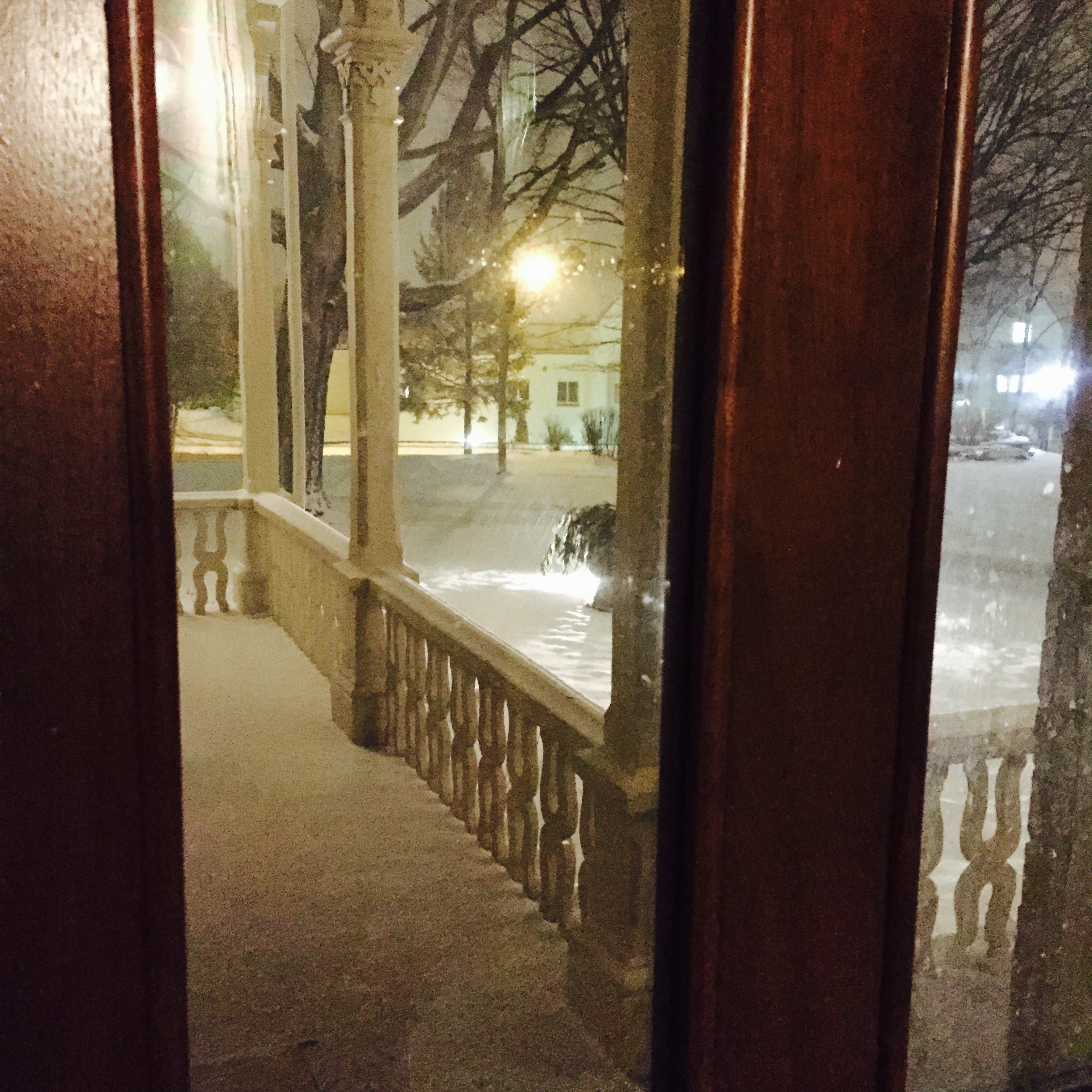
In returning to to the Lincoln-Tallman House in the evening, I was greeting by a windy snowstorm.  It began snowing during my presentation, and now the ground was covered and the house took on the appearance of a mountain top sanctuary greeting a pilgrim for an overnight stay.  The house was dark, and I entered from the back door through the servants wing.  I was handed a hand-held lantern and wished a good night by my willing hosts.  They told me to watch out for the bats (and maybe a mouse), but other than that they disappeared in the snowstorm.

As I entered the house and walked up the grand spiral stairs I was greeted by contorted shadows of the evening light and snowstorm through those enormous shutters.  The shutters took on a personality with a “language of their own”.  They became the sentinels of the house, keeping the cold and snow at a distance.  I was reassured by their size and heft.  These babies were not decorative; they had hard work to do.

IMG_7090
IMG_7086
IMG_7068

After getting situated, I changed into my sleeping jammies and got in bed.  I still held onto the lantern and placed it on the bed, while I grew accustomed to my traveler’s bedroom provided by the Tallman family.  I thought I might open the shutters so that I could fall asleep watching the snow storm outside, but when I opened a few shutters, it made me feel very vulnerable and somehow uncomfortable.  The scale of the windows and the size of the glass panes felt so very fragile at night and I started to see the windows as a “day-time” necessity, not really a “night-time” manifestation.

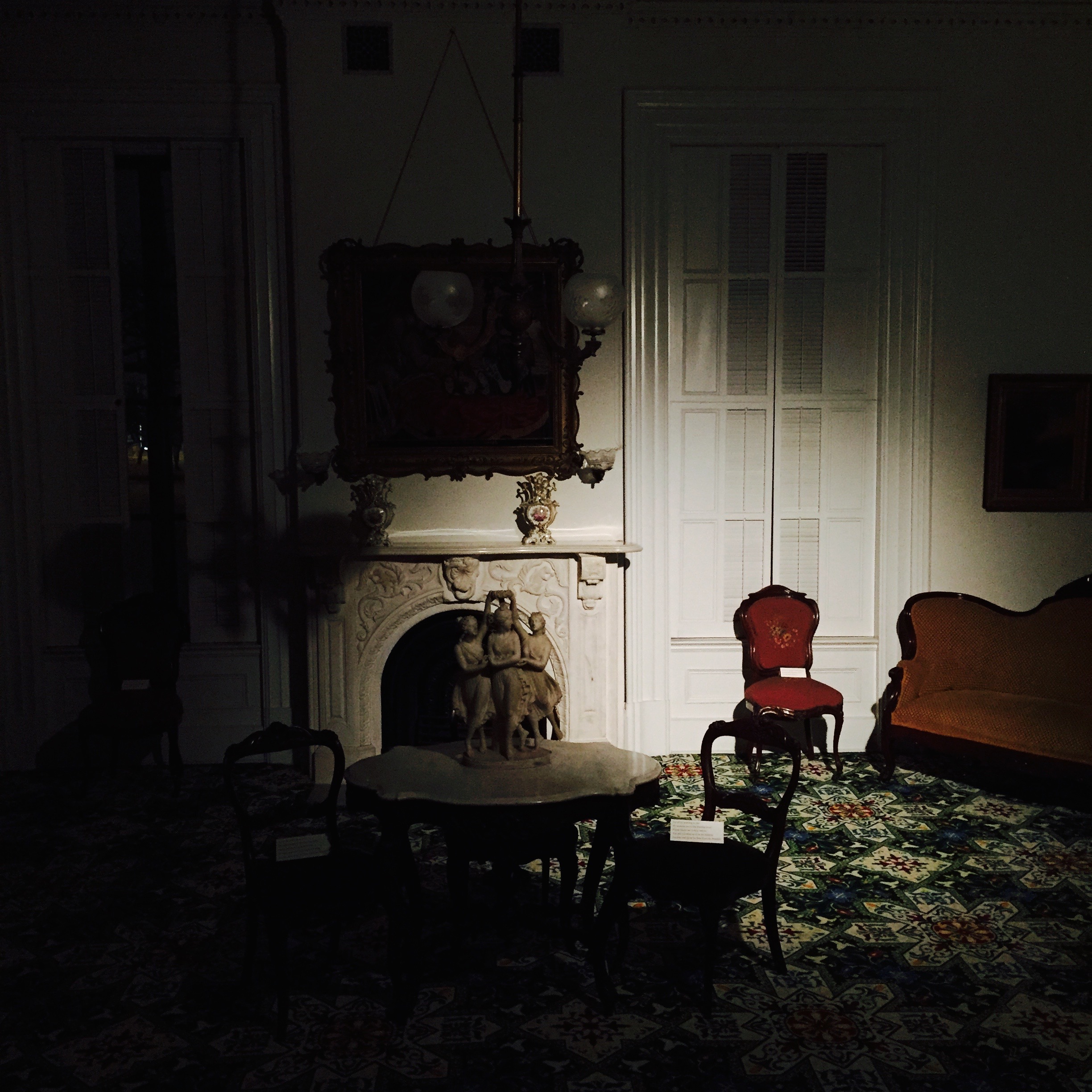
Before I went to bed for the evening, I walked around the dark house a bit with my lantern.  The dark rooms faded away as I walked around.  When I entered each room, they woke up and greeted me, but quickly went back to sleep as my light left them.  The huge windows were no longer an element in the house because the shutters turned them into solid walls of paneling. This feeling was very different from draperies.  As a kid, I always worried what was hiding behind the fabric.  They seemed creepy to me.  Now I felt comfort from these ‘window coverings”.

IMG_7080

I went back to my large bedroom and got in bed. I was fortunately gifted several warm quilts that turned that bed into a warm cocoon.  The room was cold, and even after going under the many quilts, it occurred to me that I needed to grab my cap because my head was cold.  Next time, I will bring a night cap.  Because of the day I had, I was asleep very quickly.  No bats, no mice – nothing.  Just a very safe-feeling evening of rest.

Many people asked me about ghosts, “Had I met Abe?” they asked.  It is funny to even think this, because the house felt so encapsulating and fortress-like, that I never found myself feel the slightest bit spooky.  If anything, I felt like old Abe might have been sitting outside my bedroom door watching my shoes so that the same incident that occurred to him wouldn’t happen to me! The Tallmans had an indoor “outhouse” on the second floor, near my bedroom, but when I had to go to the bathroom in the middle of the night, I had to slowly step my way down the formal stairs and into the servant’s wing public bathrooms.  While I was walking, I was very aware of how easy it would be to fall down these stairs if you were groggy (let alone wearing a hoop skirt).  I managed and got back upstairs into my warm bed.

IMG_7092
IMG_7102

When I woke up, my first vision was of a chair to the left of my bed.  I had, without thinking of it, thrown my shirt on the chair.  It seemed such a simple result of actually living in a space.  I would have never “designed” a staged historic house room to include such a casual gesture (it would cover up the fabric of the seat and it obscured the lines of the chair).  In the light of day and after a restorative night of sleep, I attempted to open all of the shutters so that I would have light with which to get dressed.  After a few attempts, I realized that the really large shutters were pocket doors!  They went back into the wall cavity.  Brilliant.  They moved so easily.  The act of opening these pocket shutters welcomed in the morning in a very active and conscious manner.  I felt like I had been given an intimate snippet of the house and its life.  The shutters, so important to make me feel safe at night, were now willing to go away into the wall, and await my request later in the day, when the night fell and I wanted to feel safe again.

My morning went quickly.  I got dressed for the day’s activities.  I was facilitating an historic house museum immersive workshop at the Lincoln-Tallman House that day and everyone would be arriving soon.  I chose to leave my bedroom alone and not straighten it up. I left my jammies and dirty socks on the floor.  I wanted to see what people thought about a room that was being used.  After the half-day workshop, I went back into my bedroom and noticed that only a few “anarchist tags” had been left on the bed.  That was odd, because most rooms had dozens strewn around.  My realization, was that the bedroom actually felt lived in, and the workshop participants thought that it was an intimate violation to spend time in a room within which I was sleeping.

IMG_7098
IMG_7099

So, what was the results of my “One Night Stand” at the Lincoln-Tallman House?  I felt welcomed by the house. It seemed to be happy to host another traveler.  I also gained a deep and visceral understanding of the inner workings of this house.  For instance, I was introduced to how the kinetic movements of the structure (shutters and doors) provided a necessary function beyond mere aesthetics. Today most of our shutters are bolted to the wall, they do nothing but add a bit of color to the curb appeal of the house.  In the Tallman House, these things carried a very heavy load – they served a very real purpose.  Even just that tiny realization was transformative for me.

An historic house is not a stage set.  If we allow it, it is a tactile and robust communicator of life experiences and latent meanings.  This is the first time that I actually experienced the life of a house museum, rather than was told about it.  Every historic site has something to tell us, it is just up to us to get out of the way and let it communicate.  The fact that I was simply sleeping over in the house, allowed me to erase the “fourth wall” of a typical public visitor experience, and blend with the natural cycles and breathing of the house itself.  The Tallman House accepted me in a way that exceeded a mere gesture of welcome – It protected me, kept me safe from the outside perils, and warmed me from the snowstorm.  Its usefulness as an intimate HOME was revealed to me.

So there I was, shutting the door to my “one-night stand” with the Lincoln- Tallman House.  I hope it wouldn’t regret the time it spent with me. As I was leaving the house, I was greeted by a text from Mike Reuter, The Executive Director of the Rock County Historical Society.  It said: “BTW, you are the first person to sleep in Lincoln-Tallman since 1915”.

The “One-Night Stand” ™ series of blog posts are an attempt at shifting our cultural perceptions of historic house museums away from viewing them solely as public venues and moving toward a more intimate and tactile appreciation of them as places of private, domestic life.  My attempt is to highlight more nuanced and latent understandings of these places as vessels for life, social issues, politics, and habitation – not merely as decorative arts objects and collections artifacts. I spend the night in the historic bedrooms, using the furniture and experiencing the combination of behaviors and interactions with a home in ways that can only be understood as an inhabitant.

Copyright © 2016 Twisted Preservation| “Twisted Preservation”, “One-night Stand”, “Sleeping Around” are trademarks of Franklin D. Vagnone. All rights reserved.
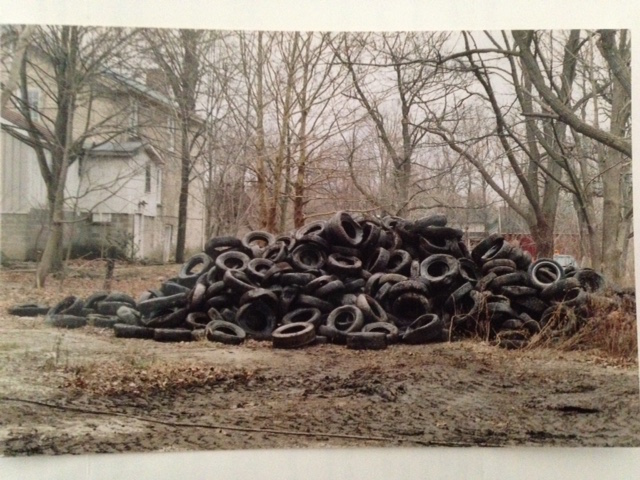
The Power Of Fragments

Photographs used for educational and non-commercial purposes only.

I grew up hearing the same story – From what I can remember, the little glass tube, attached to a thin gold chain, contained a very tiny piece of wood.  My relative always wore it around her neck.   She never tired of telling those around her that the fragment was originally a part of the cross on which Christ was crucified.  I also remember thinking how special it must be for an accountant living in Columbus, Ohio to own a fragment of such a rare and important artifact.  When I inquired further, my relative told the details of how she purchased it at the Vatican in Rome.  It was blessed by the Pope.  This story continues to, as it did when I was a small boy, feed my imagination.

I am not commenting on the veracity of my relative’s beliefs, or the authenticity of the wood splinter – it certainty remained meaningful throughout her life.   What I am thinking about is the power of a fragment, and how these dis-embodied artifacts represent a certain drive within the field of preservation to honor the materiality of form and recreate rather than re-think.

cartes-postales-photos-Chapelle-de-Notre-Dame-du-Haut-Vue-prise-un-jour-de-Pelerinage-RONCHAMP,1900

bourmont60
chapel_at_ranchamp_by_lonelymuppet


I have always found the pilgrimage site of Ronchamp to be an amazing example of the creative process in preservation and construction.  When you first see the Chapel Notre Dame du Haut at Ronchamp, France, a pilgrimage chapel designed by the architect LeCorbusier, it looks like a spaceship that has just landed on the mountaintop.  Not much about its appearance clues you into how deeply imbedded with the past it really is.  This site has long been dedicated to The Christian Madonna and home to several large international pilgrimage services a year.  The present pilgrimage chapel is actually the third distinct building that has been built on the same mountaintop.  The first dated from the 4th century and in 1913 was gutted by a massive fire; the second (using the same walls and footprint but greatly expanded) c. 1920 was significantly destroyed in 1944 during a WWII battle; and the present building was built in 1955 and quickly became an iconic 20th century building for its ability to feel primitive at the same time being something entirely new.

bourmont61 (1)
900x720_2049_2406
tumblr_mlzct7MmxE1snle3eo3_r1_1280

An aspect of this construction history that isn’t normally highlighted is, that during the last building campaign, Le Corbusier chose to re-use stones and building fragments in the structure of the new chapel.  He covers this meaningful re-use of materials with a layer of rough, natural stucco – so that to the casual observer, the building is about abstract form, not the details of materiality.  Construction photographs give us a clear understanding of the similarity of wall completion between the previous chapel and Corbu’s new building.  In contrast to the hidden stone fragments of the walls (covered in stucco), there is a “monument to peace”.  This shrine, is placed, seemingly haphazardly, off to the side of the present chapel and in the shape of a stepped pyramid.  During Pilgrimage service, attendees sit on this stepped structure.  The construction of this monument is also made out of the destroyed chapel, but this time the stone structure is not hidden under a layer of stucco, but visible – a visible, tactile reminder of the previous life of the site.

Screen Shot 2016-02-29 at 9.29.06 AM
Screen Shot 2016-02-29 at 9.37.27 AM


Sometimes fragments can be unified in non-material ways.  To further reinforce a connection to the past and the dis-assembly of the original chapel, a site analysis of the pyramid monument relative to the new Chapel structure reveals a clear, and conscious relationship between the two structures.  Although both built out of the fragments of the destroyed chapel, one is concealed, while the other is revealed.    The geometric analysis of the site plan shows how the alignment lines of the monument pyramid directly line up with the exterior pilgrimage alter. It is as if the fragments of the old chapel are bound together by an invisible tether.  The old chapel still exists in the latent structure of the new chapel as well as manifest in the monument to peace.

DSC_8281 copy
blog-ronchamp-corbusier-bueb-009


Just as the discarded stones of the old chapel at Ronchamp, the very structure of the human body can been re-used, as shown in the European catacombs.  The macabre and oddly practical uses of human bones in these shrines, stand as an ultimate creative act. The materiality of bones and fragments of the human form are meaningfully expressed beyond their previous life – through  naive creativity. The value of these bones, beyond anthropological data, is elevated through a re-combination of forms – through a conscious release of previous form and visualizing a new, expressive morphology.

Is it necessary, or even actually possible, to reconstruct or restore, in order for the spirit of place to remain?  It is as if we, as individuals, can be torn apart by war, decay, demolition, and neglect, but through an invisible connector, our humanity and life can be preserved through these fragments. Perhaps these fragments are hidden underneath more contemporary life (as in the catacombs), or they may be revealed as in the “Monument to Peace”, or they may be totally divorced contextually (as in my relative’s cross wood fragment) – but in any case – a continuous thread of habitation is preserved through thoughtful integration of disembodied parts. Most importantly, it is not the preservation of the form that matters, but the preservation of the spirit.  The spirt is found in activity, behaviors, creativity, and experiences.

The question ultimately is – can we preserve the spirit of place by allowing for new forms to become vessels for this spirit?  Is reconstruction, infill, restoration always the answer?  Perhaps in accepting the inevitable death and decay of the physical form, we can achieve something greater than what existed previously.

Screen Shot 2016-03-02 at 8.35.41 AM
Duchamp purchased this “empty” ampoule from a pharmacist in Paris as a souvenir for his close friend and patron, Walter C. Arensberg. A vial with nothing in it may be the most insubstantial “work of art” imaginable. From a molecular point of view, air is not considered nothing, but when displayed so carefully in an art museum it seems to be less than one might expect. Its precise meaning was rendered even more unstable in 1949, when the ampoule was accidentally broken and repaired, thus begging the question: Is the air even from Paris anymore? (Philadelphia Museum of Art); Photographs used for educational and non-commercial purposes only.

Photographs used for educational and non-commercial purposes only.

Reconstructing a Shadow

Photographs used for educational and non-commercial purposes only.

But while we are confined to books, though the most select and classic, and read only particular written languages, which are themselves but dialects and provincial, we are in danger of forgetting the language which all things and events speak without metaphor, which alone is copious and standard. Much is published, but little printed. The rays which stream through the shutter will be no longer remembered when the shutter is wholly removed. No method nor discipline can supersede the necessity of being forever on the alert. What is a course of history or philosophy, or poetry, no matter how well selected, or the best society, or the most admirable routine of life, compared with the discipline of looking always at what is to be seen?

 Will you be a reader, a student merely, or a seer? Read your fate, see what is before you, and walk on into futurity.

 Walden, Henry D. Thoreau, Sounds

map1802varles_all_full
1802 Plan of Philadelphia, Charles Varle, Atwater Kent Museum

During the lunch break at a museum conference in Philadelphia (MAAM), I bolted outside into the bright sunshine.  The only thing on my mind was where could I get a good cheesesteak.  After grabbing lunch, I set out to quickly re-visit some of my favorite Philadelphia house museums.  I visited The Stedman-Powel House, The Physick House, The Graff House, Franklin Court, and the President’s House.  DISCLAIMER: Even though I had previously visited these sites (even worked in some), the speed of my visits kept my experiences at a high level.   I saw them in an entirely new way.  These quick visitations produced an unexpected series of connections, such that, I felt like Ebenezer Scrooge being flown around by ghosts of Christmas past/present/and future. I wasn’t able to gain the granular perspective, but rather I was able to fly above and see these sites at a distance – removed from my professional eye.

Without even trying, because of the brevity of my visits, I was being given a high-level history of, The history ofhistoric house museums.  More specifically, I was able to see and experience the full spectrum of how we, as a nation, have manifested and negotiated loss and politics, through the act of preserving the domestic realm.

Let me detail my stroll:

Powel-House
OLYMPUS DIGITAL CAMERA

My first stop was the 1932 restoration of the 1756 Stedman- Powel House.  Once considered the finest townhome in Philadelphia, it later became a store house for horse and boar hair (to be used in the making of hair brushes), and one of the earliest house museums in the city.  First restored in a period of heavy immigration debate and strong opposing national opinions on Jewish refugee immigration, the house feels like a “stake in the ground” for American ideals and nationalism.  Although the finest room’s (Ballroom & Withdrawing Room) cosmetic surfaces have been removed and installed in major art museums, much of the house has been re-fabricated, re-engineered, and conjecturally restored.  With its plain wood floors, and slightly worn cosmetics, it holds a great deal of tangible and compelling qualities to its presentation.
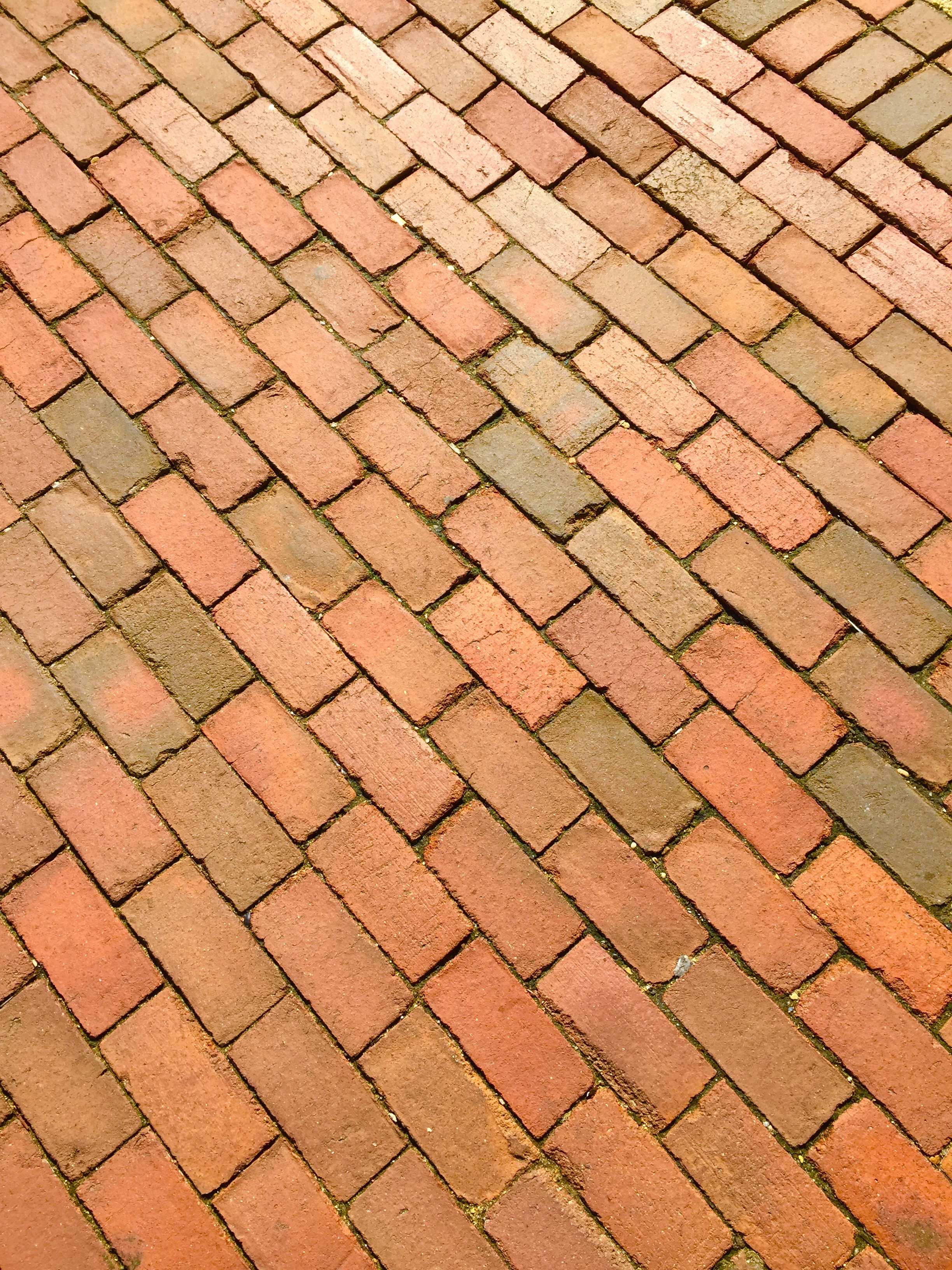
Hill-Physick-Keith-House
635775759779682500-Physick04

Next, I stopped in my old office of The Philadelphia Society for the Preservation of Landmarks, which is housed in the late 1960’s restoration of the 1786 Hill-Keith Physick House.  Unusual in that it is a free standing house among attached townhomes, the exterior structure appears much as it did when it was first built.  The romanticized “Society Hill” urban renewal movement (today we would call it gentrification) was in full force at this time and some of the most established Philadelphia families moved into the district in an effort to prop-up considerable city investment.  The original intent of the restoration by the Annenbergs was to use the site as “The Center for Media”, and as such, the interior is almost entirely re-surfaced and renovated, feeling like a very well-appointed pseudo-public venue.  This had the effect of producing a historic house museum which has a feeling of being oddly perfect and beautiful, yet inappropriately so for its age. The narrative of Dr. Physick is important and compelling, yet, today I left feeling as if his legacy was overshadowed by an interior that felt too precious and affected.
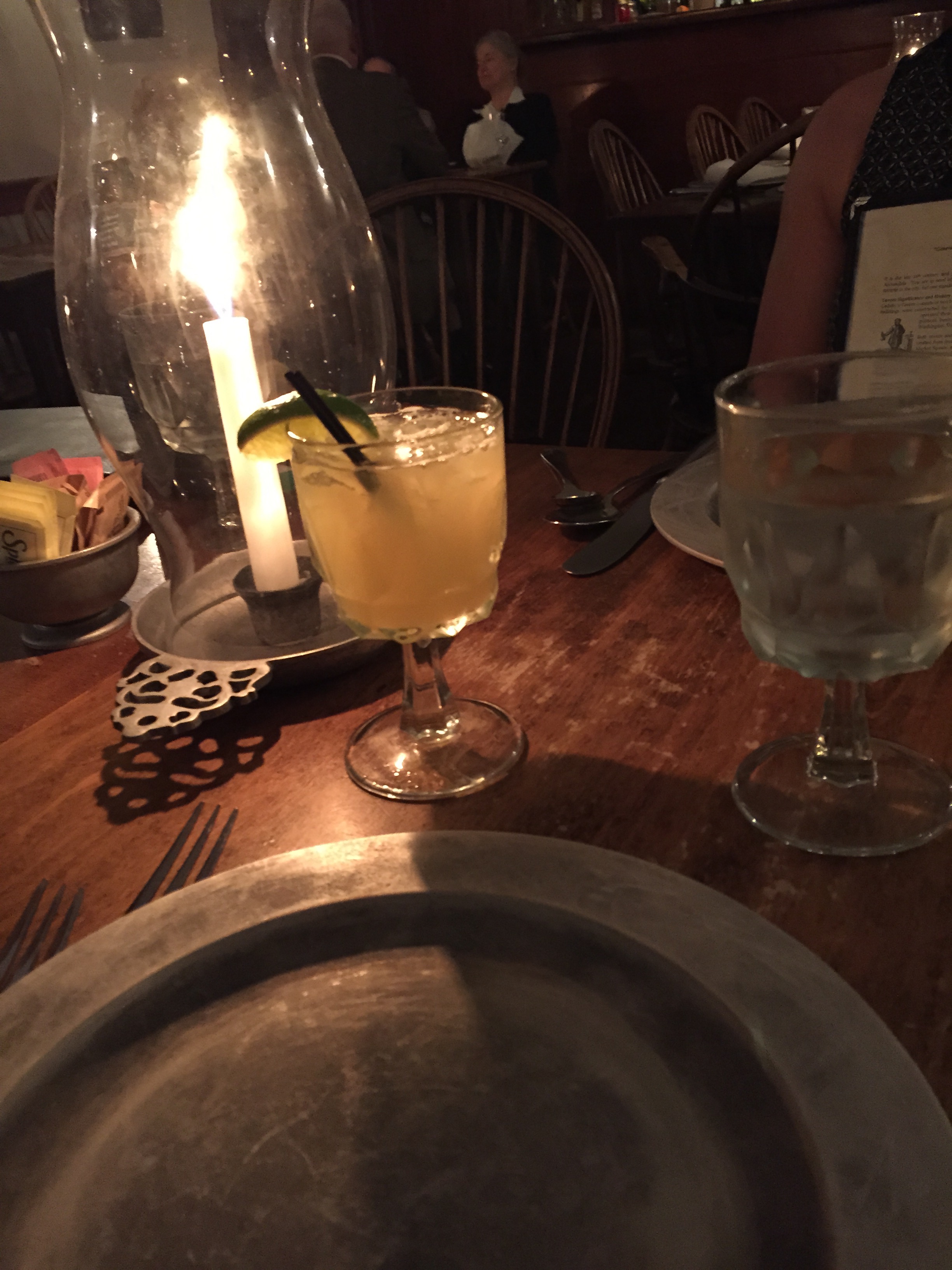
graff_house1
Declaration House Inside

After leaving the Physick House, I walked a bit farther and I recognized the 1975 reconstruction of the 1775 Graff House (Declaration House). The practice of cherry-picking seemingly important colonial sites resulted in this building being erected for the 1976 Bicentennial celebrations in Philadelphia. As many of these types of historic sites, this house museum feels like a caricature of an important house museum.  A complete reconstruction, the house has that accurate, austere vacant feeling of a National Park Service site that fulfilled all of the Department of Interior’s Standards for Preservation, yet has no soul. It appears, both literally and figuratively, to be a bookend – It feels like a weighty mass whose purpose was to solidify the importance of Philadelphia during colonial America, not to convey anything new or intimate about Thomas Jefferson or the writing of the Declaration of Independence.  The site has suffered with problems of attendance and is infrequently open.  The presentation of the historic period and the narrative is a “stand and listen” experience, while the decorated period room exists as a static backdrop. http://articles.philly.com/2015-07-20/news/64599360_1_park-service-exhibits-declaration-house
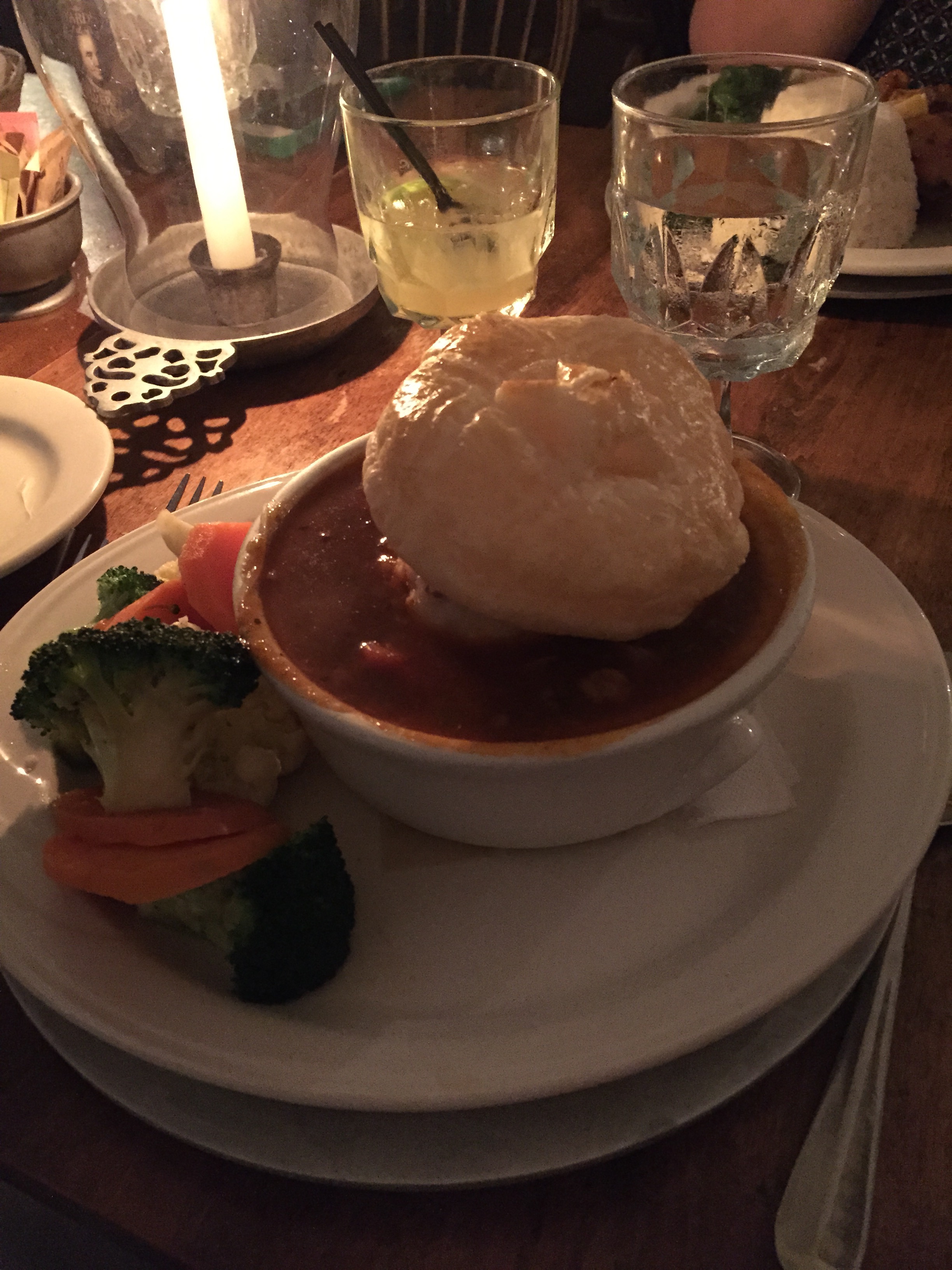
franklin court

As I returned to the conference venue, I walked into the 1976 Franklin Court design by Venturi, Rauch, and Scott-Brown Architects of the 1763 Benjamin Franklin Residence. Long regarded as the high point of progressive historic house & site interpretation (keep an eye on the Menokin Historic House site (Warsaw, Virginia)  as this “restoration” will kick the historic house museum world up a notch), The Franklin Court remains fresh and current even after 40 years – A excellent NPS leadership project . The site architecture and interpretation manifests a uniquely open-ended view of history.  There is a sense of poetics about how the house is “restored” and, at least originally, the underground museum rocketed the visitor into an immersive boundary-breaking experience.  Recently the NPS renovated the underground exhibition spaces. In opposition to Venturi’s “archaeological & technological submersion” experience, the visitor enters through a “Banana Republic-like” commercial glass box.  I want to go back and experience the changes more fully before I comment on the physical and interpretive changes. http://planphilly.com/eyesonthestreet/2013/08/21/benjamin-franklin-museum-leaves-bicentennial-behind-reopens-after-two-year-renovation

PHSaerialviewbyElliott688
img_4366

As I walked on Market Street, I noticed the 2010 President’s House: Freedom and Slavery in the Making of a New Nation. After just leaving the iconic Franklin Court, I was startled by the diagrammatic attempt to mimic its progenitor.   The design of this house museum site is deeply rooted in the need to expand the traditional narrative beyond simply the famous, important men, and move in the direction of valuing a wider narrative inclusive of people of color, marginalized populations, women, and undocumented historic figures.  All important and needed, yet the use of technology is clunky and the slavery-inspired narrative doesn’t seem to go far enough in presenting the duplicitous political views of the founding fathers. In fact, I walked away more confused as to the fundamental meaning of the site. http://philadelphia.cbslocal.com/2015/08/18/historic-presidents-house-site-soon-to-be-transferred-from-city-to-national-park-service/

QUESTIONS FROM MY STROLL:

After my run-about, I returned to the conference and was surprised by how much trouble and effort I was having in producing a unified and cohesive understanding of all of the disparate historic house museum sites.  What about these sites seemed to act like an opposing magnet – repelling the others in an attempt to maximize its own value and space in history?   They all shared the same reality – they were domestic dwellings, all within a roughly similar historic period, and all within walking distance of each other – but, to me at least – they might as well be on different parts of the world. Why?

Patricia West, in Domesticating History, demands us to take note of her thesis – that is that historic house museums have always been and will remain political.  Their very existence as cultural venues have more to say about the period in which the site was “restored”, than it has to say about the actual historic period.  I think my lunch-time stroll supports this.  These historic sites are really expressive of the “fashion” of a particular type and methodology of preservation. It occurs to me that the choices involved in preservation involve a lot of subjective attention, and political bias.

When we Preserve something, are we addressing the need to remember an object? A legacy? An identity?  The process of preservation involves a myriad of both conceptual as well as tangible design choices and actions – how do these choices and actions reflect our own identities and existential relationship with the process of time? How do these choices affect the experience and interpretation of historic sites?  My stroll left me with more questions than answers.

Photographs used for educational and non-commercial purposes only.

Narratives of Disappearance

Photographs used for educational and non-commercial purposes only.

“The history of the work of the dead is a history of how they dwell among us – individually and communally. It is a history of how we imagine them to be, how they give meaning to our lives, how they structure public spaces, politics, and time. It is a history of the imagination, a history of how we invest the dead…it is really the greatest possible history of the imagination.

Pg. 17, The Work Of The Dead, Thomas W. Laqueur

 3000px_IconicImplosion_Pruitt-IgoeMyth_Credit-STL-Post-Dispatch   Reichstag+1946
Choosing to erase an artifact can have as much symbolic meaning as choosing to preserve something.(left) Pruitt Igo (St. Louis, MO, 1954) originally viewed as the housing of the future, declined rapidly until in the mid 1970’s the 33 building complex was destroyed. (right)  German Reichstag (Berlin, 1884) as seen following the end of WWII 1946.  It has since been restored and the dome has been turned into a memorial experience (Norman Foster architect) in which visitors can view the German Parliament from a glass floor.  This experience symbolizes the German commitment to political transparency. Photographs used for educational and non-commercial purposes only.
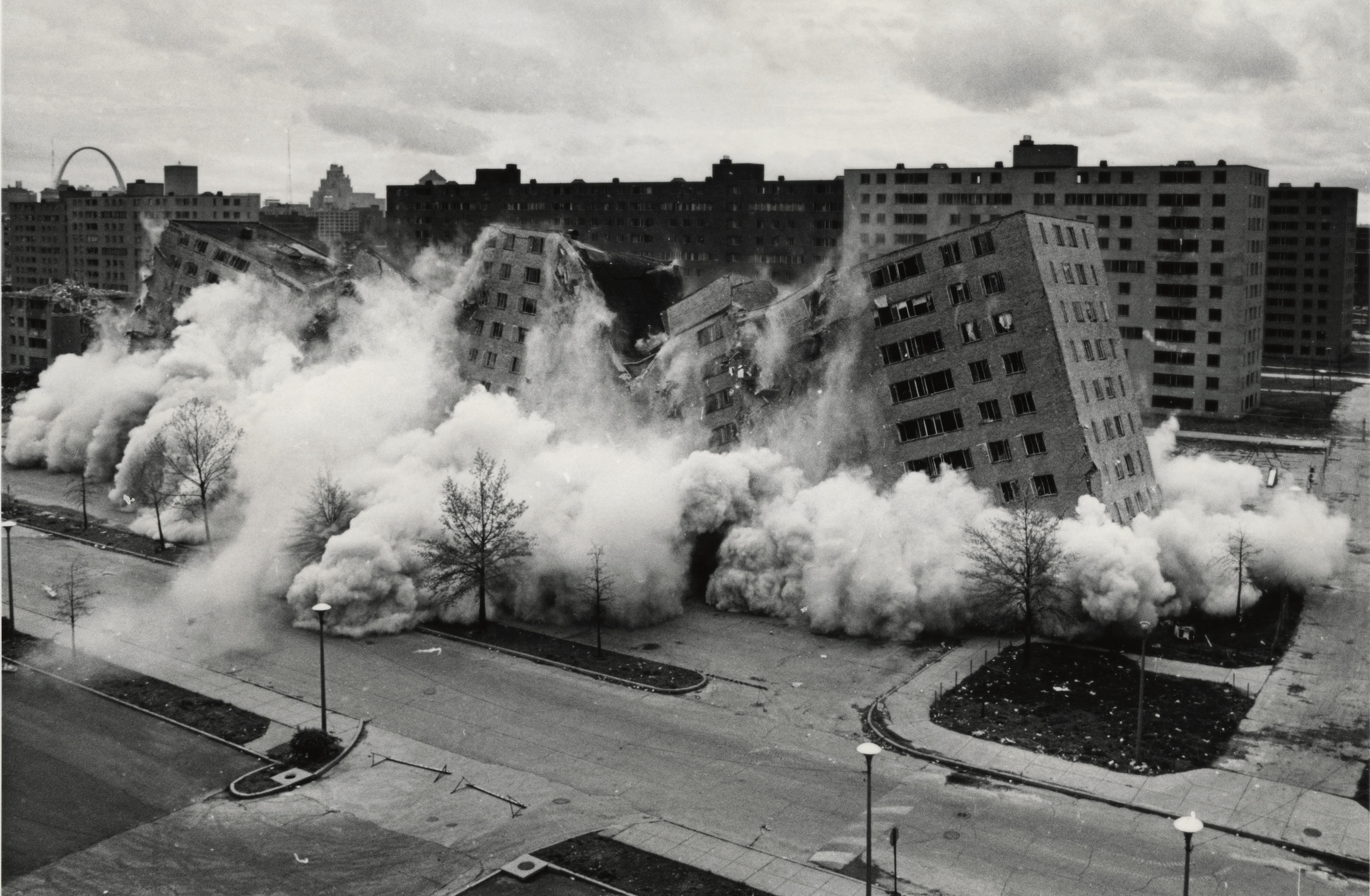
What motivates us to preserve things? Why do we chose to demolish some and  keep others?  And further still, Why do we preserve these select things in the manner that we do?
The most common answer to these questions is that we preserve things and take care of them so that future generations will have the benefit of knowing them. By knowing them, we hope that these preserved things can help influence future choices and policies. I wonder if this is really being totally honest?  Are we really keeping these things around for future generations – or are we doing it for ourselves and the “here & now?
I mean, I guess either OR both are OK reasons to cherry pick things and preserve them. It just seems to me that we need to be honest about our motivations.  You see, preservation is not a benign act.  It has social, political and financial implications.
I think it is misleading that we, as preservationists and museum professionals, state that we are only interested in the facts and representing history from an authentic perspective, and then we proceed to eliminate much of the context.  FACTS and AUTHENTICITY are conjectural and derive much of their energy from imaginative assumptions. Every preserved historic village, or structure; Every conserved artifact and document exists in a field of un-knowing.  They are like fireflies in a vast dark meadow, drawing attention to their light, while we ignore the blackness that surrounds.
547B98C6-E7B8-4B80-B972-678089DCF984_mw1024_mh1024_s.jpg  Phyfe_BoscobelFragmentsOnTruck_Boscobel.jpg
Removal of the context in order for the singular and the unique to thrive.  (left) Demolition of Matthew Whaley School, Williamsburg, Virginia, to make way for the reconstructed Governor’s Palace, early 1930s (The Colonial Williamsburg Foundation); (right) Over a five-month period in 1956, Boscobel House was dismantled and moved piece-by-piece to Garrison, where the pieces were stored in barns and other vacant buildings. They were later used to reconstruct a facsimile of the original house (Boscobel). Photographs used for educational and non-commercial purposes only.
What choices are made when we chose the light of the firefly over the darkness of the meadow?  What part does preservation play in this continuium of choice?  Many times, even when we have the contextual “meadow”, we have chosen to remove vast sections of the built environment so that the light of the firefly can be better viewed. This selective preservation I call a Narrative of Disappearance.
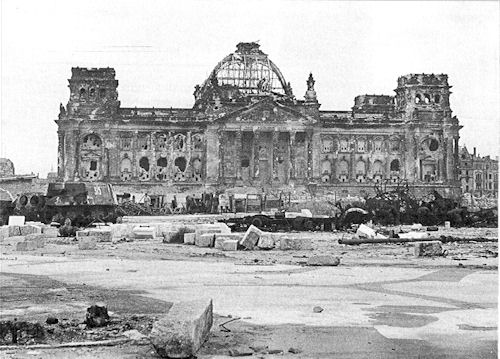
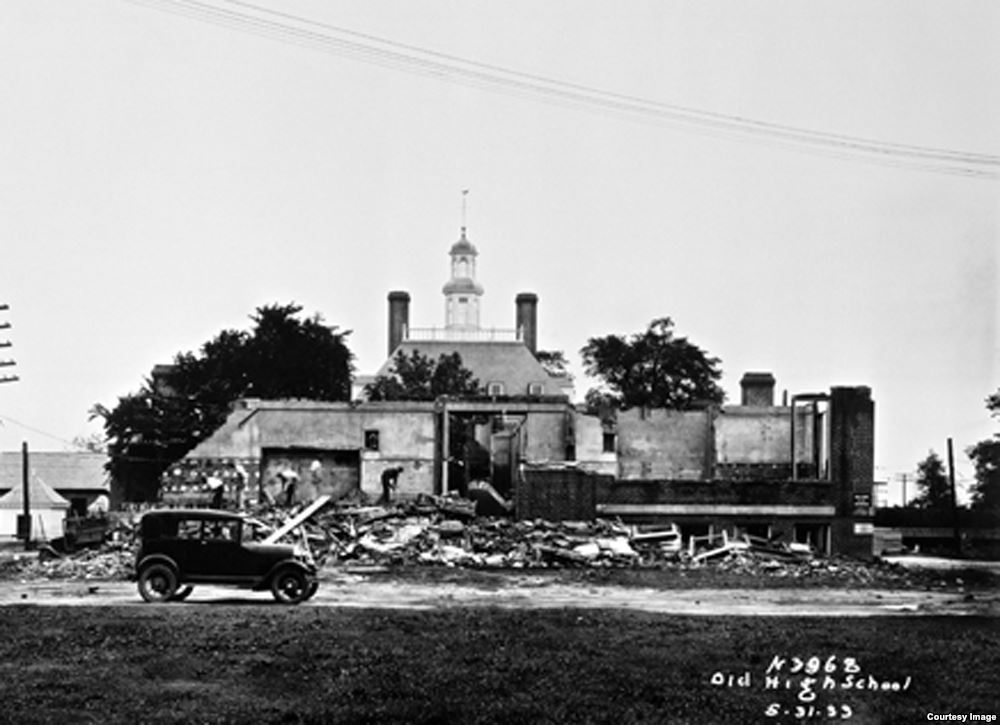
This type of narrative exists where entire sections of a town, complex, or building are intent-fully destroyed, so that some mythological period of significance can be re-created in physical form.  The Narrative of Disappearance is told through the discarded debris rather than the artifact- Through that which is removed rather than that which was allowed to remain. There is meaning in what is no longer visible – the darkness of the meadow.
19th-century-slave-cabin-at-Greenfield-Plantation-page0001

19th century slave cabin at Greenfield Plantation in Botetourt County, VA–set to be disassembled and stored in a barn

What we don’t know, destroy or ignore tells us more about our present selves than what we document and preserve.  In most cases, what we have as artifact is merely what has survived our cultural “sifting”- not what was most authentic.

portsmouth nh-goodwin house-strawbery banke-charles street-1961  portsmouth nh-sherburne house-strawbery banke-charles street-2012

 For every building artifact removed from the 1961 version of the house, there was a story – a “narrative of disappearance”.  The Sherburne House (1695-1703, Strawbery Banke Historic Village).  (left) The Sherburne House in 1961 before the selective reconstruction work. (right) The house as it appears today after the reconstruction work. Imagine the choices and conjectural assumptions that had to be made in order for this structure to go from the image on the left to the image on the right.

Photographs used for educational and non-commercial purposes only.

Perception of Value

Just as  interesting as what we preserve, I am fascinated by the efforts to reconsider that which was once preserved by a previous generation, and now, removed by the present generation.  What about our perception of value has changed? How did these considerations of value and social capital shift? What are we left with when perceptions shift?
How our imaginations maneuver through these evolutionary, murky layers of social importance – (and how the imagination originally justified preservation and then, eventual destruction,  of the very thing we preserved) – is the real story of our humanity.
Preservation is not simply about artifact and matter.  At it’s core (the intent) preservation is our way of delaying the absolute destiny that all things will disappear and the fear that our personal and collective perception of the world will change.
Preservation is not about stasis, it is actually about managing change.

1  Hart1-1024x666

Occasionally the darkness of context is illuminated, and we get to see what stories exist outside of the “bright shiny-object of preservation”.(left) New York State’s Willard Psychiatric Hospital attic (1995) showing the original placement of hundreds of discarded suitcases that were once owned by anonymous patients. (right) a Photo by Claire Yaffa (“children with AIDS”, 1990’s) illustrating the burial containers of children who died anonymously from AIDS and were buried in New York City’s “potters field”, Hart Island.
The process of honoring through preservation (either an artifact or a legacy) is fluid and in many cases leads to a re-assessment of the original motivation.  (left) Following the Battle of Bagdad, April 9, 2003 removal of the Firdos Square statue of Saddam Hussein. (middle) After details of extensive sexual abuse by famed Penn State football coach, Joe Paterno, a statue depicting the coach was removed from the Stadium grounds. (right) Many statues of J. Stalin were removed following the leader’s death in 1953.  Removal of statues depicting his likeness continues even today.
Re-assessment of preservation legacies have locational components and take on opposite perspectives. Seen here (left) A US Confederate statue is layered with current sentiment graffiti “Black Lives Matter”, while (center) another Confederate memorial is labeled “murderer” & “KKK” by social activists. (right) In comparison, the gilded Union General Sherman statue in the heart of New York City is lovingly cared for and re-gilded every few years.  Clearly, if this statue were erected in Atlanta following the US Civil War, it would have been defaced or destroyed many decades ago.

Photographs used for educational and non-commercial purposes only.

A life with things: #2 Sports Equipment

Our backyard was always very well kept.  It felt desolate and full of aspirations, but I was only a small kid – what did I know. I knew what to expect on Saturday mornings.  At 7:00am my Dad would come in and pull the covers off of me and my two brothers with a loud booming – “wake up boys, I need your help with the yard”. Even in our sleep, we knew it was coming.  Like Proust’s dream of a candle being extinguished long after it actually was extinguished – we went to sleep fully aware that we would be pulled out of bed to cut the grass, trim around the chain-link fence, and trim the bushes.  Saturday mornings were not restful moments in my childhood.

One of the reasons for the immaculate yard keeping was that my father always coached whatever sport was in season.  He was an all around sports freak and was none happier than when he could coach one of his boys.  Practicing with his boys in the backyard on a beautiful sunny Saturday afternoon was one of his favorite past-times.  In order for that to occur, he needed the yard to be clear and orderly.  My brothers had to have open space to go out for the long catch, or make the pitch strong.  I, however, spent these Saturday afternoons watching my father and brothers pitch, catch, throw, tackle, and roll their way into little league history.  Actually, in truth, I spent my Saturday afternoons re-arranging the porch furniture into more beautiful seating groups and trying new combinations of table, chair and ottomans.  The furniture was iron painted white.  I remember that it was heavy for me to move.  There was a rocker, 2 chairs and a ‘davenport”.  The davenport was this great rollie thing that we all could get on and move back and forth in a way such that it would feel like we were on a porch swing.  The cushions were vinyl and had tropical flowers and leaves on them.  I did not mind them, but they seemed a bit garish to my eyes.  My father had purchased a handful of tiki torches and he placed them around the concrete slab porch.  In the midst of all of my furniture moving and porch styling, my Mother sat quietly doing whatever she did (I have no recollection of her having a hobby).

sports equi

The porch itself was made up of thin metal corrugated sheets held up from the concrete slab by decorative aluminum columns.  I used to take my finger and run it along the curving “s” shapes of the decorative bracing.  I can still feel the slightly ridged composition of the extruded pieces.  The movement I felt while playing with these columns interested me far more than the aesthetic attempts of the decoration.  I wondered how they kept the decorative pieces from falling off of the columns – it didn’t really matter.  I thought the attempts at decoration were admirable and I felt proud of our aluminum porch and white painted “davenport”.  How lucky we were to live such a life!

Once my father and brothers got hot from all of the running around and ball catching, they would come and plop down on the re-arranged furniture and demand ice water from my Mom.  Of course, my Mom ran to grab ice water for everyone.  I would always hang close to my Mom because the brothers and my dad were sweaty and it bothered me that they were messing up my porch furniture.  The4y would drag the chairs over to the davenport so that they could put their feet up on the seat and my brother would stand on top of the rocking chair and pretend he was surfing a wave.  I just sat there watching, anthropologically taking notes on how to behave and fit in.

My dad would always want me to play with them.  He would call out to me from the hot sunny backyard, “son, grab a glove and let me throw you some pitches”.  I would always try to figure out why this was not possible and that I had to keep working on the porch.  I can imagine that this made my dad feel uneasy.  He never said anything to me (not that I recall) but it was implicit in his actions that I needed to find something deep within myself to become part of the “team”.  I got the message loud and clear – although I was not sure what the “team” was for or what it was that I was lacking.

On one of those beautiful Saturday afternoons, after our grass cutting and bush trimming, my father pulled the boys out into the backyard and spent a few hours coaching them on the nuances of football.  I seem to recall that I had a set of GI-Joes that I was playing with.  I loved the camouflage outfits they wore.  The concrete pad floor of the porch was cool and I loved lying on my stomach and feeling the coolness through my clothes.  The sun was shining and the freshly cut grass smelled that beautifully poetic message of consistency and stasis.

On schedule my dad and brothers came onto my cool kingdom and gulped down their ice water.  Content with my GI-Joes I kept playing.  My dad had left the backyard and went out front.  I now know he went to the truck of our car and gabbed a box.  He brought it back to the back yard and placed it right in front of me.  “Hey pee-wee (that was my nickname), I bought you some things.  My dad bought me something! Me. How excited. I jumped up, stomach still cold from the floor, and tore open the brown box.

The box contained child-sized versions of adult-sized sports equipment. Miniature.  I remember thinking – “those look kinda cute! – what are they for?”   I smiled and yelled “thank you!” to my dad.  Before I knew it he was pulling the box full of sport equipment out onto the cut grass backyard and dispersing them all around.  He asked me to come out into the yard and try them out.  I left the coolness of the porch and entered the heat of the sunny backyard.

My dada placed me in the center of the sports equipment, handed me a bat and told me to smile.  I smiled.

He retrieved a Polaroid camera from the great-room of our house and began taking instamatic pictures of me holding the bat and enjoying the sports equipment.  I remember just standing there while my entire family watched me hold the bat while my dad photographed me. I didn’t understand it at the time but I went from elation that my father had bought me a gift, to realizing that I was a prop, a mannequin for his expectations.  I wanted to drop the bat, run into the house, and hide – but I didn’t.  I just stood there – pretending to be his version of me.

Those miniature sports items were placed in my bedroom, in a box under my bed.  My father kept asking me where they were? When was I going to play with them? I would occasionally grab them and lie on the living room floor and roll them around – making sure he could see me – put them away until the next time he asked about them.  Those gifts from my Father defined what I wasn’t.  What I could never be.  They were a reminder to me of my Father’s expectations and wishes – and later I realized they defined his worst nightmare.

Copyright © 2016 Twisted Preservation| “Twisted Preservation”, “One-night Stand”, “Sleeping Around” are trademarks of Franklin D. Vagnone. All rights reserved.