Recently, while attending a drag brunch, I was struck by an unexpected parallel between the hyper-feminine (or masculine) presentation of drag performance and the carefully curated aesthetics of American historical landmarks. I realized that both practices engage in cultural amplification that transcends mere imitation to create something more theatrical and pointed than their original inspiration. This observation led me to explore the fascinating intersections between drag performance and historic preservation, particularly in how both practices navigate the complex relationship between authenticity and artifice.


Photos: left – by Freepik; Right – by Hunger Magazine (Jordon Rossi Photographer)
Theoretical Framework
The theoretical underpinnings of this comparison find support in several vital scholarly works. Judith Butler’s groundbreaking work on gender performativity provides a framework for understanding how drag performance creates what she terms a “hyperreal” version of femininity (or masculinity). As Jean Baudrillard might suggest, this hyperreality represents not just an imitation but a new form of reality that comments on and transcends its original reference points. Similarly, historian Michael Wallace’s concept of “memory palaces” helps us understand how preserved historical sites function as idealized versions of the past that often reveal more about contemporary cultural values than historical reality.


David Lowenthal’s influential work “The Past is a Foreign Country” (1985) provides crucial insight into how heritage sites differ from pure historical preservation. Lowenthal argues that heritage presents a simplified, romanticized version of history that serves contemporary cultural needs – a framework that perfectly parallels how drag performance approaches gender presentation.
Performance and Preservation
The connection first became apparent when considering how drag queens/kings, with their elaborate wigs, padded silhouettes, and dramatic makeup, create an intentionally exaggerated version of femininity/masculinity that both celebrates and comments on gender performance. This heightened presentation resembles how historical sites, particularly those restored during the Colonial Revival period (1870s-1940s), present an idealized version of the past. The perfectly maintained boxwood hedges, pristine facades, and meticulously curated interiors of these sites represent not historical accuracy but what I call “performative authenticity” – a deliberately stylized interpretation that serves contemporary cultural needs.


Consider Mount Vernon, George Washington’s estate. The mansion we see today exists in a curious space between historical fact and cultural performance. While its architectural features and paint colors have been researched with academic rigor, the final presentation achieves perfection that would have been impossible in Washington’s time. The famous cupola, though original, gleams with a precision that speaks more to our contemporary desires for historical clarity than to 18th-century reality. This approach parallels how drag performers might reference iconic feminine figures – not to create exact replications but to capture and amplify their essence using modern techniques and materials.
Selective Authenticity and Cultural Performance
The concept of “selective authenticity” proves crucial in both contexts. Historical houses often present a carefully curated mix of periods, perhaps featuring an immaculately preserved 18th-century parlor alongside a subtly modernized kitchen. This selective approach to preservation aligns with what historian Dell Upton describes in “Architecture in the United States” (1998) as the “invented past” – a construction that serves present needs while maintaining historical authority.
Similarly, drag performers might combine historically accurate vintage gowns with contemporary makeup techniques or modern music. Neither practice aims for pure authenticity; instead, both seek to create compelling narratives that speak to contemporary audiences while honoring their historical influences. Susan Sontag’s foundational analysis of camp in “Notes on Camp” (1964) provides valuable insight here, as both practices embrace what she describes as the love of the exaggerated, the importance of the seemingly trivial, and of things-being-what-they-are-not.
Spectacle and Performance – Innovation Within Tradition
The element of spectacle unites these seemingly disparate practices. Just as drag shows feature dramatic reveals and transformations, historical sites employ theatrical techniques in their presentations. Costumed interpreters at living history museums engage in their own form of historical drag, adopting period-appropriate clothing and mannerisms that likely exceed historical reality in their polish and precision.
The gardens of Colonial Williamsburg provide a particularly apt example of this dynamic. Their geometric patterns and perfectly maintained parterres represent an intensified vision of colonial aesthetics that would have been impossible to keep in colonial times. Landscape historian Elizabeth Barlow Rogers notes in “Landscape Design: A Cultural and Architectural History” (2001) how these gardens represent an idealized version of colonial landscaping that never existed in such perfection.
This mirrors how contemporary drag artists might use traditional elements like corsetry and hoop skirts but enhance them with modern materials to create more dramatic silhouettes than were historically possible. Both practices demonstrate practices that appear historical but are modern interpretations, drawing selectively from various historical sources.
Technological Integration and Contemporary Adaptation
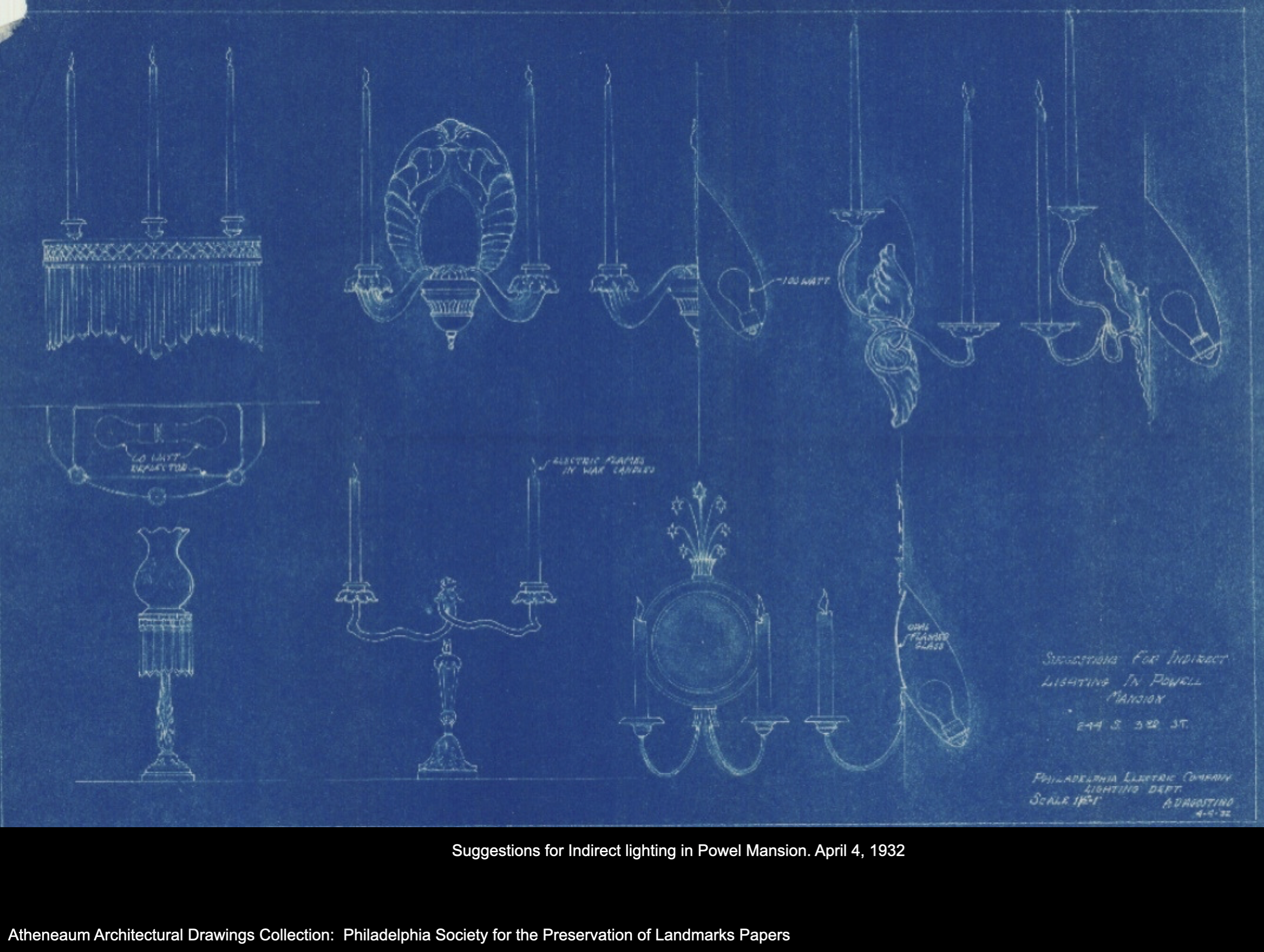
Both domains have evolved to incorporate modern technologies while maintaining their respective illusions. Historic houses often conceal sophisticated climate control systems behind period-appropriate grilles or, as in the Powel House example below – ways to provide indirect light so the visitor won’t see that the house has electricity. At the same time, drag performers utilize modern prosthetics and adhesives while maintaining the illusion of “natural” feminine forms. This technological integration reflects what architectural historian Dell Upton calls the “meditation between past and present” – a necessary compromise between historical authenticity and contemporary functionality.
Contemporary Manifestations and Controversies
The relationship between drag performance and historical preservation has moved beyond theoretical parallel into actual intersection in recent years, most notably through the emergence of Drag Queen/King Story Hours and similar programming at historic sites and museums. These events have sparked heated debates that extend beyond expected political fault lines into more profound questions about authenticity and representation. When drag performers – with their intentionally theatrical and exaggerated presentation – occupy spaces that we have culturally designated as repositories of “authentic” history, it creates a cognitive dissonance that forces us to confront uncomfortable truths about historical presentation.
The controversy surrounding these intersections stems from political objections and a deeper conceptual discomfort: these events inadvertently highlight the performative nature of historical interpretation itself. When we see a drag artist in full theatrical regalia reading stories in a meticulously restored Victorian parlor, the juxtaposition lays bare the equally constructed nature of both presentations. The pristine period rooms, the carefully scripted tours, the precise arrangements of artifacts – all are, in their way, as deliberately staged and performative as drag itself. This realization challenges our comfortable assumptions about historical authenticity. It forces us to acknowledge that our historic sites, like drag performances, engage in a theatrical presentation that amplifies and idealizes its subject matter.
This discomfort reveals a broader truth about cultural preservation: our desire for historical authenticity often conflicts with our equally strong desire for historical legibility and narrative coherence. Just as drag performances heighten and stylize gender presentation to make specific cultural statements, our historic sites heighten and stylize historical presentation to create compelling narratives about our past. The parallel manifestation of these practices in the same physical space creates a unique moment of cultural self-reflection that some find deeply unsettling precisely because it reveals too much about the constructed nature of gender and historical authenticity.
Cultural Significance and Future Implications


This observation reveals something significant about contemporary culture’s engagement with gender and history. Drag performance and historical preservation are forms of cultural expression that acknowledge the impossibility of pure authenticity while celebrating the power of intentional artifice. These practices don’t simply imitate their sources; they transform them into something new, creating spaces where preservation and innovation coexist in dynamic tension.
Through this lens, we might better understand how future historians will view our current attempts at historical preservation. As we study how the Colonial Revival movement interpreted the past, future scholars might analyze how our era understood and represented historical authenticity and gender performance, finding in our careful curations and deliberate exaggerations a reflection of our own cultural moment.
The parallel between drag performance and historical preservation – as arbitrary as it may seem on the surface – ultimately suggests a more profound truth about cultural representation: that authenticity itself is perhaps less critical than the meaningful narratives we create through these heightened interpretations. As both practices continue to evolve, they remind us that cultural preservation is not merely about maintaining the past but actively interpreting and reimagining it for contemporary audiences.
 Twisted Preservation
Really appreciate you and this. A gentle reminder there are drag artists who portray men too. Not all drag is femme.
>
LikeLike
Thank you for the gentle reminder – Yes I worked on an article that included drag kings as well. I think I will go in and modify this a bit. Again – thanks!
LikeLike
edits made! Thanks again. Frankie
LikeLike