A life with things: #1 Sears Tower Erector Set

The living room faced south. Except for one window, it was a box with vacuous white walls.  The window, proudly identified by my parents as a “picture window”, occupied an entire wall.  Standing outside, picturesquely assymetric in its placement, stood a large maple tree.  The leaves of the tree used to turn, like ruby affectations on a crisp white diamond necklace, blood red in the cool Ohio fall air.   Later in the snow, the tree stood like an old man; a peeping tom with wrinkled dark skin participating as we all ate Kentucky fried chicken, mashed potatoes & gravy, and biscuits while watching the TV.  Everything happened in that Living Room.  It became more lively during holidays when, through my mom’s hesitant, Catholic decorations, took on an atmosphere of a cautious celebration.

e456e54est4et4t4

As best I can remember it was the winter of some year in the late 1960’s and it was all that I could think about.  It seemed really wonderful– taller than I was high and constructed of thousands of tiny pieces just like the real Sears Tower.  A perfect Christmas gift.  I couldn’t articulate it then, but I was always pulled toward the tactility of things.  My kinesthetically inquisitive fingers needed to touch things, test them out, put something indie of something else.  Books and words didn’t speak to me.

I lay in front of our TV watching the commercial for the erector set – “it must be as tall as my Living Room ceiling,” I thought to myself.  I always watch the TV while lying on the floor.  This was because my two older brothers always got the couch, and my Mom and Dad each had their own upholstered chair. There wasn’t anything else for me to sit on, so I would commit to the floor.  I always thought of the floor as my island.  I would grab a pillow from my bedroom (which I also shared with my two brothers) and land directly in the center of the room.  The carpet on the floor was this nubbly, tightly woven, modeled, monochromatic 1960’s wall to wall.  Looking back now I see that the carpet was a domestic “fuck you”, so to speak, to the way my parent’s parents surrounded themselves with ornate, decorated, and patterned things.  No oriental rugs or cherubs for my folks.  Their house was a sparkling new democratically designed, suburban ranch.

The primarily brick house had a front facade with a careful, sparse smattering of horizontally cut, Frank Lloyd Wright-style stone which was rough in a very cautious, measured, and not too expensive way (this was Gahanna, Ohio after all).  The interior front door was usually left open because my mom and dad bought a security glass storm door so that they could have the door open and let the sunlight in without worrying about bugs or thieves.  Because of this, I could sit behind the storm door and watch our front yard, the old man tree and the bright blue sky.  What security I felt – inside our safe prairie style house in suburban Columbus Ohio all while I watched my neighborhood.  I think this is where I started my voyeuristic and control fetishes. Much like Captain Nemo from 20,000 Leagues under the sea standing apart from the world, judging it, but never really engaging it.

The glass storm door also meant that when I did unwrap my Christmas gift and build my 6 foot tall erector set of the SEARS Tower, other people, outside,  could see how great it was, not to mention how special and unique I was for wanting it as my Christmas gift.

I still feel like I am sitting at my Mom and Dad’s glass storm door – watching the world – wanting them to see me and my Sears Tower erector set – but safely distanced from them to actually have to say anything.  Even then I felt outside of the stream of life.  I’d sit by the door wondering, thinking, and sleeping. I also felt secure that somehow the erector set of the Sears tower was a symbol of what a real boy would like.  I mean, I really wanted the erector set, but I also wanted an easy bake oven and a Ken Doll.  I wanted Ken to live in the Sears Tower while I baked brownies in the easy bake oven for all of my dinner guests.

Another one of my friends from the island of miss-fit toys was a Mickey Mouse record player.  I remember how cool it was to pick up his hand (which held the record needle) and gently place it on the record. Ping, scratch, listen, and repeat.  I played my Mom and Dad’s records from when they were in high school.  The reason I know that is because when my Dad was feeling fun he would put on the same records on their enormous living room console record player and dance around in the Living Room. Usually by himself.  Once he showed me his prized high school yearbooks.  In them, there was a picture of him dancing at the St. Thomas Aquinas Homecoming Dance surrounded by what seemed like all of Columbus Ohio.  My Dad used to be cool.  He knew how to dance. People liked him.  At least that what I thought.  He also made sure to show me that he was captain of the football team.  For my Dad, his records and it seemed – his yearbook – mattered.

My Mom was in the kitchen cooking. She seemed happy enough– I think.  She never was drawn to pretty things that way I am.  She had one pair of black high heel shoes she wore for most of my life.  They were very beautiful with a matt finish, a pointed toe and a respectable heel height. Nothing too flashy or old-laddish.  They seemed to me to be just the right amount of pizzazz without looking trashy.  On really nice occasions she had this velvet, bright red flower chocker she would put on around her neck.  To it was pinned a big red silk flower.  As a child I felt like she was trying to hide her double chin behind the big flower – she never really liked the way she looked and maybe the flower made her feel pretty. So, in that way she did have a relationship with pretty things – but very few pretty things.  The things she liked seemed to shield her, keep her isolated and disconnected – simple, black high heel shoes, the velvet & silk red flower choker, and that is about all I can remember.  I felt sad that she didn’t have more pretty things.

The ranch house in Gahanna really didn’t seem full of stuff.  It actually seemed empty.  We of course had the huge console record player that my dad played his records on, and the couch that my brothers monopolized.   The couch was pushed next to a built in planter-wall divider.  The planter was made out the same horizontal stone that matched the outside decoration.  My parents filled the planter with what seemed to me to be yellowish-green, sparsely leafed leggy plants.  Our Living Room always smelled like dirt.

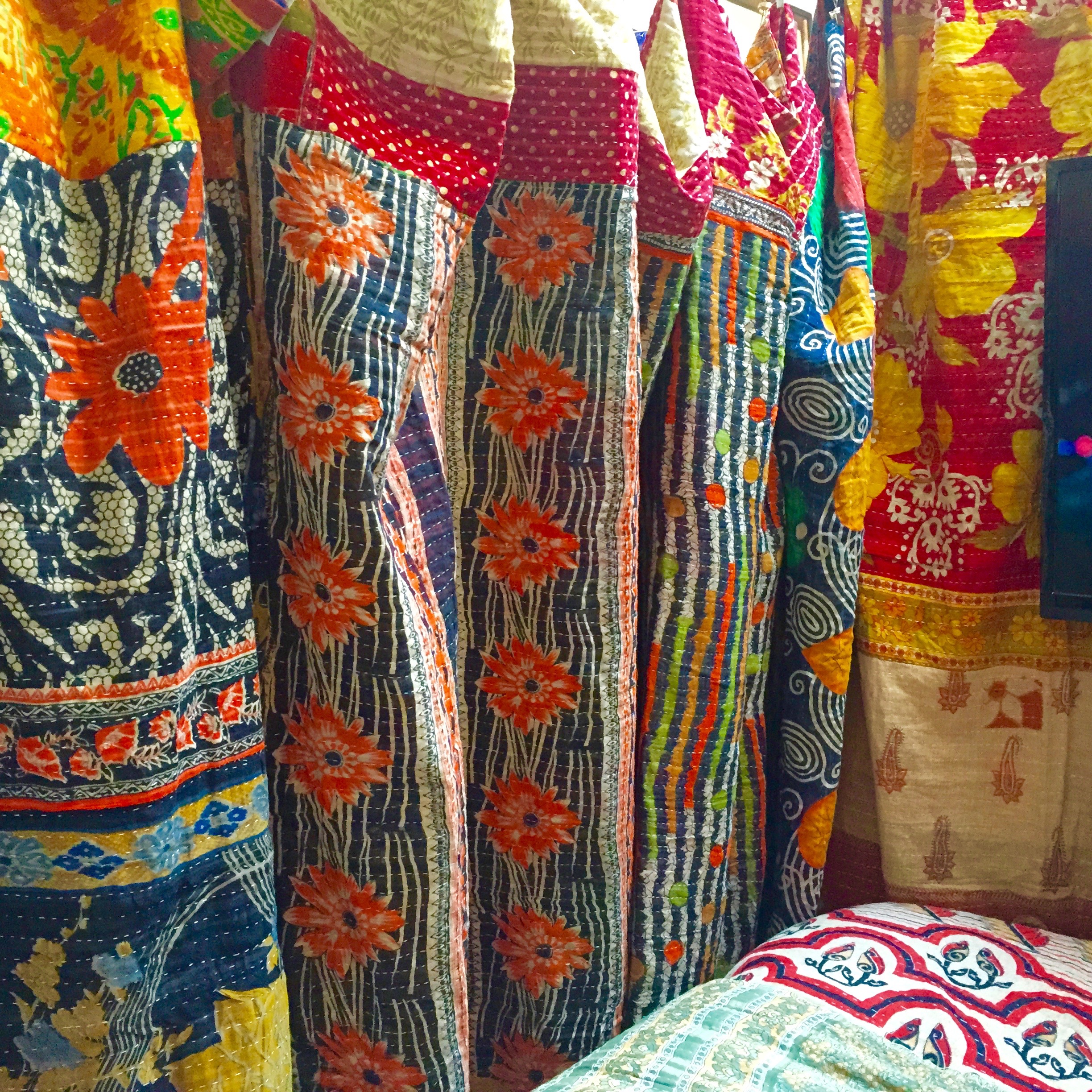
The reason that I remember my Living room so well is because my two older brothers were already in school and I spent the day with my Mom.  My brothers farted, smelled and played football.  They called me “Frankie” and I think looked after me because I was their little brother and I needed looked after.  We all slept in one room, all on our own twin beds.  The bed covers were solid red, white and blue cotton blankets.  They had raised textile weave that made them almost like sandpaper when you touched them.  It was not uncommon for us to wake up from a nights sleep with deep red lines on our faces from the imbedded shapes of the contorted bed coverings.  Even today I don’t think of them as comfortable or things that I was attracted to.  The bedcoverings were almost alien fixtures in my life – they hurt when you touched them and made fun of you when you woke up by imbedding red marks on your face.

I assume my intimate relationship with the bedspread may not have been so adversarial had I not insisted on wrapping the cover entirely around my neck so that Vampires wouldn’t be able to “get me” while I slept.  I was convinced that the vampires I saw at the drive-in movie could not, in any way, navigate through that bed cover to get to my neck to bite me.  My brothers did not have the same issues with vampires that I had.  They didn’t seem to care about vampires, the red marks on their faces or the colors of the bed covers themselves.    I don’t remember anything else in our bedroom.  There wasn’t much to feel close to – nothing of mine.

All this was to change. Once I was gifted the Sears Tower erector set for Christmas –I would begin my life as a collector of fine things – of interesting things, aspirational things, and even though I couldn’t express it at the time – Pretty things.

I woke up on Christmas morning with the red cotton blanket kissing my neck.  It had left behind its imprint on my face, slightly wet from the drool often a sign of a good night’s sleep. What was waiting for me downstairs wasn’t a SEARS Tower erector set.   I don’t know why, but my Mom and Dad bought me an organ.  I never asked for it.  I couldn’t read music.  I never played it.  It sat in my empty room for years unused.  My memories of a life with (or without) things officially began.

Copyright © 2016 Twisted Preservation| “Twisted Preservation”, “One-night Stand”, “Sleeping Around” are trademarks of Franklin D. Vagnone. All rights reserved.
Freedom of Speculation

Freedom of Speculation (Thought)

“”Bolder men than the revolutionary soldiers had, in their writings at least, overthrown the entire system of ancient philosophy and its ancient prejudices. Hester had immersed herself in this spirit. She assumed a freedom of  speculation (thought) that was typical enough for Europe at the time but one that our Puritan forefathers would have considered a crime deadlier than the one marked by the scarlet letter. 

Nathaniel Hawthorne, The Scarlet letter, 1850

MJM fp tags
MH fp paths

At my core, I am still the little boy lying on the living room floor, looking out the glass storm door, watching the world go by.  An observer. A kinesthetic learner.  I am a queer, dyslexic, sculptor,  guided by, as Rufus Wainwright sings, “Pretty Things”. Today, I freely admit that, other people know a lot more about the facts of history than I do.  I have never made any claims otherwise.  This is not false modesty, it is the truth.    The one thing I do posses, is the naive, child-like freedom that comes from allowing oneself room to, as Hawthorne writes, “speculate”- or in more current language,   freely think without the bias of tradition.  Much of the “Anarchist Guide to Historic House Museums”  research grew out of my personal frustration with traditional museum visitor experiences.  I am essentially a child, looking for answers.

As I have matured in my thinking (aided by those around me), I can see the stark contradictions between my fairly non-intellectual, experience-based upbringing and the conceptually-driven, Ivy-league, almost intangible education of my adulthood.  It is from the nexus of this tectonic fault line from which my thoughts arise – and in truth, where most professional criticism targets.

IMG_9085
11863281_1133346710012306_2525921528268490297_n

Still the little boy, sitting on the floor and observing the world around, much of my views come from experience and tactile experimentation.  To some, this approach puts me outside of accepted professional practice – labeled me.

Just like an earthquake, my observations about history, cultural sites and interpretation, result in the re-configuration of stasis.  This is not intentional; it merely is the condition of my existence.  I think being an observer to my process is confusing.  More to the point, being a participant must feel assaulting.

In Generation to Generation, by Edwin H. Friedman, he makes the case that social organizations (just like family systems) naturally seek stasis.  Like an Alexander Calder mobile, when one particle of the constellation is addressed, all the others react, shift, and are forced into a new state of presence.  This makes a lot of sense to me.  I have seen this over and over at many cultural organizations of which I have been aware.  As conscious and systematic as we try to engage change – it cannot help but to produce cataclysmic movements in the entire system.

FDV mont

The question in my mind is whether a natural inclination for speculation removes one to a place outside of the possibility for “doing”?   At what point is the critical observer no longer able to engage in the very thing that he/she observes?

Much of my professional work has been, just as I did when I was a little boy in Gahanna, Ohio looking out the storm door, an attempt to observe the everyday, document normal life, to suggest ways in which our cultural organizations can better reflect the needs and desires of the contemporary world.  It is, as Nathaniel Hawthorn writes, “Freedom of Speculation”, translated into modern English as “freedom of thought”, that can produce a safe environment from which expansive ideas and actions can grow.  Perhaps more than anything concrete or actionable, is the need for providing this speculative intellectual environment within our cultural organizations. We find ourselves in a world of big data, statistics, ROI, and a request for “innovation”.  But, one has to question if this “bias for action” isn’t a smoke screen to maintain stasis, when such action needs to comply and be justified by pre-determined data and organizational structure.  As in a Calder mobile, true creative action is not fully calculate-able, nor prescriptive. Freedom of thought cannot be managed.

Scarlet Letter’s Hester was many things at the same time, full of complexity, contradiction, good and flawed – essentially human.  What is needed in our cultural institutions, is a management set on producing a truly creative atmosphere that values alternative thought, speculation, questions stasis, and embraces the messy, fuzzy process of contradiction. The alternative to this leadership grows out of a rigid and absolutist philosophy,  which in turn,  results in the display of Hawthorne’s scarlet “A”.

The observations from our research are meant to be self-revelatory – A documentation of existing conditions.

Copyright © 2016 Twisted Preservation| “Twisted Preservation”, “One-night Stand”, “Sleeping Around” are trademarks of Franklin D. Vagnone. All rights reserved.

The Beauty of the Undefined

Photographs used for educational and non-commercial purposes only.

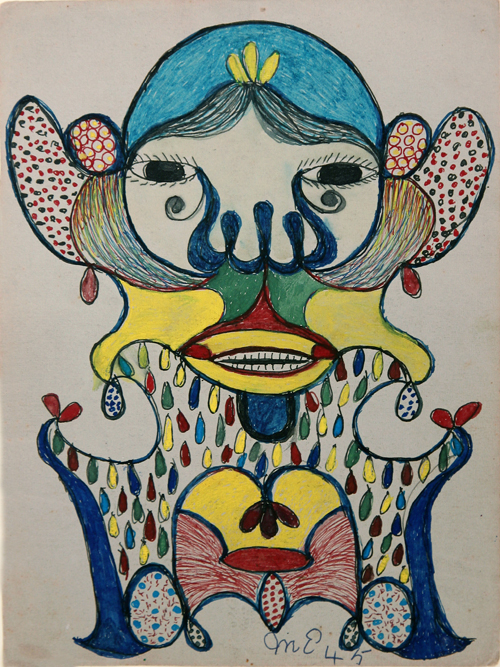
“I can’t paint what I dream because I paint memorandum of my dreams…I have so many dreams about angels.  I paint imitations of angels just as I imagined them.  I do not paint an angel, because they come from the throne of God.  We can get the imitation, but we can’t paint the real angel”

Minnie Evans: artist, from DRAW or DIE,  Wilmington Star News, January 19th, 1969  Photographs used for educational and non-commercial purposes only.

IMG_3539
ae-evans


Minnie Evans was an outsider artist who lived in Wilmington, NC (1892-1987).  She told us that in the middle of sleeping, she was awoken by angels slapping the bottom of her feet – she was told to “draw or die”.  The visitors required that she paint and sketch her the visions.  Her first drawings were hastily completed on small index cards and Minnie told us that the two drawings were her first impressions of heaven.  These two drawings occupy a world somewhere between an analytic floor plan & building section, and a simultaneous overlap of transparent film clips.  The difficulty in reading these two drawings is perhaps the basis for their power.  The lack of conceptual precision forces us to internally argue over the hidden narrative.

Even Minnie (take a look at the short video) tells us that she cannot believe that she was able to draw what she was seeing – but she had no choice, remember she was told “draw or die”.  Essentially Minnie was forced into producing a visual expression of a series of simultaneous experiences.  

So what does this have to do with public history, interpretation, and experience of our historic sites? I often hear from museum professionals that what is needed to better convey a complex historic narrative is a paring-down of the details, a simplification of the habitation layers, and eventually a script that clearly explains the results of this reductive process.  However, in my experience, this type of process can cut away all the fragile, loose histories (conjectural and difficult-to-isolate aspects of a narrative) and unfortunately, can leave only with what is easily contained and clearly defined. Yet isn’t there often a kind of sublime beauty in that which is often the hardest to explain, describe, and define?

1398698093923
img-minnie-evans_1559335393.jpg_x_325x433_c
evans_minnie_jones-figural_abstraction-OM5f5300-10001_20110918_19255_3051

Imagine an interpretive process that, instead of paring away complexities, embraced them, and allowed them to contradict each other.  Imagine an historic site that openly presented a VISION of history that, like Minnie Evans’ drawings, produced an expression of a series of simultaneous histories.  I suggest that we trust the visitors’ ability to manage contradictory messages simultaneously.  In doing this, we not only honor our guests’ intelligence, but also step closer to a more full expression of history.

In our book, Anarchist Guide to Historic House Museums, Deb Ryan and I suggest that what is lacking in most of our historic sites is what we have labeled POETIC PRESERVATION.  Just like Minnie, we cannot paint the real thing, all we can honestly do is re-present a compilation of overlapping histories that result in a poetic experience.  If we are lucky, this poetic experience touches something deeper than the analytic mind.

peopleschoicemag
Many of her images contain faces intertwined with both plants and animals. The concepts of time and space are blended into one continuous unified narrative. The drawings bust their paper edges, flowing into our current time and space. Photographs used for educational and non-commercial purposes only.

This short video of Bacon’s Art Studio (voiceover of Bacon himself describing his working experience) presents us with an entirely new way of seeing historic space. Not reductive in any way, the studio was archeologically documented and transferred to an art gallery. Bacon found the chaos of his studio a necessary type of order – one he required in order to do his work.  This begs the question, how does one effectively present and represent the creative mind?

Photographs used for educational and non-commercial purposes only.

The frustration with professionalism, and why not to listen to me

“Faced with any new object, reason asks, ‘in which of its earlier categories the new object belongs? In which ready-to-open drawer shall we put it?  With which ready-made garments shall we invest it?’  Because, of course, a ready made garment suffices to clothe a poor rationalist.”

The Poetics of space, Gaston Bachelard, from Henri- Louis Bergson, L’ Evolution creatrice, pg. 52, 1907.

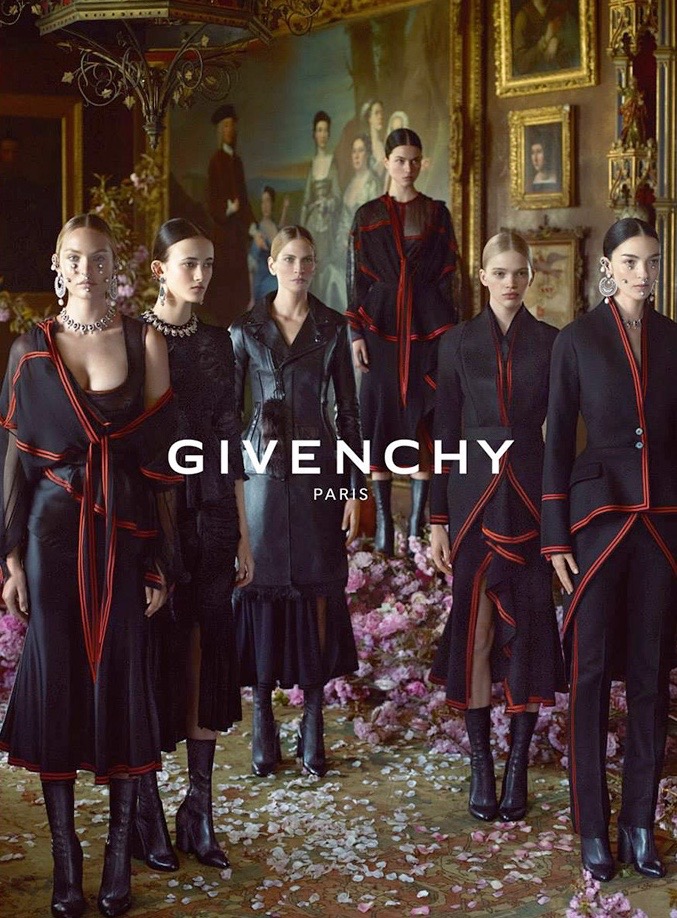
Givenchy-2015-New-York-Fashion-Week-Show (1)
Haute couture regularly places itself against a history-inspired backdrop. It is as if fashion needs the “structure” of memory as a foil for its rule-breaking. Notice the corseted women in the painting at the center looking on – as the contemporary models are bound by nothing but a few buttons and ties.
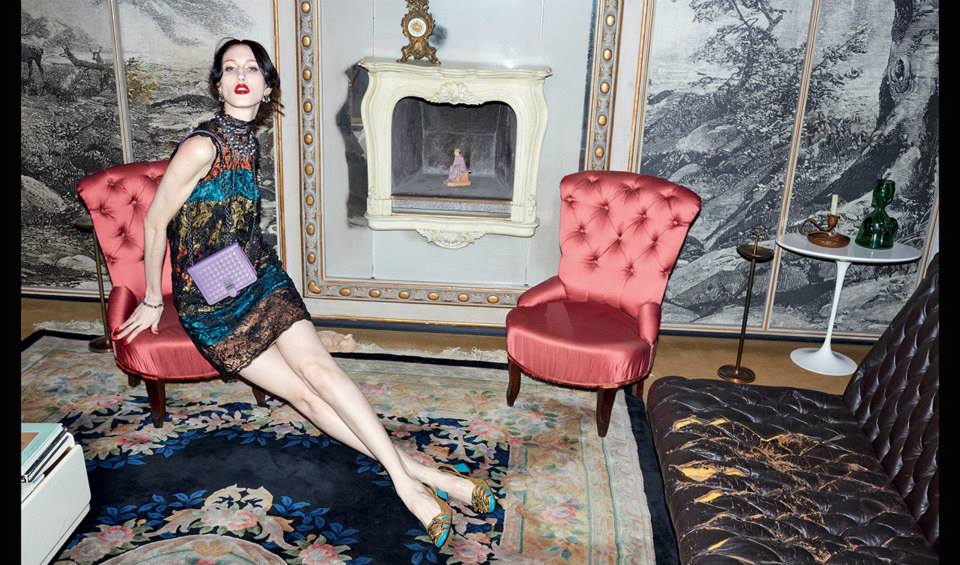
11665492_10204599836092598_4232934985417343292_n
In many cases, these images need the fragmentation of history in order for contemporary re-evaluation to be recognizable. Notice the mantel and clock as a fragmented image taken out of context. As Henri Bergson stated – “frames within frames”. The model seems to slide off the red silk covered chair, as if to suggest that history can no longer accommodate the needs of contemporary life.

As I sat there, listening in on a discussion regarding implementing changes to a historic house museum’s interpretation and furnishings plan, one of the team members (whom I value greatly) stated: “I don’t want to do this piecemeal – I want to figure it out with a plan and then move on it”.  In every part of this statement, my excitement, imagination, and energy was hammered into an unwelcomed shape; The shape of reason, measured contemplation, and rationality, “Of course”, I thought, “to do this properly, one must rationally think about the entire organism, prioritize the parts, organize the issues, categorize the projects, and then (and only then) should one implement anything.”   I remained quiet.  Of course my colleague was correct.  So why did I disagree?

It was at that moment that, as often occurs, the harsh little voice in my head (I call him Gollum) reminded me of two things.  One, that something is wrong with me – how much of another species I am from my fellow lovers of historic house museums, and Two, what a SHAM I really am.

48593 APARTAMENTO 03-TRIPA.indd
We seem to be in an era I would label as the “fetish of the everyday”. I am one who finds this fascination of the messy, complex and idiosyncratic as a needed expansion of what culture values as environmental beauty. Nothing about this environment can be categorized from a purist taxonomic perspective.
home
My interest in environments of habitation are not limited to any distinct perspective. As shown in this Elle Decor image, I am often drawn into environments that are fueled by the dialogue between history and current fashion (not categories of appropriateness).

Why a sham?  Because instead of reading some important museum publication for guidance, I am looking at the New York Times Style Magazine, W, Elle Decor, and Apartmento.  I usually find professional publications so rational and, as Bachelard explains, “complexualistic”, that it leaves me with no place for my imagination, no place for my creativity.  The drawers of the conceptual cabinet are all labeled and filled with the appropriate contents before I even get a chance to open it and see what’s inside.  What’s that about?

Does this mean that, in order for me to be a professional, I have to accept the labeled drawers? Is my only option to re-arrange the pre-determined contents of the drawers – but never allowed to empty the contents onto the floor in one big pile; mix them?

Screen Shot 2015-09-06 at 9.08.41 AM

What if I want to arrange my books by color of the dust jacket and not by the author’s last name?  Does that  make me silly? Immature? Irrational? Fuzzy? There are other ways of operating and interpreting environments that are outside of normative professional practice.

Given the world of historic sites, I wouldn’t listen to me either.  It is by no accident that the most important component to my professional understanding of historic house museums is EXPERIENCE.  Within that, I wonder how IMAGINATION, ENERGY,  and EXCITEMENT are fostered.   Notice that I am not suggesting that curatorial, interpretive taxonomic structure or pedagogic theories are the basis for a successful historic site.

OAS-conf-call-2012Sept
BMCRP_NCDAH_albersJosef_classes6
Art-School-For-All-See-The-Creative-Future-Of-Education-At-This-Historic-Black-Mountain-Exhibit


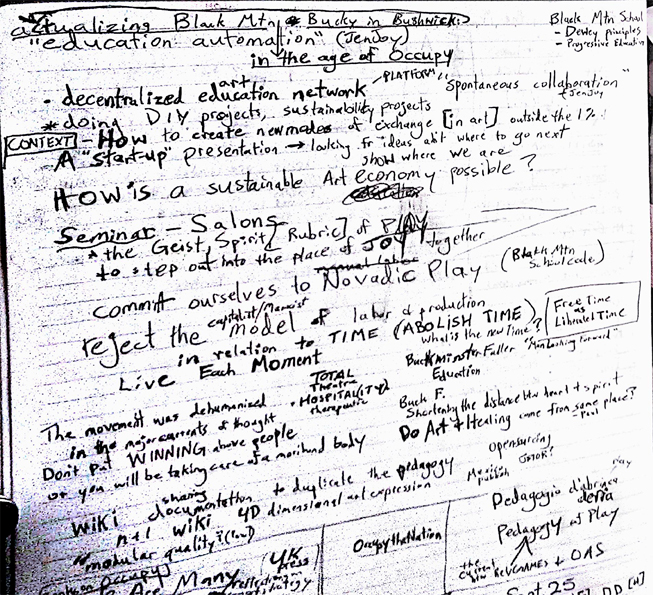
I have valued the way the Black Mountain College (North Carolina, 1933 – 1956) set out to redefine arts education, I feel like that deep re-assessment could be useful for our historic sites.

You have been warned – professional rationality is not my goal.

10496110_10206483631957625_906004569024097112_o
dsc_00112
Screen Shot 2015-09-06 at 11.36.02 AM


Copyright © 2016 Twisted Preservation| “Twisted Preservation”, “One-night Stand”, “Sleeping Around” are trademarks of Franklin D. Vagnone. All rights reserved.
What would your historic house museum look like?

IMG_3411

It is impossible to target just one state, one emotional moment in which we can draw a “period of interpretation”.  As my videos (below) show, I am constantly changing my living environment, changing my emotional state, adding and subtracting experiences to what defines me –


IMG_3236


How would you tell your story?

Which era?

What would you highlight?

What would you do with the “collections”?


9781629581712_p0_v1_s600
Pre-ordering now. Published October 2015.

Preservation, Demolition, Destruction, Decay and Death

Photographs used for educational and non-commercial purposes only.


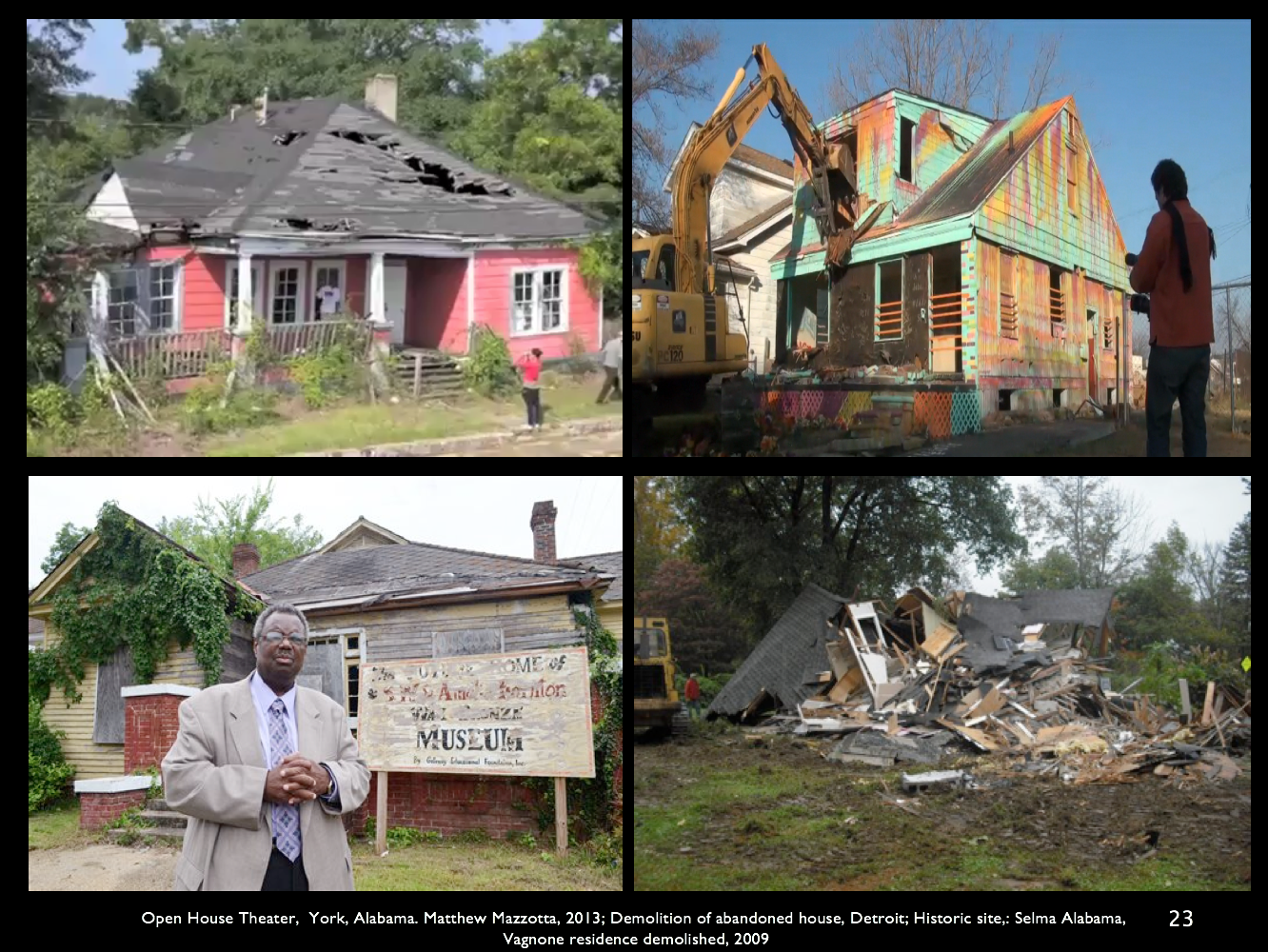
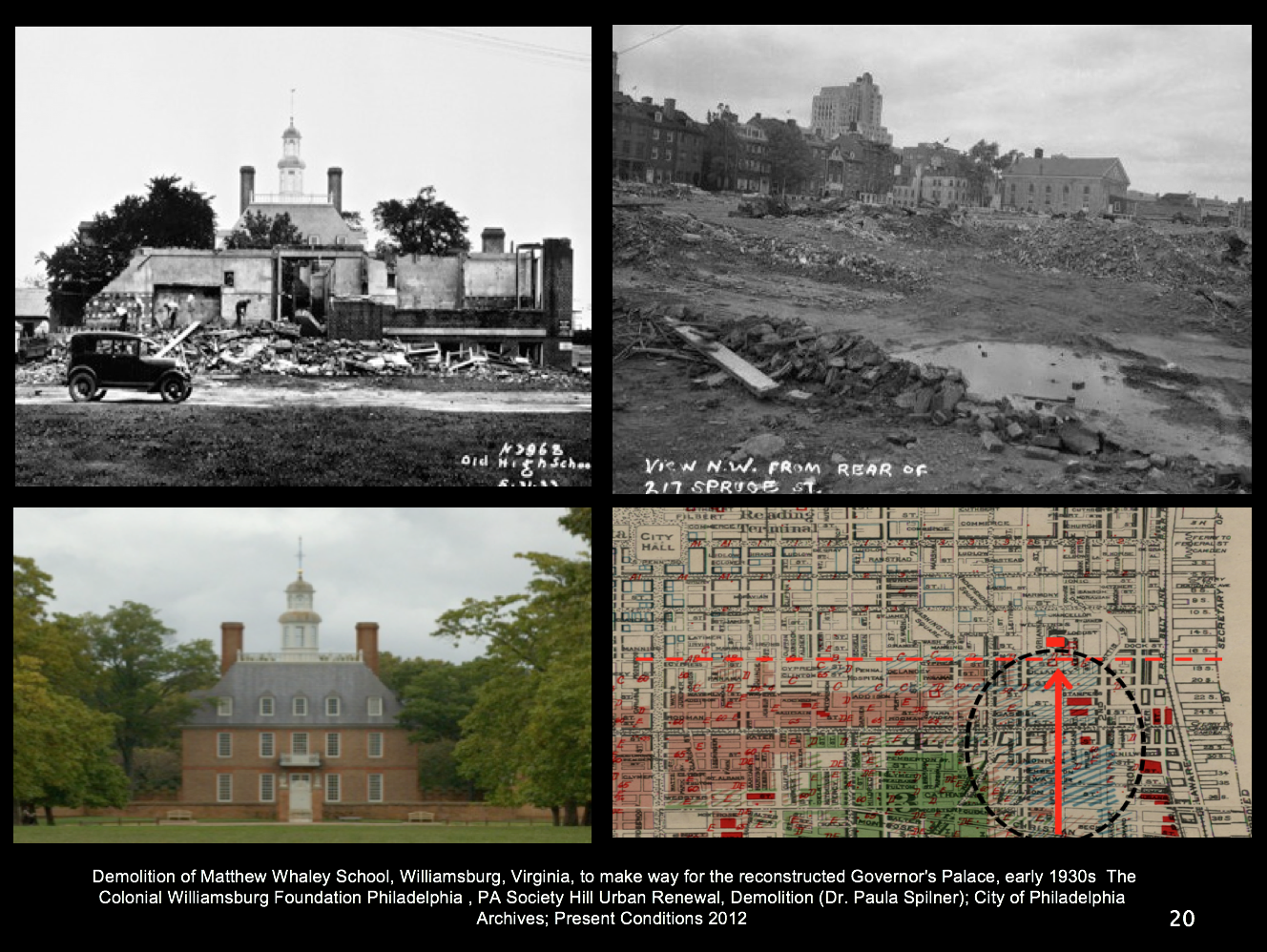
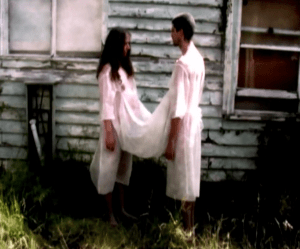
This is a new thread of investigation – In what ways does “preservation” help us avoid death?  How does the purity of our preservation efforts directly reflect personal feelings of loss?  Our world is in a continuous process of demolition (Pruitt Igo Housing demolition), destruction (ISIS museum aggression), decay (Willard Hospital suitcases) and death (Funeral for a House – Temple University).  I gave a presentation to the Greater Philadelphia Museum Council in which I outlined the basic concept of how I see death being a foundational element in our stewardship of cultural sites.  I admit, it was an odd and at times disturbing glimpse into this, mostly unrealized, component to historic preservation.

The acknowledgment of disintegration as an accepted and anticipated process is, in fact, a form of preservation.  How? It becomes preservation of the concept of life by accepting death (and the process of decay), rather than the in-authentic preservation of the physicality  and “object-ness” of life.


Screen Shot 2015-09-20 at 11.14.36 AM

Screen Shot 2015-09-20 at 11.15.40 AM  Screen Shot 2015-09-20 at 11.16.13 AM

Screen Shot 2015-09-20 at 11.16.00 AM   Screen Shot 2015-09-20 at 11.15.49 AM


Screen Shot 2015-08-29 at 12.47.03 PM

azuma-makoto-box-flowers-designboom-01

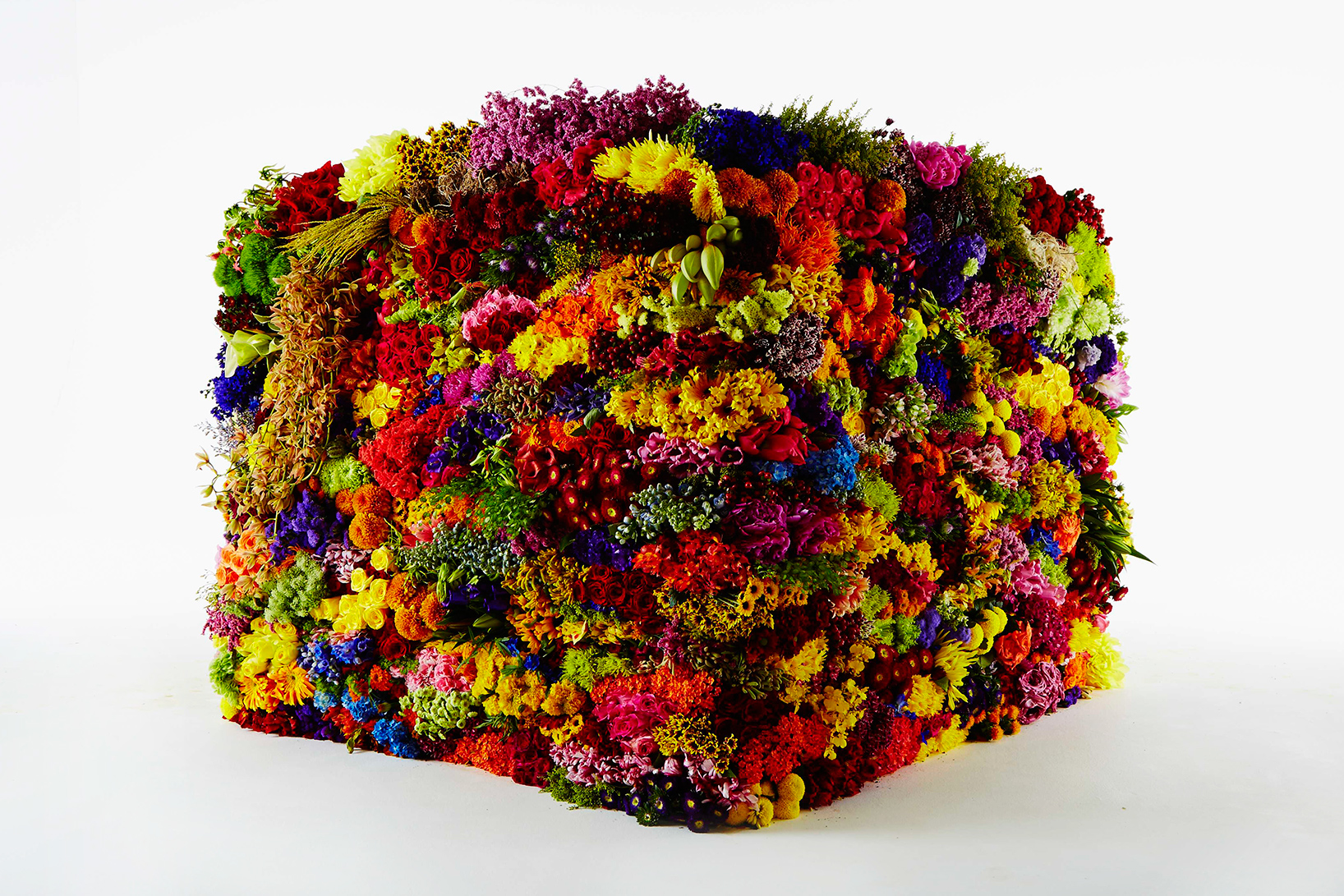
azuma makoto represents the stages of decomposition using flowers and leaves
all images courtesy of azuma makoto Photographs used for educational and non-commercial purposes only.

In japanese art, the ancient kusozu style refers to a specific series of watercolor paintings that graphically illustrate the various stages of human decomposition just before, and after, death. these works of art, inspired by buddhist beliefs, intended to stimulate thinking about the ephemeral nature of the physical world.

IMG_5332-1000x704

Material Speculation” is a digital fabrication and 3D printing project by Morehshin Allahyari that inspects Petropolitical and poetic relationships between 3D Printing, Plastic, Oil, Technocapitalism and Jihad. Photographs used for educational and non-commercial purposes only.

The first series “Material Speculation: ISIS” is an in progress 3D modeling and 3D printing project focused on the reconstruction of selected (original) artifacts (statues from the Roman period city of Hatra and Assyrian artifacts from Nineveh) that were destroyed by ISIS in 2015.   “Material Speculation: ISIS” creates a practical and political possibility for artifact archival, while also proposing 3D printing technology as a tool both for resistance and documentation. It intends to use 3D printing as a process for repairing history and memory.

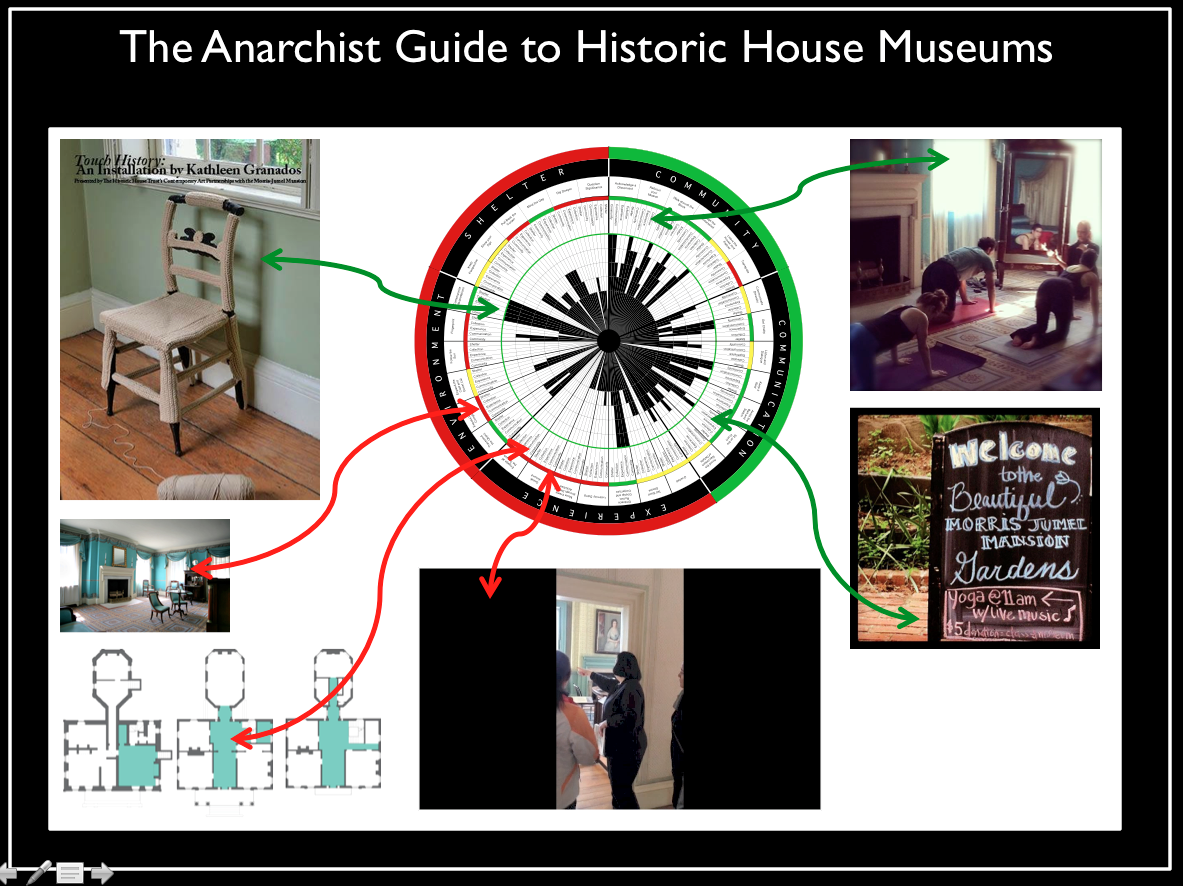
The Anarchist Guide to Historic House Museums: Evaluation Methodology for Historic House Museums

The Anarchist Guide to Historic House Museums: Evaluation Methodology for Historic House Museums

Franklin Vagnone, Deborah Ryan, and Olivia Cothren

Screen Shot 2015-05-20 at 6.55.54 AM

‘‘Don’t you want to preserve old things?’’
‘‘Trying to preserve a century by keeping its relics up to date is like keeping a dying man alive by stimulants.’’

F. Scott Fitzgerald, The Beautiful and Damned


‘‘Tyranny is the deliberate removal of nuance.’’

Albert Maysles, through #Russell Brand


What is The Anarchist Guide to Historic House Museums?

we are house museum lovers and professionals who care deeply about historic house museums (HHMs). At the same time, we want to take a critical, but practical look at shortcomings of these fragile sites. As we discuss HHMs, the first question we often hear is, ‘‘Are there are too many of them?’’ Although many of our colleagues seem to revel in arguing over the answer, we wonder if the question is really a smoke screen of sorts, distracting HHMs from working on the problems many of them share. We have also often heard that, ‘‘If we just were awarded more grants, we would be fine,’’ and the umbrella statement that, ‘‘People just don’t care about history any longer, it’s not taught in schools anymore.’’ These perspectives blame outside forces for the plights most HHMs are facing today, and by focusing on absolutes, they leave little possibility for a course correction or a more nuanced understanding. In fact, it is rare that anyone discusses the inherent, systemic challenges facing historic house museums.

The Public Historian, Vol. 37, No. 2, pp. 97–111 (May 2015).
ISSN: 0272-3433, electronic ISSN 1533-8576.
© 2015 by The Regents of the University of California and the
National Council on Public History. All rights reserved.
Please direct all requests for permission to photocopy or reproduce article content through the University of California Press’s Rights and Permissions Web site: http://www.ucpressjournals.com/reprintInfo.asp. DOI: 10.1525/tph.2015.37.2.97.

SEE THE BELOW LINK FOR THE ENTIRE PUBLIC HISTORIAN ARTICLE:

“You are an idiot!”

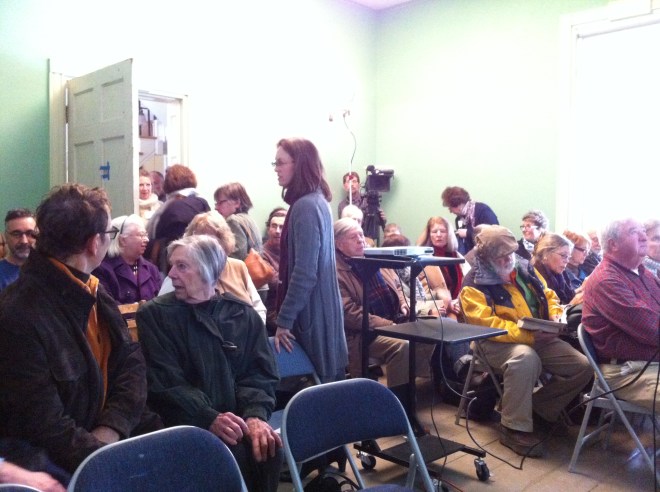
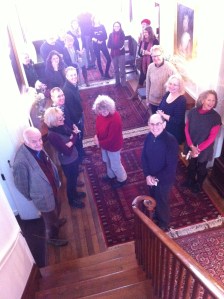
IMG_0478Moments before my lecture began, I snapped a picture of the crowd at the Thomas Cole Historic Site.

This past weekend I was asked to give two public lectures in upstate New York. One was at Clermont Historic House in Germantown, NY and the other at the Thomas Cole Historic site in the nearby town of Catskill.  The Clermont presentation consisted of a discussion of our “Anarchist Guide to Historic House Museum” concepts followed by a hands-on workshop in the historic house itself. The Thomas Cole presentation was to concentrate solely on “Contemporary Art Happenings in Historic House Museums”.  I was flattered to be asked to hold these two public forums and my hosts were perfect: They made me feel appreciated and valued.  I hope the ideas we discussed will become useful for them. My thought this morning concentrates on the second presentation at the Thomas Cole Historic Site.  I think everyone had early-winter cabin fever so it was standing room only, but this made for a nice intimate community to discuss innovative ideas in house museums.  The video of the talk itself can be found HERE. The slides of the powerpoint can be found here Contemporary Art Happenings in Historic House Museums. F. Vagnone IMG_0479 The audience was a wonderful, receptive, and friendly group. The Thomas Cole House knows how to treat a guest! Thank you to their Board of Directors, Executive Director and Staff.   Following the talk, I took questions and one comment stood out among the others.  A quiet woman, whom I think was new to the crowd,  raised her hand, I called on her, and she began to speak.  Among other things, she told me to, “take what I am about to say personally”. I responded with a smile and she proceeded to voice her comment. “You are an idiot“.  She went on to voice her concern that the ideas I presented were nothing less than the complete destruction of all that is valuable.  She voiced her concerns in a very clear, non-anxious tone.  She sincerely meant what she said and had no reservations about stating it. I smiled, not in a patronizing way, but from an honest appreciation of her thoughts.  Why did I not get defensive and push back with all of the statistical data that we have been compiling about historic house museums?  Why didn’t I tell her that these contemporary art happenings could be one of the pieces to our historic house museum puzzle?  The answer is this: The room was filled to capacity to hear some unknown guy talk about art history and historic house museums.  They each felt passionately regarding these fragile sites and took time out of their lives to hear my ideas and comment on them. IMG_0457  IMG_0469
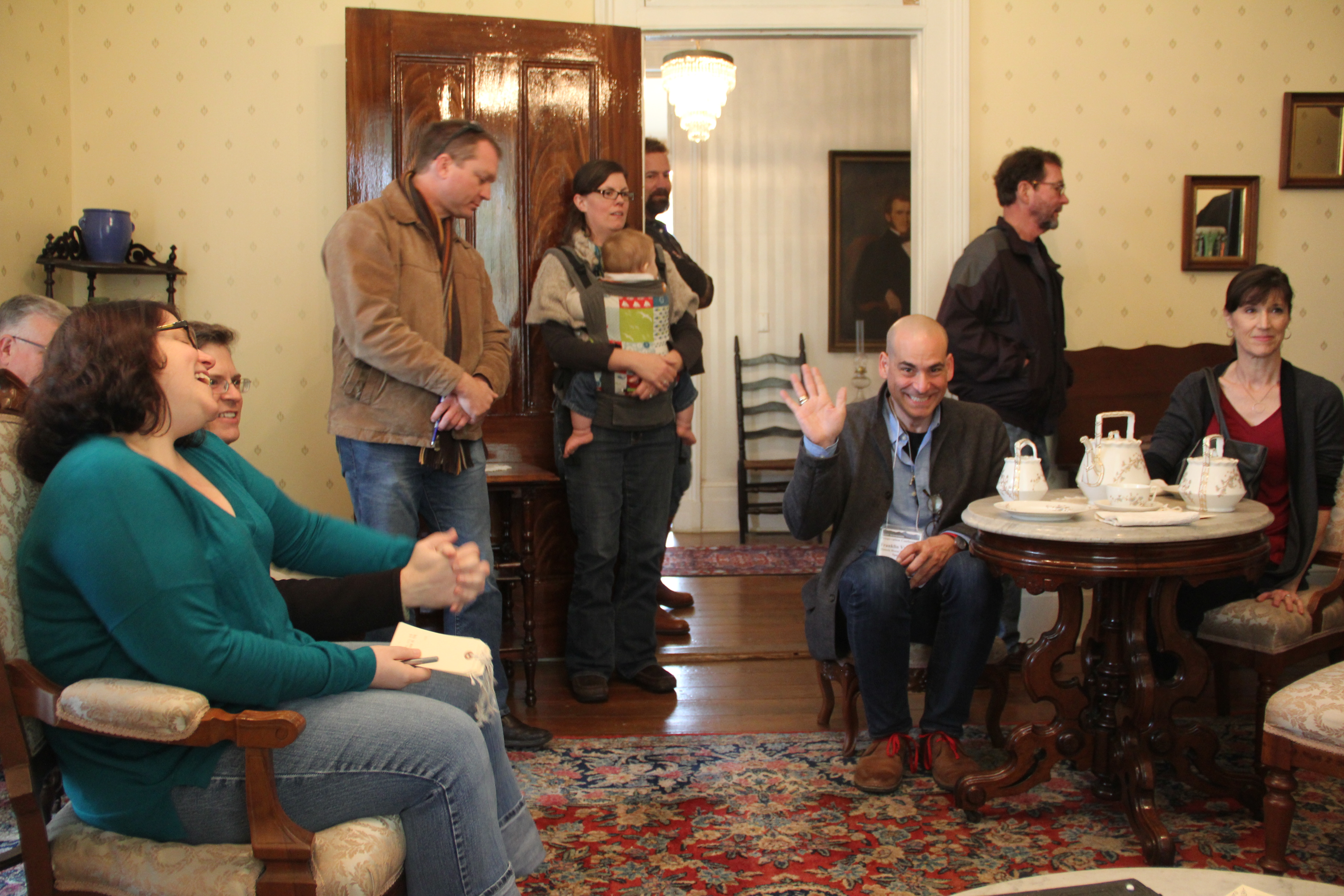
On Saturday I facilitated a hands-on workshop at Clermont Historic House site in Germantown, New York.  The group was engaged, interested and willing to try anything!

Is this not what is needed for historic house museums and sites? ideas – dialogue – testing- failure- and – a re-boot?  I was happy that a woman called me an “idiot”.  Her comment showed me that 1. people still cared about these almost-forgotten sites and 2. that my presentation provided a safe forum for discussion.  It is only from strong voices like hers that we will mediate a successful vantage point to see our next steps.  I have never seen our research with historic sites and house museums as adversarial, but rather as framing a discussion in a way that a woman can come to a public presentation and voice her  thoughts. IMG_0475

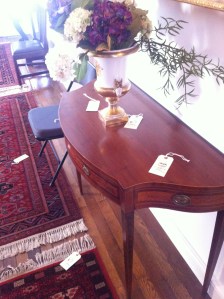
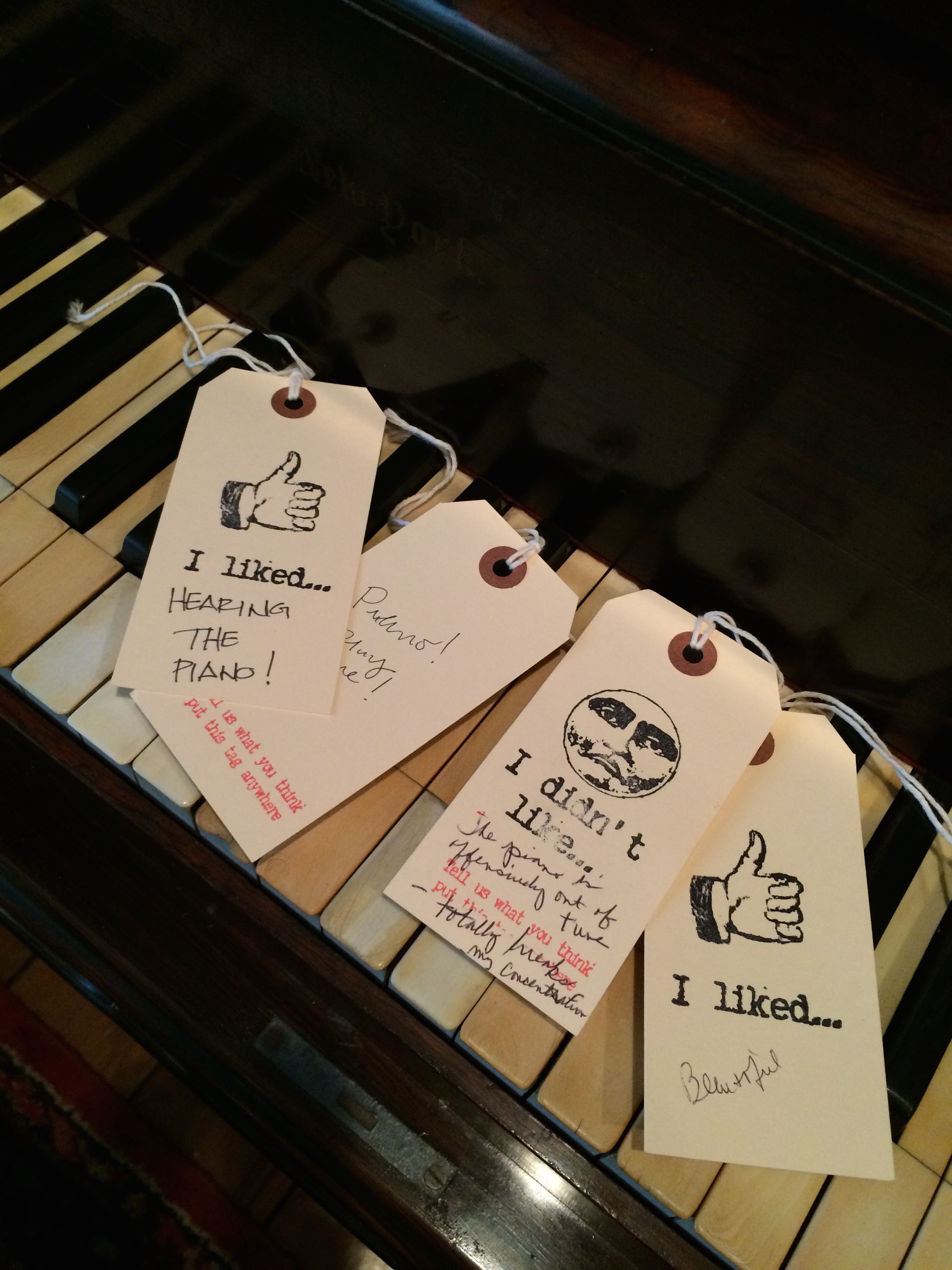
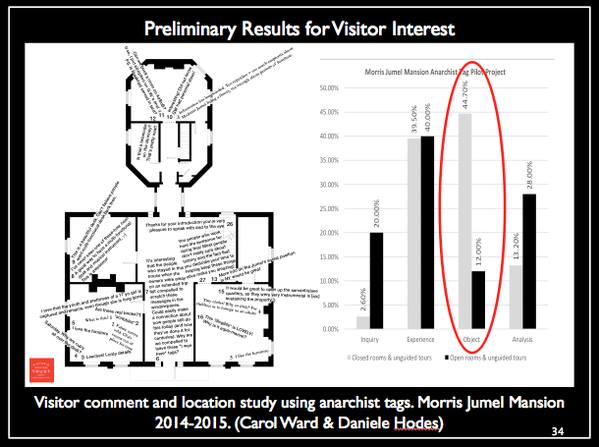
As part of the Clermont hands-on workshop, we used the “Anarchist tags” to crowd-source our thoughts on the visitor experience.

So far, I have been called “a menace” and “an idiot” openly in my public talks about historic house museums. Finally I am beginning to believe there are people out there who care about the future of these sites.  So next time I present in public, show up, voice your concern and make me feel useful.

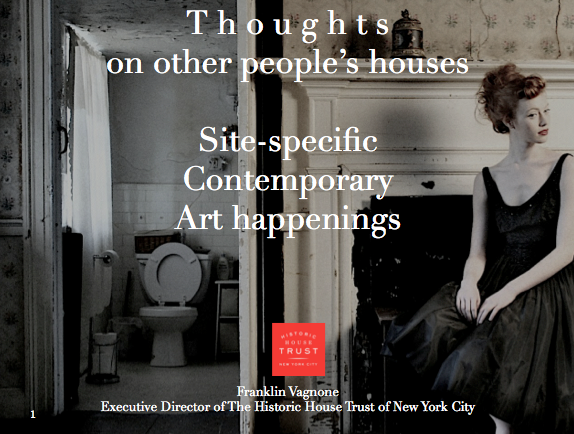
Contemporary Art Happenings in Historic House Museums

Screen Shot 2015-01-12 at 8.08.11 AM

Contemporary Art Happenings in Historic House Museums. F. Vagnone

Presentation given at the Thomas Cole Historic Site, Catskill, NY

The destruction of the sacred

I watched the screen in disgust as the crowd began to tear apart the tree. They ripped off whole limbs with their hands and women grabbed leaves and began to stuff them inside of their jacket pockets. The mob grew larger and eventually the assault on the tree resulted in the bare trunk being pulled out of the soil and onto the ground. It lay like one of the ill pilgrims hoping for a miraculous healing from the Madonna. The scene pans away from the detailed rape of the tree to show the chaos of the surrounding paparazzi and pilgrims – all hoping to gain a glimpse of the Madonna. (Photographs used for educational and non-commercial purposes only.)

Previously, two children had testified to the Madonna visiting them under this particular tree.  Eventually the location of the tree become a pilgrimage destination and crowds continued to gather.  The scene soon became a media spectacle and the crowds became zealous with religious fervor. The children then told the crowds that the Madonna had mandated a church be built on the site of her manifestation– at the tree. Hence, the scene cited above.

I was transfixed – the drive to possess the unique, sacred, and finite, ultimated in the destruction and loss of the very thing that pulled the mob to the desolate spot in the first place – the tree. But, what were the outcomes for such a situation? Preserve the tree as an artifact? Build a church around it? Next to it? Out of it?   How best could a reverent acknowledgment of the miraculous encounter be facilitated? And more importantly, how could the miraculous event be formalized into a positive experience for the believers?

Was this scene from Fellini’s film, La dolce vita, an metaphor for what what we all have done to historic sites?  Have we made them into media destinations without a soul?

Although a stark example, some critics might say this is analogous to what we have been advocating  in reference to historic house museums? Are we proposing to tear apart the very thing we love in order to feel a part of it? Is the visitor experience we advocate for really just the pornographic voyeurism of watching the scared being defiled? Am I one of the paparazzi, standing on the scaffolding with bright lights, illuminating the slow destruction of our cultural heritage?

No – despite what some may think, I am not a paparazzo.   While I do want to bring attention to, and shed light on an historic site, I want our guests to appreciate the sites from a deeper, personal level. My collaborator and writing partner, Ms. Deborah Ryan (UNCC Professor of Architecture, Specialist in Community Engagement) and I have spoken about this much.

*I feel the urge to push for tactile, emotional and poetic experiences at historic sites.  

*I wish us to transcend the fetishization of the “object” and to swim in a sea of experience.  

*I advocate for the soulful honoring of historic sites in a way that engages a guest viscerally. 

*I am interested in how might we draft a new course for preservation that not only inherits the past but allows the use of its value in the present.

What is sacred?

Perhaps nothing? Perhaps everything?

How then, does one honor and memorialize without fetishizing?

IMG_8786
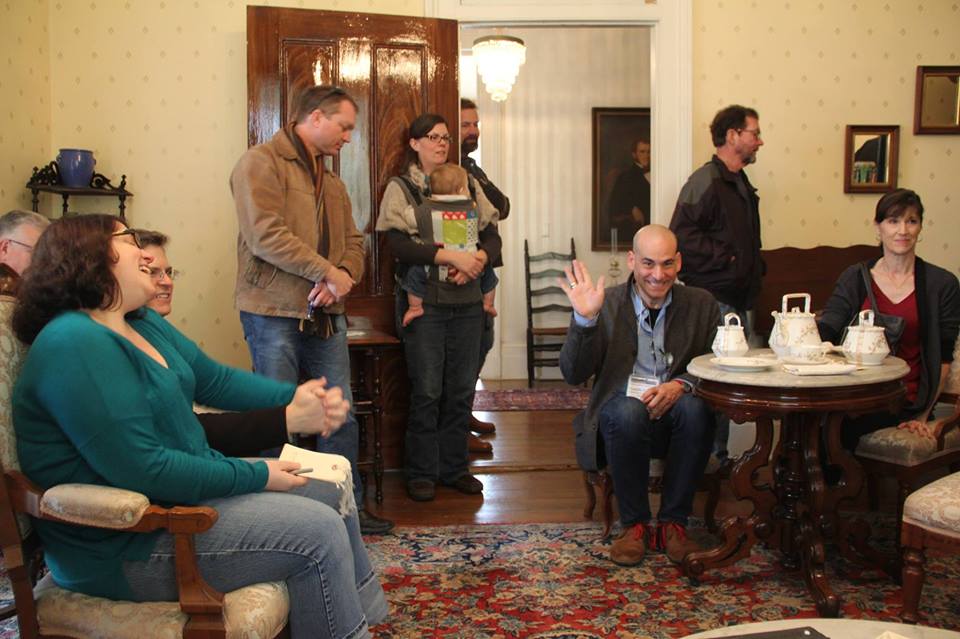
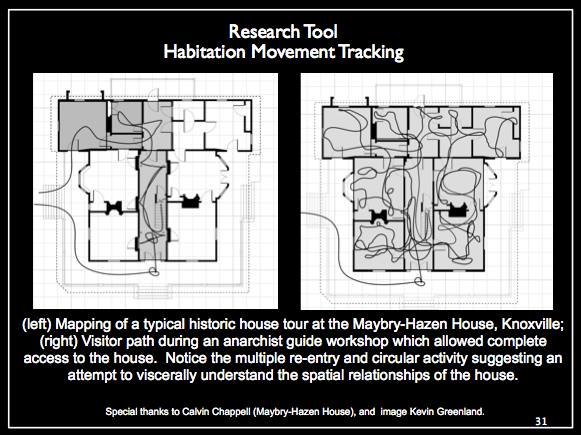
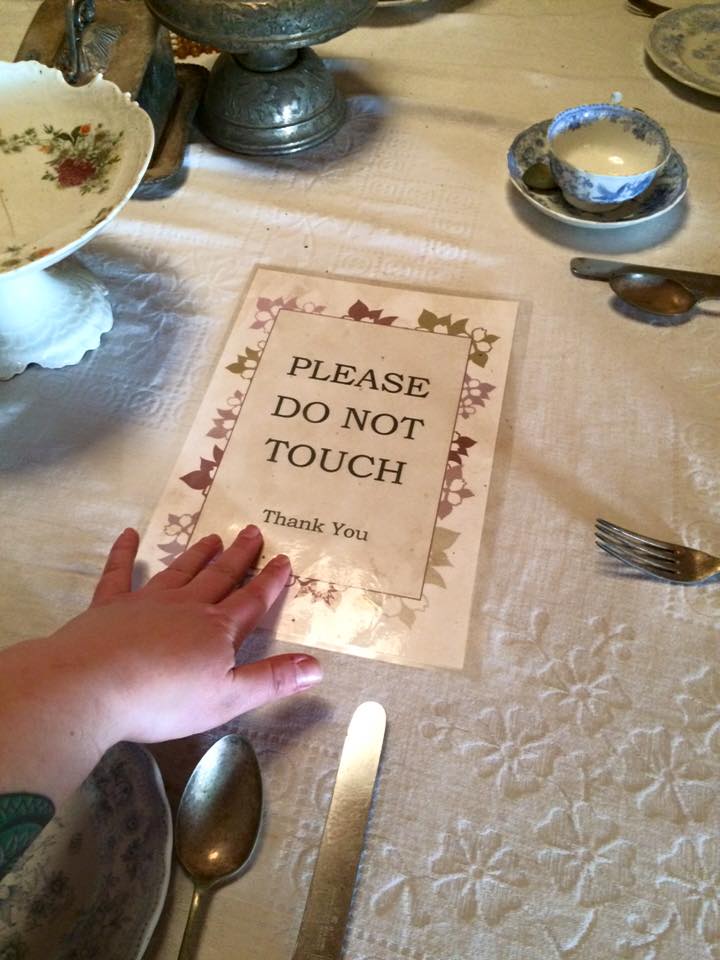
Mabry-Hazen Historic House Museum (With Knox Heritage).  Anarchist Guide to Historic House Museum day-long workshop in which we remove all of the barriers from the experience and use the house and collections as they were intended to be used.  The participants were asked to use “anarchist tags” (shown below) to tell us their thoughts about the experience.

IMG_6507 IMG_6541IMG_6594

china_art

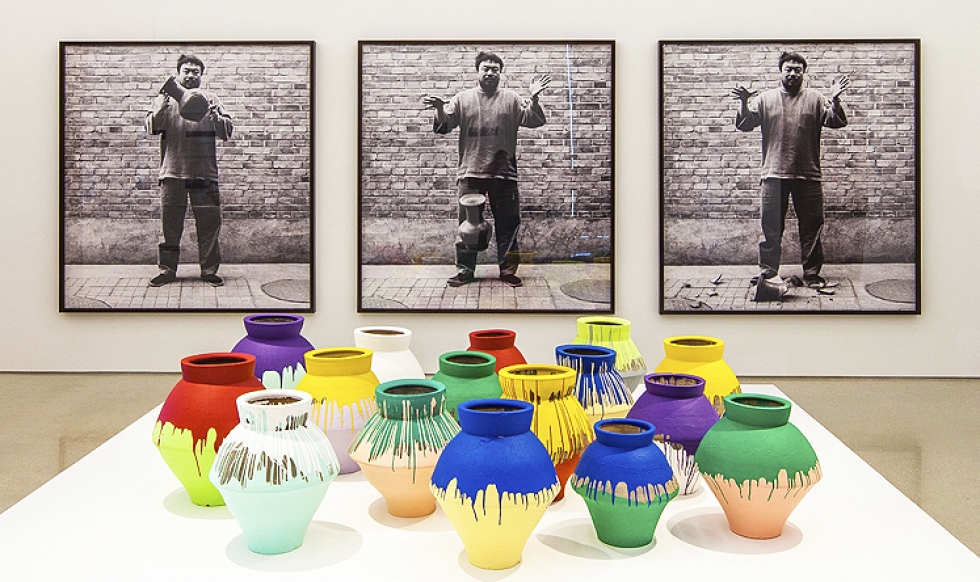
Ai Weiwei’s “Colored Vases” was created by covering urns that are thousands of years old with new paint, Photographs used for educational and non-commercial purposes only.

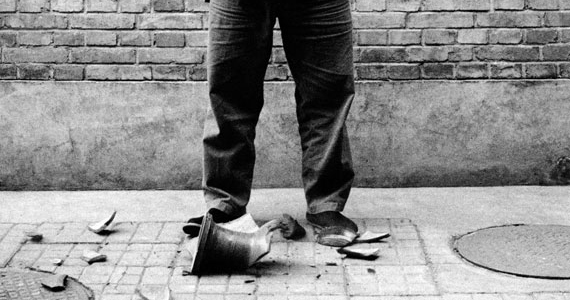
droppingurn1Weiweis most iconic work, a triptych of photographs, Dropping a Han-Dynasty Urn (1995). The action makes us witnesses to the willful destruction of a superb, “museum quality” urn that had survived for 5,000 years in pristine condition. Weiwei impassively sends it crashing to its death.  A persistent reminder of Weiweis fearless, transgressive iconoclasm. Photographs used for educational and non-commercial purposes only.