The team at Twisted Preservation focuses on unique and specialized projects that serve as experimental opportunities to develop new and innovative methods for preserving cultural and heritage sites. We engage in projects based on how much they can benefit the specific site and how the techniques and ideas developed can be applied to benefit the cultural sector as a whole.
Presentation and consulting relationships HERE

J. Brown Heritage Foundation (Saint Catharines, Ontario): Engaged in a long-term strategic planning process. This historic site, not open to the public, is seeking Twisted Preservation to help with their Phase 1 decision-making in bringing to life a truly unique regional-specific idea for a historic house site. The project involves extensive community engagement, interviews with community leaders, and in-depth discussions with stakeholders, including farmers, local merchants, university leaders, representatives from the arts and culture sector, and public historians, with the ultimate goal of developing a solid plan for Phase 2.
Fairmount Park Conservancy in Philadelphia, PA facilitated a two-day innovation think tank and a public presentation on historic site innovation. The Conservancy, a public-private organization, is responsible for overseeing 25 historic house museums located across a large area of parkland. The first day involved a private, in-house retreat to discuss stewardship, presentation, and interpretation issues. The second day included an on-site historic house museum immersive workshop.
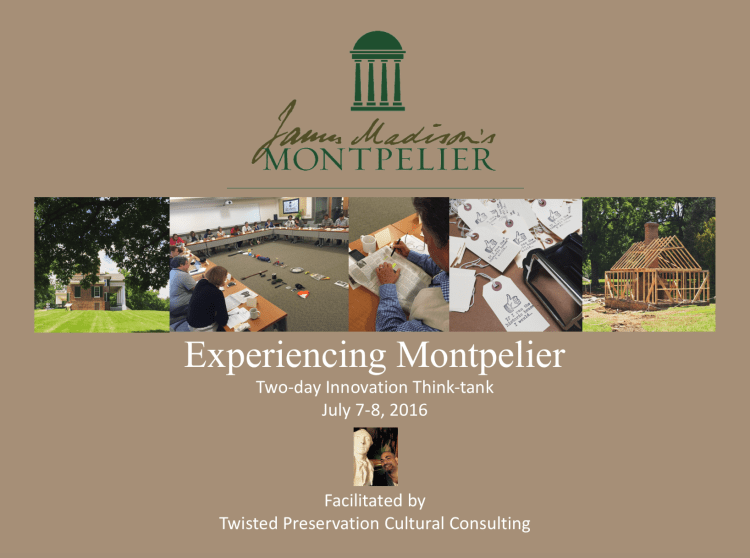
James Madison’s Montpelier (Virginia): A two-day think-tank was organized to explore the integration of various narratives at Montpelier, focusing on the story of enslaved peoples as well as the political, social, and domestic aspects. Montpelier has been reconstructing a series of slave quarters on their original sites and the goal of the think-tank was to consider how these multiple narratives could be combined to create a cohesive and impactful visitor experience.
Willowbank Center Preservation School (Ontario, Canada): A Keynote and panel think-tank was held to discuss restoration possibilities for the Willowbank Estate. The estate is planning for rehabilitation, and three panels of heritage industry leaders gathered to talk about what conservation means in the 21st century. The discussions took place in Willowbank’s Bright Parlor, providing inspiration and a backdrop for the event. Panelists spoke about conservation philosophy, interpretive approaches, and materials and systems considerations.
The City of Alexandria, Art Commission (Maryland): There was an invited presentation and panel think-tank on contemporary art happenings in historic sites. The event consisted of an afternoon presentation of the city-owned historic sites, followed by a discussion with stakeholders about the logistics and implementation of contemporary art happenings in historic sites. The day ended with a public presentation at the African-American Museum of Alexandria, VA. Additionally, you may want to check out “One Night Stand at Gadsby’s Tavern – Leaving Crumbs Behind (2016).“
Chipstone Foundation & Bard Graduate Center for Material Culture (Wisconsin & New York City) : “Cultural Change Affecting Curatorial Practice” took place in February 2016 as a part of the “Object Lab.” This three-day event was held at the Chipstone Foundation Estate, Pabst Mansion, and the Milwaukee Museum of Art. The schedule included a presentation, execution of the “distinct activities survey” project with discussions, and an interactive session in the Chipstone Galleries at the Milwaukee Museum of Art (2016).
Rock County Historical Society & Lincoln-Tallman House (Wisconsin) : The focus of this gathering is to discuss the current presentation of the historic house, the needs of the surrounding community, and new methodologies to better connect them. This involves studying visitor experience and community engagement, leading to a series of potential ideas for expanding the historic site’s public presence. Additionally, you may want to check out “One Night Stand: Making Friends With The Shutters” .
Minnetrista & Oakhurst House (Indiana): an IMLS grant-related historic site think-tank was held with Deborah Ryan. This event focused on exploring the potential uses of a historic house that was closely associated with the canning of fruits and vegetables. The two-day series included presentations, archive reviews, town hall discussions, and a half-day house museum workshop. Participants included Minnetrista staff, board members, and community group leaders. The workshop resulted in a list of potential ways to use the historic structure to increase public engagement and honor the legacy of the Ball Family.
California State Park System (40 Historic State Parks): “Interpretation & Education Webinar Training with Deborah Ryan. This webinar presentation outlined innovative concepts regarding community engagement, visitor experience, and historic site re-evaluation. The presentation followed a discussion of tactical actions that could be enacted. Shown in the webinar presentation were the Bodie Gold Mine State Historic Park and San Simeon.
Delaware Historical Society (Read House & Gardens) and University of Delaware (New Castle, Delaware): A two-day interpretive think tank and historic site workshop was held with Deborah Ryan as part of a U. of D. Museum Studies Course. The workshop focused on the existing interpretation and visitor experience at the Read House & Gardens. The event included extensive presentations, discussions, and a half-day, hands-on historic site experience. The project’s results will explore new innovative methodologies of community engagement, programming, and visitor experiences.
Buffalo History Museum (New York): Innovation Think Tank. This event involved pre- and post-event meetings, a two-day think tank facilitation, a reminiscence project, a presentation on current social trends affecting museums, and extensive discussions on “transformation”. The deliverables included a series of concise bullet points highlighting areas needing attention and a list of actionable items to address in smaller committees. The weekend concluded with an invitation-only presentation to stakeholders, contributors, non-profit partners, and foundations.”
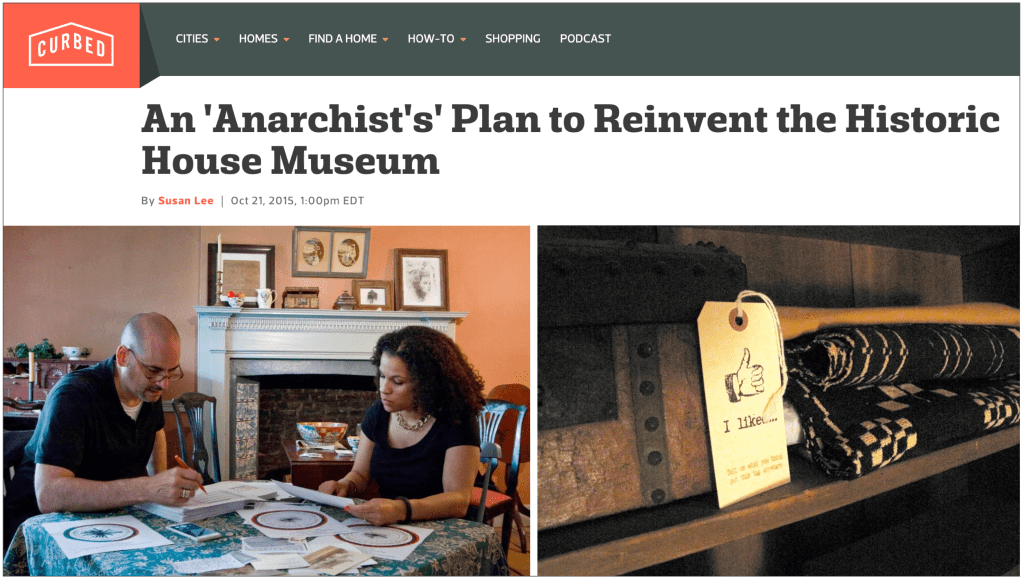
Peabody-Essex Museum (Massachusetts): Staff In-house Retreat & Two-day Docent Training, with Deborah Ryan. This event included discussions with the PEM Educational & Interpretive staff and the volunteer docents from the historic house museums. The program consisted of two presentations on the concepts from the “Anarchist’s Guide to Historic House Museums,” followed by question and answer sessions. Additionally, there was an in-depth review of the Ropes Mansion, followed by a staff discussion on visitor experience innovation.
Chipstone Foundation & The National Society of the Colonial Dames of America in Virginia (Virginia): The Innovation Think-Tank was a one-day gathering that included the Board, staff, and national experts in historic site interpretation, management, innovative stewardship, and programming. The goal of the planning session was to outline a new direction for the long-established headquarters site and the house of the Virginia NSCDofA. The deliverables included actionable items directly tied to improving the visitor experience, expanding community engagement, and infusing contemporary art happenings into the regular activities.
Knox Heritage & The East Tennessee Preservation Alliance (Tennessee): Keynote and one day on-site interpretive & visitor experience workshop.
Historic Macon Foundation (Georgia): On-site planning workshop.
Rensselaer County Historical Society (New York): Keynote and one-day on-site strategic planning workshop.
Philadelphia Preservation Alliance, National Trust for Historic Preservation and the John Coltrane House (Philadelphia): Panel participant, One-day strategic planning workshop.
New York State Historic Preservation Regional Office & Philipse Manor (New York): Innovative programming at historic sites, one-day on-site innovation workshop.
 Twisted Preservation